
0%

Choosing the right Dental Extraction Forceps is not a matter of selecting the largest or most expensive instrument. It requires clinical judgment, anatomical knowledge, and careful attention to control. A forceps that feels balanced in the hand can reduce unnecessary pressure on the tooth and surrounding bone. The wrong pattern may increase slipping, crushing, or soft-tissue trauma.

Dr. Gordon J. Christensen, a respected dental educator and prosthodontist, has often stressed predictable clinical performance. His practical message applies here: “The best instrument is the one that supports safe, controlled, and predictable treatment.” That principle should guide every purchasing decision. A maxillary molar forceps differs from a mandibular root forceps in beak shape, angulation, and intended access. Stainless steel quality also matters, especially when instruments face repeated sterilization cycles. Check the hinge. Examine the beaks. Feel the grip.

This guide, How to Choose the Best Dental Extraction Forceps, examines design, material, ergonomics, and tooth-specific applications. It also considers working experience, because catalogue descriptions rarely reveal everything. A forceps may look precise but feel awkward after several procedures. That weakness matters. Some choices may still require reconsideration, particularly when operator hand size, patient anatomy, or extraction complexity changes. No single model suits every clinic. Reliable selection combines manufacturer information, clinical training, instrument inspection, and feedback from experienced dental professionals. The goal is not aggressive removal. It is controlled extraction with minimal unnecessary force and greater confidence.
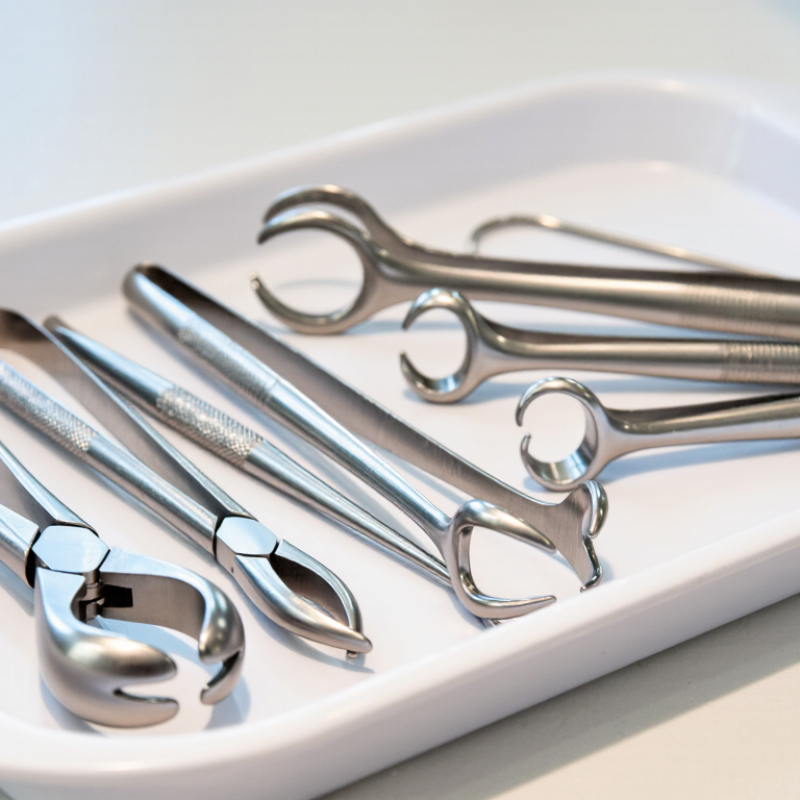
How to Choose the Best Dental Extraction Forceps?

Understanding Dental Extraction Forceps and Their Main Types

How to Choose the Best Dental Extraction Forceps?

Dental extraction forceps are not interchangeable tools. Their shapes reflect tooth anatomy, access, and the direction of controlled movement. Universal forceps may suit several visible crowns, but they are not always the safest choice. Upper molar forceps usually provide beaks designed for the tooth’s root pattern. Lower molar forceps often use stronger, more angular beaks for limited access. Root tip forceps have narrower working ends for delicate fragments. Cowhorn-style forceps can engage deeply divided molar roots, but they require careful handling and sound clinical judgment.

Choosing the right type begins with assessment, not preference. Examine the crown, mobility, root shape, surrounding bone, and opening range. Beaks should contact the tooth securely without crushing fragile enamel. A comfortable handle is useful, but comfort alone proves little. This is where mistakes happen. A forceps may feel familiar yet create poor purchase or unnecessary tissue pressure. Dental training, radiographic review, and supervised clinical experience remain essential, especially when anatomy is unclear.

Tips: Match the beaks to the tooth, not just the crown’s appearance. Check alignment before applying force. Keep movements slow and controlled. Inspect the instrument for clean hinges, stable beaks, and smooth action. If access is poor, reassess rather than forcing the tool. Even experienced clinicians can misjudge root anatomy. That deserves reflection.

How to Choose the Best Dental Extraction Forceps?

Dental extraction forceps should be selected according to the dental arch, tooth group, and the condition of the crown or root. The chart shows common primary indications for major generic forceps patterns.

How to read the chart: 1 indicates a commonly associated primary use, while 0 indicates that the pattern is not primarily selected for that tooth group. Universal forceps cover several teeth within the same arch, molar forceps are adapted to molar anatomy, and root forceps are designed for retained or fractured roots. Final selection should also consider tooth morphology, access, bone support, and periodontal condition.

Matching Forceps Design to Tooth Location and Extraction Method

Choosing extraction forceps starts with tooth location, not habit. Maxillary anterior teeth often need narrow, straight beaks that follow slender roots. Premolars require a secure grip without crushing delicate crowns. Molar forceps should reflect buccal and palatal root anatomy. Fit matters. Mandibular molars usually need stronger, broader beaks and a stable hinge. For lower anterior teeth, slimmer beaks can improve access in a tight arch.

The extraction method also changes the choice. For a fully erupted tooth, beaks should engage the cervical area and align with the long axis before controlled apical pressure is applied. When the crown is fractured or heavily restored, conventional forceps may fragment it further. A root instrument, tooth sectioning, or a planned surgical approach may be safer. Curved or offset designs can improve visibility around posterior teeth, but excessive angulation reduces control. Not every case cooperates.

Clinical judgment remains essential. Review radiographs for root curvature, divergence, hypercementosis, and nearby anatomical structures before selecting an instrument. Check that the beaks close evenly and avoid pinching soft tissue. In practice, the standard forceps may feel wrong after access and mobility are assessed. A trained clinician should pause, change the design, and reconsider the technique instead of forcing a poor grip. Sterilization, inspection, and documented instrument maintenance also support reliable care.

Evaluating Handle, Beak, Material, and Ergonomic Features

How to Choose the Best Dental Extraction Forceps?

Choosing dental extraction forceps requires more than matching a number to a tooth. Handle design affects control, pressure, and hand fatigue during repeated procedures. A slightly textured handle can improve grip when gloves become damp. However, excessive texture may create cleaning challenges. Test the handle with gloved hands before purchase.

The beak should contact the tooth securely without damaging nearby tissue. Its shape, width, and angle must suit the tooth’s anatomy and the intended extraction technique. Beaks that close evenly usually provide steadier force. Misalignment is a warning sign. It may cause slipping or uneven pressure. Experienced clinicians also check visibility around the beaks, especially near posterior teeth.

Material influences strength, corrosion resistance, and sterilization performance. Surgical-grade stainless steel is widely preferred because it tolerates repeated processing when maintained correctly. Still, material alone does not guarantee reliability. Inspect the hinge, locking action, and surface finish regularly. Rough spots can trap debris. An ergonomic design should support a neutral wrist and smooth finger movement, not force the hand into a rigid position. Weight matters too. A heavy instrument may feel solid, yet become tiring during a busy session. A lighter model may improve comfort but reduce perceived stability. There is no perfect choice. Clinical setting, operator hand size, tooth position, and personal technique all matter. Trial use can reveal weaknesses that specifications overlook.

Checking Sterilization, Durability, and Clinical Safety Standards

Choosing dental extraction forceps begins with sterilization, not appearance. Clean is not sterile. Look for instruments made from surgical-grade stainless steel and supported by clear reprocessing instructions. The instructions should specify cleaning, packaging, autoclave temperature, exposure time, and drying requirements. If these details are vague, staff may guess, and guessing creates risk. Check whether the forceps can tolerate repeated sterilization cycles without corrosion, discoloration, or joint stiffness.

Durability also affects clinical safety. Inspect the hinge, beaks, serrations, and handle after every cycle. The beaks should meet evenly without sharp misalignment. The hinge should move smoothly but should not feel loose. A rough surface can retain debris and make cleaning difficult. A comfortable grip helps control pressure during extraction, especially when visibility is limited. However, comfort must not replace function. A well-polished instrument can still have poor alignment.

Choose forceps supported by documented quality testing and traceable production records. Recognized medical-device standards can provide useful evidence, but certificates alone are not enough. Review the manufacturer’s validation data and maintenance guidance. In practice, I would test several instruments with gloved hands before purchase. Small differences become obvious then. I still recheck instruments after sterilization, because wear often appears gradually. No selection process is perfect, and clinical teams should record defects, replacement dates, and unexpected handling problems.

Selecting Forceps Based on Procedure Requirements and User Experience

How to Choose the Best Dental Extraction Forceps?

When selecting dental extraction forceps, match the instrument to the procedure, tooth anatomy, and access angle. Upper molars often need different beak alignment than lower incisors. Check whether the working ends seat around the cervical area without crushing fragile enamel. A narrow beak can improve access, while a broader beak may distribute pressure more evenly. The correct choice should support controlled, apical pressure rather than forceful pulling. Experienced clinicians also assess handle balance, spring action, and visibility during positioning. These details are easy to overlook in a busy operatory.

Tips: Hold the forceps before treatment. Test the grip with gloved hands. The handles should close smoothly without pinching your palm. Compare the beak shape with the radiograph and planned path of removal. Confirm that the instrument is intact, clean, and suitable for sterilization. If the design feels awkward, stop and reassess. Comfort matters, but it cannot replace anatomical judgment.

User experience changes the selection.

A beginner may benefit from a clear beak profile and a forgiving handle, supported by supervised practice. A seasoned operator may prefer a lighter instrument for delicate movements. Still, familiarity can create bias. I have learned that my favorite grip is not always the safest choice for a different tooth or limited opening. Review clinical guidance, instrument instructions, and feedback from trained colleagues. Document what worked, what slipped, and what caused unnecessary tissue pressure. That record makes future choices more reliable.

FAQS

Are dental extraction forceps interchangeable?

No. Their beaks match different tooth shapes, root patterns, and access conditions. A familiar forceps may still provide a poor grip.

Which forceps are commonly used for upper teeth?

Upper front teeth often need narrow, straight beaks. Upper molar forceps usually follow buccal and palatal root anatomy. Root tip forceps suit small, delicate fragments.

Why do lower molar forceps have stronger beaks?

Lower molars often have limited access and larger root structures. Broader, angular beaks can improve stability. Excessive pressure can still damage a fragile crown.

How should forceps be selected before extraction?

Assess the crown, mobility, root shape, bone, and mouth opening. Review radiographs for curved or separated roots. Match the beaks to the tooth, not only its visible crown.

When might conventional forceps be unsuitable?

A fractured or heavily restored crown may break further under ordinary forceps. A root instrument, tooth sectioning, or planned surgical method may provide safer access. Not every case cooperates.

What should clinicians check before applying force?

Check beak alignment and cervical contact first. Keep the instrument parallel with the tooth’s long axis. Use slow, controlled movements and avoid soft-tissue pinching.

Which handle and beak features support better control?

A textured handle may help when gloves become damp. Beaks should close evenly and remain stable. Test the instrument with gloved hands; specifications can overlook real weaknesses.

Does stainless steel guarantee a reliable forceps?

No. Suitable steel supports strength, corrosion resistance, and repeated sterilization. Inspect the hinge, surface, beaks, and locking action regularly. Rough spots can trap debris.

How important are weight and ergonomics?

A neutral wrist and smooth finger movement can reduce fatigue. Heavy forceps may feel stable but tire the hand. Lighter designs may feel less secure. There is no perfect choice.

What should happen when access or grip feels wrong?

Pause and reassess the tooth, radiograph, and instrument. Change the forceps or technique when needed. Forcing a poor grip is a preventable mistake. Even experienced clinicians can misjudge root anatomy.

Conclusion

Choosing the right Dental Extraction Forceps is essential for safe, controlled, and efficient tooth removal. Different forceps are designed for specific tooth locations, root shapes, and extraction methods, so understanding their main types helps clinicians select the most suitable instrument. The design should match the target tooth and procedure, while the handle, beak shape, material, balance, and grip should provide stability, precision, and comfort during use. Ergonomic features can also help reduce hand fatigue and improve control during demanding procedures.

Before selection, clinicians should evaluate sterilization compatibility, corrosion resistance, structural durability, and adherence to recognized clinical safety standards. The ideal forceps should maintain reliable performance after repeated cleaning and sterilization without compromising patient safety. Ultimately, the best choice depends on the procedure requirements, tooth anatomy, operator experience, and personal handling preferences. A well-matched instrument supports smoother extractions, minimizes unnecessary tissue stress, and promotes consistent clinical outcomes.

Ethan

Ethan

Ethan is a professional marketing specialist with a deep understanding of the company’s products, their features, and the needs they are designed to meet. He regularly contributes expert articles to the company website, sharing clear, practical information that helps readers make informed decisions......