Blog
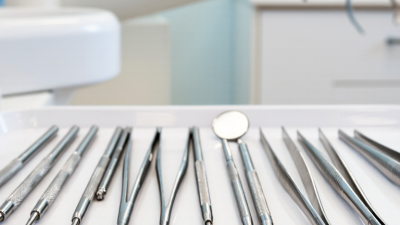
Why Choose Private Label Dental Instruments?
Private Label Dental Instruments can help dental distributors build a distinct product range without developing every instrument from scratch. The opportunity sits within a substantial care market. The World Health Organization’s Global Oral Health Status Report (2022) estimates that oral diseases affect nearly 3.5 billion people worldwide. It also identifies untreated decay in permanent teeth as the most common oral health condition. These figures indicate broad, continuing need for dental care, though they do not guarantee demand for any particular product or brand.
Market data offers another useful signal. Grand View Research estimated the global dental equipment market at about USD 10.9 billion in 2023, with projected growth through 2030. This category is broader than hand instruments, so it should not be read as a direct forecast for private-label products. Still, it points to an active purchasing environment. For distributors, a private-label program may support clearer positioning, tailored assortments, and closer control over packaging and customer service. The details matter: a mirror handle should feel balanced, a scaler tip should match its stated design, and product records should remain traceable. Small gaps show up quickly in a clinic.
Branding alone is not a quality system. Buyers should assess material specifications, manufacturing consistency, inspection processes, and supplier communication before choosing a partner. Those checks take time. They are easy to underestimate. Private label can create value, but only when the product performs reliably and the commercial promises remain realistic.
Read more »
 By:Oliver
- November 2, 2026
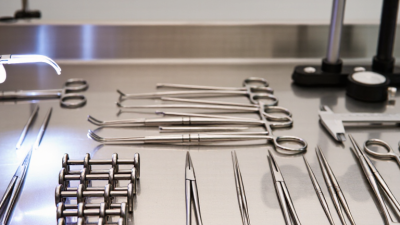
7 Best OEM Surgical Instruments Manufacturing Companies?
Choosing among the 7 Best OEM Surgical Instruments Manufacturing Companies requires more than comparing catalog prices. Surgical instruments must support precise handling, repeatable performance, and dependable sterilization. A misplaced clamp or uneven cutting edge can affect an entire procedure.
The Lancet Commission estimated approximately 313 million surgical procedures occur worldwide each year. That volume creates constant demand for reliable forceps, scissors, retractors, biopsy tools, and customized instrument sets. Market estimates vary, however. Grand View Research valued the global surgical instruments market at approximately USD 13.6 billion in 2023, while other reports use broader categories and publish higher figures. This difference matters. Buyers should examine the research scope before accepting any headline number.
A strong OEM Surgical Instruments Manufacturing partner should demonstrate practical engineering experience, documented material traceability, and controlled inspection processes. ISO 13485 certification is important, but it does not replace supplier audits or product verification. FDA quality requirements, validated cleaning guidance, and risk-management practices should also shape the evaluation. The best manufacturers can explain tolerances, surface finishing, packaging, and reprocessing performance without hiding behind general claims.
This guide compares seven notable companies through those operational details. It considers customization capacity, stainless-steel expertise, prototyping speed, quality documentation, and support after delivery. Some manufacturers may excel at high-volume standard instruments but struggle with complex designs. Others may offer impressive customization while lacking transparent production data. That is a limitation worth acknowledging. No single ranking fits every hospital, distributor, or device developer. The final choice should reflect clinical use, regulatory expectations, budget, and the buyer’s willingness to verify every important claim.
Read more »
By:Oliver
- October 28, 2026
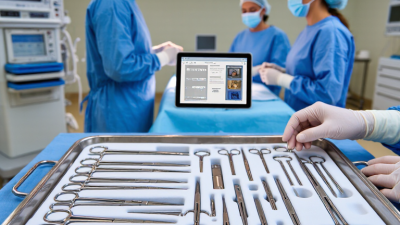
How to Choose Custom Surgical Instrument Sets in 2026?
Choosing Custom Surgical Instrument Sets in 2026 requires more than selecting attractive finishes or adding familiar tools. Hospitals must connect each set with actual procedures, surgeon preferences, sterilization capacity, and patient safety goals. A tray that looks complete may still contain the wrong clamp, an unnecessary retractor, or too many repeated instruments. That creates weight, confusion, and processing delays.
Dr. Atul Gawande, a surgeon and patient-safety authority, wrote, “The volume and complexity of what we know has exceeded our individual ability to properly deliver its benefits.” His observation remains highly relevant to Custom Surgical Instrument Sets. Modern procedures demand precision, yet complexity can quietly increase handling errors. The right set should support a clear surgical workflow, not display every possible instrument.
A practical evaluation begins with procedure mapping. Review operative steps, surgeon feedback, instrument frequency, and sterilization records. Measure tray weight and check whether staff can identify each instrument quickly. Examine hinges, box locks, insulation, markings, and corrosion resistance under repeated use. Small details matter.
Ask hard questions.
Does the set reduce unnecessary opening?
Can nurses recognize missing instruments immediately?
Will the configuration remain useful after technique changes?
There is no perfect tray. That deserves honesty. A custom design may improve efficiency, but it can also create dependence on one surgeon’s habits. Preferences change. Inventory mistakes happen. Therefore, hospitals should test the set in supervised cases, collect feedback, and revise it before full adoption. In 2026, the strongest choice will balance clinical familiarity, measurable performance, lifecycle cost, and reliable reprocessing.
Read more »
 By:Evelyn
- October 23, 2026
What Are Dental Scalers and How Do They Work?
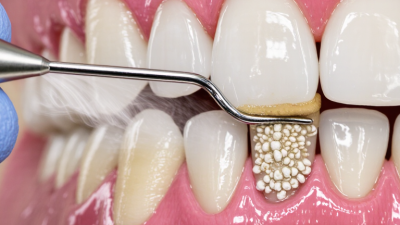
Dental Scalers are precision instruments used to remove plaque, tartar, and deposits from tooth surfaces. Unlike a toothbrush, a scaler reaches beneath the gumline and around tight areas. Its narrow tip can clean where bristles cannot. The process requires controlled pressure, steady hand movement, and a clear view of the tooth.
Periodontist Dr. Sally Cram offers a useful clinical reminder: “Brushing cannot remove hardened tartar; professional instruments are needed.” This distinction matters. Plaque feels soft and sticky, while calculus feels rough, like a small stone attached to enamel. Dental hygienists select manual or ultrasonic scalers according to deposit thickness, tooth shape, gum condition, and patient sensitivity.
Manual scalers scrape deposits with a shaped metal tip. Ultrasonic models use rapid vibrations and water irrigation. The vibration breaks apart calculus, while water helps cool the instrument and flush debris. It can sound sharp. It may also feel uncomfortable.
Still, scaling is not a simple scraping task. Excessive pressure can irritate delicate gum tissue or create unnecessary sensitivity. Technique matters more than force. This point is easy to underestimate. Even experienced professionals must adapt their approach for crowded teeth, deep pockets, restorations, or inflamed gums.
This guide will explain how Dental Scalers work, where each type is used, and why professional training remains essential. It will also examine common misunderstandings about home scaling. Some online advice sounds convincing, but safety should come before convenience. A polished smile is not worth damaging healthy enamel or gum tissue.
Read more »
By:Oliver
- October 18, 2026
How to Choose the Best Dental Extraction Forceps?
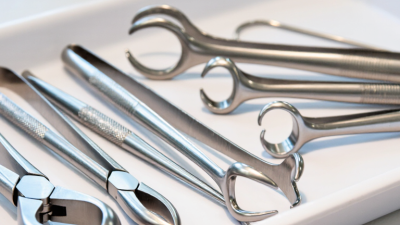
Choosing the right Dental Extraction Forceps is not a matter of selecting the largest or most expensive instrument. It requires clinical judgment, anatomical knowledge, and careful attention to control. A forceps that feels balanced in the hand can reduce unnecessary pressure on the tooth and surrounding bone. The wrong pattern may increase slipping, crushing, or soft-tissue trauma.
Dr. Gordon J. Christensen, a respected dental educator and prosthodontist, has often stressed predictable clinical performance. His practical message applies here: “The best instrument is the one that supports safe, controlled, and predictable treatment.” That principle should guide every purchasing decision. A maxillary molar forceps differs from a mandibular root forceps in beak shape, angulation, and intended access. Stainless steel quality also matters, especially when instruments face repeated sterilization cycles. Check the hinge. Examine the beaks. Feel the grip.
This guide, How to Choose the Best Dental Extraction Forceps, examines design, material, ergonomics, and tooth-specific applications. It also considers working experience, because catalogue descriptions rarely reveal everything. A forceps may look precise but feel awkward after several procedures. That weakness matters. Some choices may still require reconsideration, particularly when operator hand size, patient anatomy, or extraction complexity changes. No single model suits every clinic. Reliable selection combines manufacturer information, clinical training, instrument inspection, and feedback from experienced dental professionals. The goal is not aggressive removal. It is controlled extraction with minimal unnecessary force and greater confidence.
Read more »
 By:Ethan
- October 13, 2026
Why Choose Surgical Retractors for Global Healthcare Buyers?
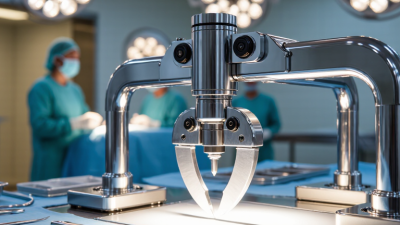
For global healthcare buyers, Surgical Retractors are more than stainless-steel instruments. They are essential tools for creating a stable, visible, and controlled operative field. In an operating room, a few millimeters can matter. Poor exposure may increase tissue pressure, obstruct visibility, and slow a carefully planned procedure. Dr. Michael DeBakey, a pioneering cardiovascular surgeon, emphasized this principle: “The secret of successful surgery is exposure, exposure, exposure.”
That principle still guides modern procurement decisions. Hospitals must evaluate blade design, retraction strength, ergonomics, sterilization compatibility, and material quality. A retractor should support the surgeon without creating unnecessary trauma. It must also match the procedure, patient anatomy, and local clinical workflow. Reusable models may reduce long-term waste, while disposable options can simplify infection-control processes. Neither choice is automatically better.
Details matter.
Buyers should request measurable specifications, validation documents, and realistic handling information from qualified manufacturers. Product demonstrations can reveal whether a ratchet locks smoothly or slips under pressure. They can also expose weaknesses that product photographs hide. Experience in one hospital does not guarantee success everywhere. Staff training, maintenance capacity, and surgical specialties may differ widely.
There is no perfect retractor for every market. That is an uncomfortable truth. A reliable purchasing decision balances clinical performance, total cost, regulatory compliance, and user feedback. When these factors are reviewed carefully, Surgical Retractors become part of a safer, more efficient, and more accountable healthcare system.
Read more »
By:Oliver
- October 8, 2026
What Are the Best Surgical Needle Holders from China?
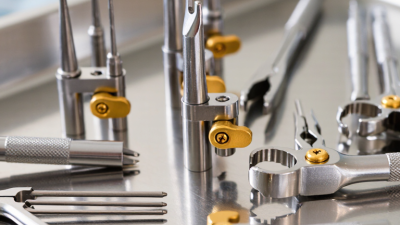
Choosing the best Surgical Needle Holders from China requires more than comparing prices or polished photographs. These instruments must support controlled needle driving, stable grip, atraumatic handling, and dependable sterilization. Grand View Research identifies surgical instruments as a growing global market, driven by procedure volumes, hospital investment, and minimally invasive techniques. The World Health Organization also stresses that safe surgery depends on reliable equipment, trained teams, and consistent processes.
Dr. Atul Gawande wrote, “The volume and complexity of what we know has exceeded our individual ability to properly deliver its benefits.” That observation applies directly to needle-holder selection. A surgeon may notice the box lock first. However, jaw alignment, ratchet security, tungsten-carbide inserts, handle balance, and fatigue resistance matter during a long closure. Small defects become obvious when the needle slips beside a delicate vessel. They can also remain hidden during a brief product demonstration.
This guide examines Chinese manufacturers through practical and documented criteria. These include material certificates, ISO 13485 quality systems, inspection records, sterilization compatibility, and sample testing. Buyers should also confirm applicable regulatory requirements in their destination market. No ranking is perfect. Factory capability can vary between product lines, and catalog claims still require verification. Some lower-priced Surgical Needle Holders may perform well, while expensive models may disappoint after repeated processing. The strongest choice combines surgeon feedback, measurable specifications, transparent supplier evidence, and realistic clinical use.
Read more »
By:Evelyn
- October 3, 2026

China Top 10 Surgical Forceps Manufacturers
Surgical Forceps are small instruments with a demanding job: they must grip, separate, or hold tissue with controlled pressure. Their performance depends on details clinicians notice immediately, including jaw alignment, hinge movement, surface finish, and balance in the hand. A forceps that looks polished in a catalogue may still feel awkward during a long procedure. That difference matters.
The scale of surgical care provides useful context. Weiser and colleagues estimated about 234.2 million major operations worldwide in 2004, in a study published in The Lancet in 2008. That number is old. It remains a landmark estimate, not a measure of today’s procedure volume or current instrument demand. It does, however, show why consistent surgical instruments matter across health systems.
China’s medical-device sector includes manufacturers with different product ranges, production capabilities, and documentation practices. This guide to China’s top 10 Surgical Forceps manufacturers is intended as a starting point, not an endorsement or a substitute for supplier assessment. Buyers should examine the specific forceps design, material and finish information, quality-management documentation, inspection records, and responsiveness to technical questions. ISO 13485 certification may be relevant, but certification alone does not establish that every product suits every clinical use. Ask for evidence tied to the exact model.
There is no perfect shortlist. Product specifications can be difficult to compare, and public information may leave gaps. A careful review of samples and records can reveal more than a ranking ever will.
Read more »
By:Ethan
- September 28, 2026
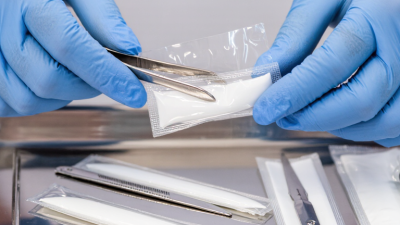
What Are Single Use Disposable Medical Instruments?
Single Use Disposable Medical Instruments are medical tools designed for one procedure or one patient use, followed by disposal according to the product instructions. Examples may include forceps, scalpels, syringes, and certain examination tools. Some arrive sterile in sealed packaging; others may have different handling requirements. The label and accompanying instructions matter. A familiar shape does not tell you whether an instrument is single-use.
In a clinical setting, a nurse might open a packaged instrument beside a prepared tray, check its name and condition, and use it for the intended task. Afterward, staff follow the facility’s procedures for disposal. This approach can reduce the need to clean and process reusable tools, but it does not remove the need for careful handling, training, or waste management. Convenience is only part of the picture. Cost, packaging, material use, and supply reliability also deserve attention.
The distinction is not always obvious. Some instruments look similar across disposable and reusable versions, and product claims should be checked against manufacturer documentation and relevant professional guidance. “Single use” should not be treated as a casual suggestion or inferred from appearance. It describes the intended use of a specific product. Understanding that detail helps clinicians, buyers, and patients discuss safety with greater precision, while recognizing that no instrument replaces sound clinical judgment.
Read more »
By:Evelyn
- September 25, 2026
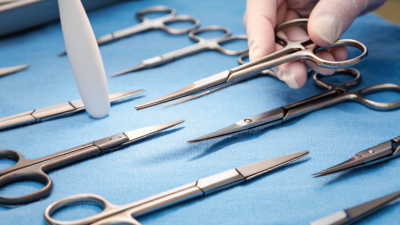
How to Choose Surgical Scissors in 2026
Choosing Surgical Scissors in 2026 means matching an instrument to the task, the user, and the setting. A pair that feels balanced during a brief procedure may cause fatigue during repeated, precise cuts. Blade length, tip shape, edge design, and handle size all affect control. Small details matter.
This guide explains how to compare common patterns, including straight and curved blades, blunt and sharp tips, and different cutting edges. It also considers materials, joint action, grip comfort, and compatibility with the facility’s cleaning and sterilization processes. Check the manufacturer’s specifications rather than assuming every stainless-steel instrument tolerates the same cycle. Confirm intended use, too. A fine tip may improve access in a confined area, but it can be less suitable for heavier tissue or broader cutting tasks.
Price alone is a poor measure of value. Consider durability, repair options, instrument tracking, and the availability of service documentation. Ask experienced users to handle candidate scissors, and notice whether the blades meet smoothly without excessive pressure. It sounds obvious. Yet this check is sometimes skipped. No checklist can replace clinical training or local protocols, and product claims deserve careful review. Even a well-made instrument may not suit every hand or procedure. The aim here is a practical, evidence-aware framework for evaluating options—not a universal recommendation. Use it to ask better questions before selection, purchasing, and routine inspection.
Read more »
By:Evelyn
- September 25, 2026

What Are the Best Reusable OR Grade Surgical Instruments?
Choosing the best Reusable OR Grade Surgical Instruments means looking beyond price and appearance. A clamp must close smoothly, a scissors’ edges must meet cleanly, and a handle must remain comfortable through repeated use. Yet these details matter only when the instrument also suits its intended procedure and can withstand its validated cleaning and sterilization processes. Small flaws can be easy to miss.
The stakes extend beyond the instrument tray. The World Health Organization’s Global Report on Infection Prevention and Control (2022) estimates that 7 in 100 hospitalized patients in high-income countries, and 15 in 100 in low- and middle-income countries, acquire at least one healthcare-associated infection. These figures do not attribute infections to surgical instruments, but they underline why dependable reprocessing deserves close attention. Dr. William A. Rutala, an infection-prevention expert, has put it plainly: “Cleaning is the most important step in the reprocessing of reusable medical devices.” His point is practical. A premium instrument cannot compensate for an inadequate cleaning process.
This guide compares instruments by material quality, precision, ergonomics, repairability, and compatibility with facility reprocessing protocols. It also considers manufacturer documentation and service support, not just catalog claims. No single instrument is best for every operating room. The right choice depends on the procedure, staff feedback, and the demands of repeated use. We should acknowledge one limitation: published head-to-head performance data can be sparse, so careful evaluation matters.
Read more »
By:Ethan
- September 25, 2026