
Surgical Forceps are small instruments with a demanding job: they must grip, separate, or hold tissue with controlled pressure. Their performance depends on details clinicians notice immediately, including jaw alignment, hinge movement, surface finish, and balance in the hand. A forceps that looks polished in a catalogue may still feel awkward during a long procedure. That difference matters.
The scale of surgical care provides useful context. Weiser and colleagues estimated about 234.2 million major operations worldwide in 2004, in a study published in The Lancet in 2008. That number is old. It remains a landmark estimate, not a measure of today’s procedure volume or current instrument demand. It does, however, show why consistent surgical instruments matter across health systems.
China’s medical-device sector includes manufacturers with different product ranges, production capabilities, and documentation practices. This guide to China’s top 10 Surgical Forceps manufacturers is intended as a starting point, not an endorsement or a substitute for supplier assessment. Buyers should examine the specific forceps design, material and finish information, quality-management documentation, inspection records, and responsiveness to technical questions. ISO 13485 certification may be relevant, but certification alone does not establish that every product suits every clinical use. Ask for evidence tied to the exact model.
There is no perfect shortlist. Product specifications can be difficult to compare, and public information may leave gaps. A careful review of samples and records can reveal more than a ranking ever will.
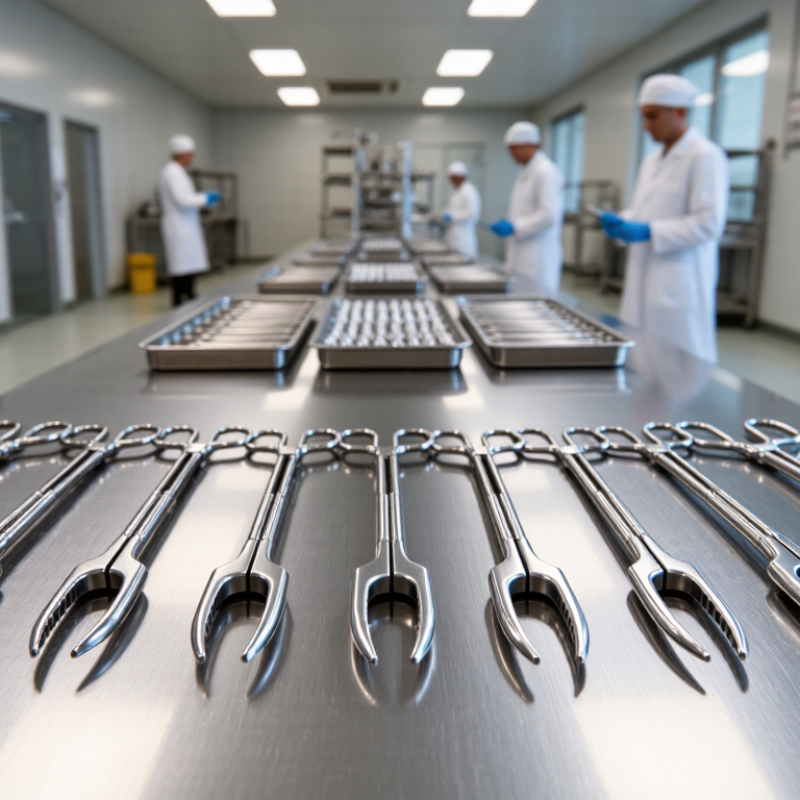
Surgical forceps are classified mainly by their clinical purpose and jaw design. Tissue forceps grasp skin or other tissue; dressing forceps handle gauze and small materials. Hemostatic forceps clamp vessels, while fine microforceps support delicate work under magnification. Some instruments called forceps have a ratchet lock, a useful distinction when comparing them with nonlocking graspers.
Jaw details affect control. Fine teeth can hold skin securely, while smooth or lightly textured jaws may reduce trauma to delicate tissue. The choice depends on the procedure, tissue condition, and clinician’s technique. A firm grip is not always a better grip. In practice, the instrument should hold without requiring excessive pressure. Even familiar names can vary between departments, so checking the instrument’s design matters.
Clinical teams also inspect alignment, jaw closure, and the locking mechanism before use. A slight gap at the tips can make precise handling difficult. Reusable instruments require cleaning, inspection, and sterilization according to validated facility procedures and the manufacturer’s instructions. Small details matter. It is easy to focus on the forceps’ label and overlook how they feel in the hand; that judgment deserves a second look.
Surgical forceps differ in jaw shape, tip texture, and intended grip. Dressing forceps have fine, often serrated tips for handling gauze, while tissue forceps may use small teeth to hold tissue securely. Hemostatic forceps feature a locking handle and ridged jaws. These details matter: a delicate tip can bend under excess pressure, while aggressive teeth may damage tissue. Fit matters.
Material selection should match the instrument’s job and repeated reprocessing. ISO 7153-1:2016, Surgical instruments—Materials—Part 1: Metals, sets out material designations and composition data for metals used in surgical instruments, including stainless steels and titanium alloys. It is a material reference, not a finished-product certification. Stainless steel is common for its balance of strength and corrosion resistance; titanium can reduce weight, but may require different handling and finishing. The material name alone does not prove durability.
For practical evaluation, inspect the pivot, jaw alignment, surface finish, and locking action under bright light. ISO 13402:1995 addresses resistance to autoclaving, corrosion, and thermal exposure in surgical and dental hand instruments. Together, these standards help buyers ask specific questions about materials and reprocessing performance. A smooth finish helps. Yet small pits or uneven serrations can still escape a quick visual check, so documented testing and routine inspection remain important. These are easy to overlook.
Typical jaw features vary by design: tissue forceps commonly have teeth, while dressing and hemostatic forceps commonly use serrated jaws without teeth. This is a qualitative design guide, not a manufacturer ranking or market-share chart. ISO 7153-1 addresses materials for surgical instruments; it does not rank manufacturers.
ISO 7151:1988 Tests for Non-Cutting, Articulated Surgical Instruments
For surgical forceps, a smooth finish is only part of the picture. ISO 7151:1988 addresses non-cutting, articulated instruments used in general surgery, including relevant requirements and test methods. Its focus makes joint movement and instrument function important points during quality review. Open and close each sample carefully. Watch for uneven travel, loose hinges, or jaws that fail to meet evenly. Small differences matter. A forceps may look precise but feel stiff in the hand. Testing should follow the standard’s applicable procedures and documented acceptance criteria, not visual judgment alone.
Tips: Check the applicable edition and instrument scope before comparing supplier reports. Keep sample identification, inspection conditions, and results together. Ask how deviations are handled. A neat certificate is useful, but it cannot replace clear, traceable test records. No single check tells the whole story.
For buyers comparing manufacturers in China, request evidence that links test results to the specific instrument type and production lot. Confirm that inspection methods are consistent and that any reported failures receive documented follow-up. ISO 7151:1988 is a useful reference, but it should not be treated as proof of every performance or safety feature. Requirements may depend on the intended use and purchasing specification. Even careful reviews can miss something; repeating checks on selected samples is a sensible safeguard.
Comparing China’s ten leading surgical-forceps manufacturers by product range requires more than counting catalog entries. A useful comparison checks dressing, tissue, hemostatic, and needle-holding forceps, alongside specialty patterns. Look for straight and curved jaws, varied lengths, and toothed or smooth tips. Small differences matter. A short clamp may not suit a deep operative field.
Fortune Business Insights estimated the global surgical instruments market at USD 17.25 billion in 2023, with a forecast of USD 28.12 billion by 2032. This report covers surgical instruments broadly, not forceps alone, so it indicates market context rather than individual supplier performance. For each manufacturer, buyers should verify listed dimensions, material specifications, reusable or single-use options, and available finish variations. A long product list is not automatically a complete range.
Catalogs can be inconsistent. That deserves attention. Compare published specifications with current product sheets, and note missing details instead of assuming products are equivalent. Range depth also means checking whether core patterns are offered across multiple sizes, not merely under different product names. These checks make the comparison more practical for procurement and clinical evaluation.
For a China-focused surgical forceps shortlist, verify certificates against the actual factory and product scope. ISO 13485 supports a medical-device quality management system; it does not certify every forceps model or guarantee clinical performance. ISO’s 2022 Survey of Management System Standard Certifications recorded more than 31,000 ISO 13485 certificates worldwide. That broad figure signals adoption, not supplier quality. Ask for the certificate number, issuing body, validity dates, and a scope covering the relevant manufacturing site and instruments.
Check NMPA registration details when products are represented as registered for the Chinese market. Match the registration holder, product name, model, and manufacturing information to the offered forceps. Then review export credentials for each target country, including applicable conformity documents, authorized exporter details, and traceable batch records. For reusable forceps, request evidence of material specifications, corrosion resistance, jaw alignment checks, and validated cleaning or sterilization instructions. A polished certificate packet can still leave gaps.
Tips: Request a recent sample and inspect its hinge, ratchet, and jaw closure under bright light. Compare the sample with the approved drawings and inspection criteria. Ask for corrective-action records, too; suppliers do not always present those first.
Dressing forceps often have fine serrations for gauze. Tissue forceps may use small teeth for a firmer hold. Hemostatic forceps have ridged jaws and a locking handle. The wrong tip can damage tissue.
Stainless steel balances strength and corrosion resistance. Titanium can reduce weight, but may need different handling and finishing. Material names alone do not prove durability.
It lists material designations and composition data for metals used in surgical instruments. It is a materials reference, not finished-product certification.
Under bright light, inspect the pivot, jaw alignment, and surface finish. Check for pits, uneven serrations, and a secure locking action. Some defects are easy to miss.
It concerns resistance to autoclaving, corrosion, and thermal exposure in surgical and dental hand instruments. Reprocessing performance still needs suitable evidence.
Open and close each sample carefully. Look for stiff movement, loose hinges, or jaws that do not meet evenly. Small differences matter.
It addresses non-cutting, articulated surgical instruments, including relevant requirements and test methods. Confirm the edition and instrument scope before comparing reports.
Ask for test records tied to the specific instrument type and production lot. Check inspection conditions, acceptance criteria, and documented follow-up for failures. A tidy certificate is not the whole story.
No single check tells the whole story. Repeat checks on selected samples can help, though they may still miss a problem. Regular inspection matters.
This article explains how Surgical Forceps are classified and used in clinical practice, from grasping and holding tissue to assisting with suturing and other procedures. It outlines common forceps designs, material considerations, and the role of ISO 7153-1 in specifying requirements for materials used in surgical instruments. Readers will also find an overview of ISO 7151:1988 and its tests for non-cutting, articulated instruments, helping clarify how design and performance are assessed.
The article compares ten Chinese manufacturers by product range, offering a practical framework for evaluating available instrument categories rather than endorsing any particular supplier. It also describes supplier checks that may support purchasing decisions, including review of ISO 13485 quality-management documentation, applicable NMPA registration information, and export credentials. Together, these topics provide a useful starting point for understanding forceps specifications and conducting a more structured supplier assessment.
