
China ENT Surgical Instruments Manufacturing: Technical White Paper & Global Sourcing Benchmark
The global demand for high-precision Otorhinolaryngology (ENT) surgical instruments has experienced unprecedented growth, driven by the rapid global adoption of Minimally Invasive Surgery (MIS), modern Functional Endoscopic Sinus Surgery (FESS), and advanced micro-laryngeal interventions. As healthcare providers and medical device procurement teams seek to optimize capital expenditures while maintaining uncompromised clinical outcomes, China has consolidated its standing as the world's primary manufacturing hub for professional OR-grade ENT instrumentation.
This technical report evaluates the metallurgical standards, micro-machining capabilities, regulatory compliance frameworks, and global procurement trends governing the selection of China's best ENT surgical instrument manufacturers. Designed for hospital procurement officers, medical device distributors, and OEM brand partners, this benchmark document provides actionable information gain required to execute risk-mitigated, high-value procurement strategies.
Key Industry Insight: Modern ENT surgical instruments require tactile sensitivity, micro-mechanical alignment, and long-term resistance to cyclic steam autoclave sterilization. Leading Chinese OEMs utilize imported German stainless steel (AISI 420 & 410) alongside 5-axis CNC grinding to deliver mechanical tolerances down to ±0.01mm.
Material Science & Engineering Standards in ENT Instrument Fabrication
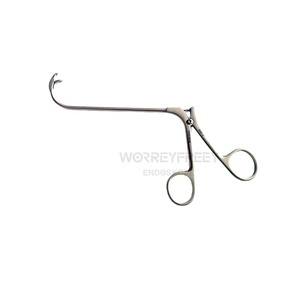
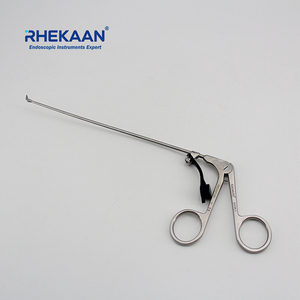
The operational longevity and ergonomic precision of an ENT instrument are determined at the raw material phase. Unlike general surgical tools, ENT devices—particularly micro-crocodile ear forceps, sinus punch forceps, and laryngeal scissors—feature extremely slim working shafts and intricate distal jaws that withstand significant mechanical torque and bending strain.
1. Stainless Steel Grade Selection Matrix
Reputable Chinese medical manufacturers comply strictly with ASTM F899 and ISO 7153-1 standards for surgical instrument metallurgy. The primary alloys utilized include:
- Martensitic Stainless Steel (AISI 420 / DIN 1.4021): The industry standard for cutting and gripping instruments. Heat treatment via vacuum quenching achieves a Rockwell hardness of 48-52 HRC, guaranteeing edge retention for nasal scissors and tissue punches.
- Martensitic High-Carbon Steel (AISI 440C / DIN 1.4125): Used exclusively for high-stress micro-cutting edges requiring extreme sharpness, such as FESS micro-debrider blades and laryngeal micro-scissors.
- Austenitic Stainless Steel (AISI 316L / DIN 1.4404): Non-magnetic material offering superior corrosion resistance, utilized for rigid endoscope outer sheaths, suction tubes, and non-cutting cannula assemblies.
- Tungsten Carbide (TC) Inlays: High-wear contact surfaces—such as needle holder jaws—are reinforced with tungsten carbide inserts bonded via silver brazing, expanding wear life by up to 500%.
| Instrument Category | Primary Material Grade | Hardness Rating (HRC) | Critical Performance Benchmark |
|---|---|---|---|
| FESS Sinus Forceps & Punches | AISI 420 / German 1.4021 | 50 - 54 HRC | Clean bite without tissue dragging; 1000+ cycle fatigue limit |
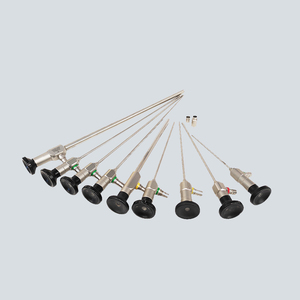
| Rigid Sinuscopes & Otoscopes | AISI 316L / Sapphire Glass | N/A (Optical Spec) | Autoclavable HD optical clarity; gold-plated optical seals |
| Laryngeal Micro-Instruments | AISI 420B / Titanium Alloy | 46 - 50 HRC | 230mm shaft stability; zero rotational play at box lock joint |
| Self-Retaining Laryngoscopes | AISI 304 Stainless Steel | 35 - 40 HRC | High structural tensile strength; high load resistance under suspension |
Precision Manufacturing Workflows: From Drop Forging to Passivation
China's top-tier ENT medical suppliers employ advanced manufacturing pipelines combining automated robotics with artisan hand-finishing. This hybrid manufacturing model ensures strict consistency across high-volume OEM orders while maintaining the delicate balance required for micro-surgery instrumentation.
1. 5-Axis CNC Machining
Complex jaw mechanisms, including crocodile action joints and double-action sinus forceps, are carved from solid metal blocks using multi-axis CNC machines for exact jaw meshing.
2. Vacuum Heat Treatment
Computer-controlled vacuum furnaces prevent surface decarburization during heating, achieving uniform grain structure and optimal mechanical elasticity.
3. Chemical Passivation
Instruments undergo nitric or citric acid baths (per ASTM A967) to remove free iron molecules from the surface, creating an impenetrable chromium oxide passive film.
Future Procurement Trends in Global ENT Surgical Instruments (2025-2030)
As international healthcare markets evolve, medical device procurement specialists must align their supply chain strategies with overarching technical and economic shifts. Analysis of global purchasing behaviors reveals three dominant procurement trends:
Trend 1: Shift Toward Hybrid Endoscopic-Surgical Ecosystems
Hospitals are moving away from piecemeal instrument sourcing in favor of integrated surgical suites. Manufacturers in China now offer bundled FESS suites that pair HD 4mm 0°/30°/70° rigid endoscopes with specialized hand instruments, irrigation systems, and sterilization trays certified to ISO 11607 standards. Procurement teams achieve up to 30% cost savings by sourcing complete procedure-specific sets rather than individual line items.
Trend 2: Rigorous Regulatory Compliance & Traceability Requirements
With the implementation of the European Union Medical Device Regulation (EU MDR 2017/745) and US FDA Unique Device Identification (UDI) mandates, buyers demand total supply chain transparency. Premium Chinese exporters provide complete technical files (DHF/DMR), material mill certificates, ISO 13485 audit reports, and direct laser-engraved UDI QR codes on every reusable instrument.
Trend 3: Demand for Anti-Glare Satin & PVD Coated Surfaces
Under intense OR LED surgical lighting and high-definition endoscopic camera systems, conventional mirror-polished stainless steel causes distracting optical reflections. Sourcing trends show an 80% preference for satin-matte or dark Physical Vapor Deposition (PVD) titanium nitride coatings that eliminate glare and increase surface scratch resistance.
Customized OEM/ODM ENT Instrument Manufacturing
We provide full-spectrum private label manufacturing for medical device brand owners, distributors, and large hospital groups. Transform your engineering concepts or sample prototypes into market-ready clinical instruments.
Technological & Design Development Trends in ENT Instrumentation
Modern otorhinolaryngology is being redefined by micro-engineering and ergonomic innovations. Leading manufacturers are investing heavily in R&D to refine instrument mechanics across three core specialties:
1. Advanced Rhinology & FESS Engineering
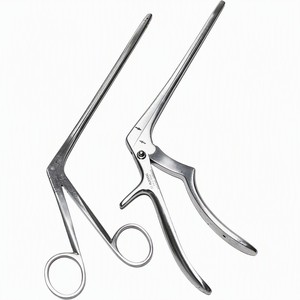
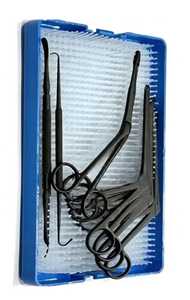
Functional Endoscopic Sinus Surgery requires delicate manipulation within narrow mucosal passages. Key mechanical advancements include 360-degree rotating shaft forceps, enabling surgeons to maneuver around the uncinate process and ethmoid bulla without changing hand position. Furthermore, side-cutting nasal punches now incorporate micro-serrated teeth that secure slippery mucosal tissue, reducing accidental tissue tearing and postoperative scarring.
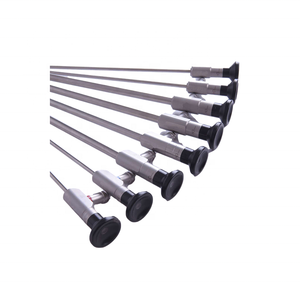
2. High-Definition Rigid Endoscopes (Sinuscopes & Otoscopes)
Optical endoscopes have advanced from standard glass rods to high-density sapphire crystal lenses coupled with multi-layer anti-reflective coatings. These systems deliver 4K optical resolution, wide-angle distortion correction, and enhanced color fidelity. Advanced thermal sealing techniques ensure optics withstand hundreds of automated washer-disinfector cycles without internal lens fogging or seal degradation.
3. Micro-Laryngeal Surgery Tools
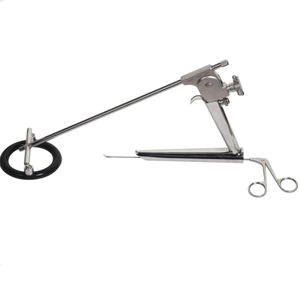
Phonosurgery demands 230mm extended micro-forceps capable of fine tumor resection and vocal cord polyp removal. Modern laryngeal tools feature lightened titanium handles, delicate 0.9mm jaw profiles, and counter-balanced spring mechanisms that eliminate hand fatigue during prolonged microscopic procedures.
Enterprise Advantage: Why Global Buyers Partner with Our Manufacturing Hub
As a premier manufacturer rooted in China's established medical device industrial clusters, our facility combines clinical expertise, cutting-edge technology, and rigorous quality control to serve international buyers.
ISO 13485:2016 Certified Facility
Our complete production management system is audited annually for full compliance with international medical device quality standards.
Lifetime Warranty Against Defects
Every reusable OR-grade instrument comes backed by a lifetime guarantee against manufacturing, mechanical, or material failure.
Complete Regulatory Support
We supply complete technical documentation, CE declarations of conformity, ISO certificates, and free sale certificates for rapid customs clearance.
Frequently Asked Questions (FAQ) for Procurement Teams
What material standards are used for your ENT surgical instruments?
Our reusable ENT surgical instruments are manufactured primarily using imported martensitic German stainless steel (AISI 420, AISI 410, and DIN 1.4021) in strict compliance with ASTM F899 standards. Non-cutting components and rigid endoscope sheaths utilize corrosion-resistant AISI 316L stainless steel.
Are your instruments compatible with standard steam autoclave sterilization?
Yes. All reusable OR-grade instruments are fully autoclavable and engineered to withstand repeated steam sterilization cycles at 134°C (273°F) at 2.1 bar pressure for 18 minutes, adhering to ISO 17665 sterilization benchmarks without corrosion or mechanical joint degradation.
Do you offer custom OEM laser branding and UDI marking?
Absolutely. We provide comprehensive OEM private label services, including precision laser etching for corporate logos, item catalog numbers, batch codes, and DataMatrix UDI barcodes compliant with US FDA and EU MDR regulations.
What quality control protocols are performed prior to export shipment?
Every production batch undergoes a 100% multi-stage quality inspection. This includes dimensional verification via optical comparators, jaw alignment checks under 20x magnification, surface passivation integrity testing (per ASTM A967), and function testing on synthetic tissue blocks.
What is your typical order lead time and Minimum Order Quantity (MOQ)?
For standard catalogue items, our MOQ starts at 5 pieces per pattern. Customized OEM orders or complete procedure sets typically have an initial lead time of 2 to 4 weeks depending on production complexity and laser marking requirements.
Conclusion: Partnering for Global Surgical Excellence
Selecting the right China ENT surgical instruments manufacturer requires balancing metallurgical precision, regulatory compliance, design versatility, and long-term supplier reliability. By implementing advanced CNC micro-machining, automated vacuum heat treatment, and stringent ISO 13485 quality controls, top-tier Chinese manufacturers deliver OR-grade instruments that meet the stringent demands of global healthcare providers.
Whether you are procuring complete FESS sinus endoscopy sets, micro-laryngeal scissors, or seeking a dedicated OEM manufacturing partner for custom surgical tools, our engineering team is prepared to fulfill your technical specifications with precision and consistency.