Featured Precision Instruments Portfolio
OEM & ODM German Stainless Steel Medical Tools Manufactured under ISO 13485 & CE Standards
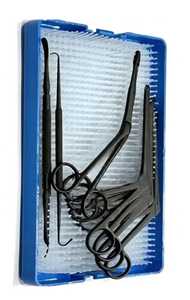
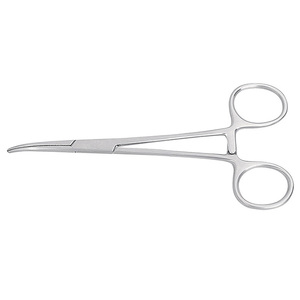

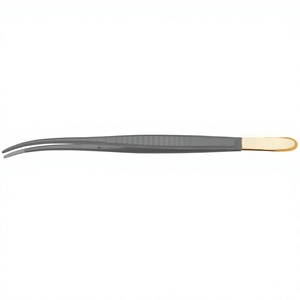
1. Executive Summary & Metallurgy Architecture of German Steel Medical Tools
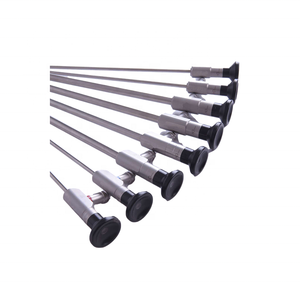
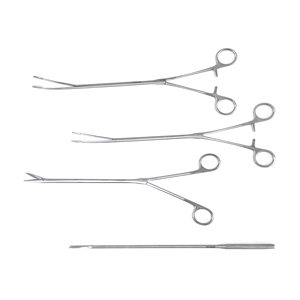
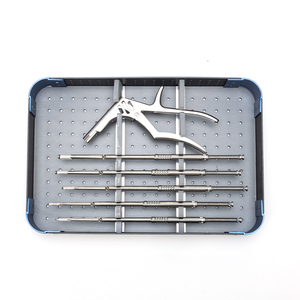
In modern surgical practices—spanning minimally invasive laparoscopy, neurosurgical spine interventions, thoracoscopic VATS, and delicate ENT FESS procedures—the mechanical integrity of surgical instruments directly dictates clinical outcomes. Hospital procurement committees, global medical equipment distributors, and OEM brand managers increasingly seek China-based manufacturing partners capable of integrating genuine German stainless steel alloys (specifically DIN 1.4021, DIN 1.4117, AISI 420A/B/C/D, and AISI 440C) with advanced computer numerical control (CNC) machining and micro-laser welding technologies.
China's medical instrument manufacturing infrastructure has undergone a systemic technological evolution over the past decade. By pairing imported German raw steel billets with local high-precision 5-axis CNC grinding, EDM wire-cutting, and automated vacuum heat-treatment furnaces, top tier Chinese OEM manufacturers deliver Operating Room (OR) grade surgical instruments that meet or exceed European standards (CE MDR 2017/745) at a fraction of traditional European production costs. This technical whitepaper analyzes the procurement dynamics, metallurgical specifications, manufacturing processes, and future development trends defining the global supply chain for German steel instruments.
2. Metallurgical Superiority & Heat Treatment Engineering
The term "German Steel" in surgical manufacturing denotes specialized high-martensitic and austenitic stainless steel grades formulated for extreme hardness, superior edge retention, flexural resilience, and exceptional corrosion resistance during repeated steam autoclave sterilization cycles (134°C at 2.1 bar).
To achieve optimal performance across diverse clinical applications, leading Chinese manufacturers select specific German steel grades tailored to the mechanical demands of each instrument category:
| German Steel Grade | AISI / ASTM Equivalent | Chemical Composition Highlights | Target Rockwell Hardness | Primary Clinical Application |
|---|---|---|---|---|
| DIN 1.4021 | AISI 420A | Cr 12.0-14.0%, C 0.16-0.25% | 45 - 48 HRC | Hemostatic Forceps, Tissue Clamps, Retractors |
| DIN 1.4028 | AISI 420B | Cr 12.5-14.5%, C 0.26-0.35% | 48 - 52 HRC | Surgical Scissors, Needle Holders, Rongeurs |
| DIN 1.4117 | AISI 420 Mod / X50CrMoV15 | Cr 14.0-15.0%, Mo 0.5-0.8%, V 0.1-0.2% | 54 - 58 HRC | Microsurgical Blades, High-Precision Bone Cutting Tools |
| DIN 1.4125 | AISI 440C | Cr 16.0-18.0%, C 0.95-1.20%, Mo 0.75% | 58 - 62 HRC | Osteotomes, Chisels, Heavy-Duty Neurosurgical Cutters |
| Tungsten Carbide (TC) Inserts | WC-Co Composite | Tungsten Carbide + 6-10% Cobalt Matrix | 70 - 74 HRC (HV 1200) | SuperCut Scissor Edges, Needle Holder Jaw Inserts |
Vacuum Heat Treatment & Passivation Kinetics: Raw steel alone does not guarantee instrument longevity. Superior Chinese manufacturers utilize computer-controlled vacuum heat-treatment furnaces. The steel is heated to austenitizing temperatures (1000°C–1050°C), followed by nitrogen gas quenching and double-tempering to relieve internal lattice stresses. This guarantees uniform microstructural conversion into fine-grained martensite without surface decarburization.
Subsequent chemical passivation per ASTM F1089 standards (including Citric Acid or Nitric Acid immersion) removes free iron particles deposited during machining. This promotes the rapid formation of a passive, self-healing Chromium Oxide ($\text{Cr}_2\text{O}_3$) layer spanning 2–5 nanometers in thickness, ensuring complete immunity against pitting and crevice corrosion during enzymatic cleaning and autoclaving.
Enterprise Manufacturing & OEM Capabilities
State-of-the-Art Production Technologies Driving Global Surgical Supply Chains
5-Axis CNC & Wire EDM Machining
Sub-micron tolerances for complex multi-articulating laparoscopic handles, rotatable intervertebral rongeurs, and endoscopic biopsy forceps jaws.
Tungsten Carbide Gold-Handle Bonding
Proprietary vacuum brazing technique securing Tungsten Carbide jaw inserts onto needle holders and scissors, guaranteeing 500,000+ suture gripping cycles without jaw slip.
Insulated Electrosurgical Coating
Advanced Onyx dielectric ceramic and polymer insulation for monopolar/bipolar coagulation forceps, preventing thermal lateral damage during delicate breast and neck dissection.
Private Labeling & Laser UDI Marking
High-resolution fiber laser engraving for custom brand logos, catalog numbers, batch codes, and ISO 15459 compliant 2D DataMatrix Unique Device Identification (UDI).
3. Future Trends in Medical Instrument Procurement & Development (2025–2035)
As global healthcare systems contend with tightening budgets, stringent infection control mandates, and ESG (Environmental, Social, and Governance) sustainability requirements, the surgical instrument procurement landscape is shifting rapidly. Global hospital networks and distributors must adapt to five major technological and commercial trends:
1. Minimally Invasive & Micro-Robotic Tooling Transition: Traditional open-surgery instruments are increasingly giving way to specialized 3mm and 5mm endoscopic, laparoscopic, and VATS (Video-Assisted Thoracoscopic Surgery) instruments. China’s leading German steel manufacturers are investing heavily in flexible joint articulation mechanisms, rotatable shafts, and modular designs that allow rapid disassembly for cleaning. Furthermore, micro-instruments designed for robotic surgical arms require miniaturized, ultra-high-tensile stainless steel components with tolerances within $\pm 0.005\text{ mm}$.
2. PVD Black Oxide & Titanium Nitride (TiN) Nano-Coatings: Standard satin or mirror finishes are being augmented by Physical Vapor Deposition (PVD) surface treatments. Ceramic-based Titanium Aluminum Nitride (TiAlN) and Diamond-Like Carbon (DLC) coatings provide surface hardness exceeding 2500 HV. In ophthalmic, ENT, and neurosurgery, non-reflective PVD black instruments eliminate glare under high-intensity operating theatre microscopes while extending cutting edge sharpness by up to 300% compared to uncoated stainless steel.
3. Smart Inventory Management via Direct Laser UDI Marking: Under the European Union Medical Device Regulation (EU MDR 2017/745) and United States FDA regulations, direct part marking (DPM) of UDI codes is mandatory for all reusable medical devices. Procurement directors now prioritize suppliers offering high-contrast, corrosion-resistant fiber laser DataMatrix codes. This enables automated hospital CSSD (Central Sterile Supply Department) tracking, monitoring individual instrument usage cycles, sharpening history, and autoclave exposure.
4. Total Cost of Ownership (TCO) & Hybrid Single-Use Strategies: While reusable OR-grade German steel tools offer the lowest per-procedure cost over a 10-year lifespan, reprocessing costs in Western hospitals have escalated due to labor and utility expenses. Consequently, procurement strategies are evolving toward a hybrid model: adopting high-grade reusable German steel instruments for core surgical sets, paired with sterile single-use disposable sets for outpatient clinics, emergency departments, and field surgical units.
5. Sustainable Circular Manufacturing & Metal Injection Molding (MIM): Environmental sustainability is compelling manufacturers to adopt closed-loop metal recycling and eco-friendly passivation chemistry (replacing nitric acid with biodegradable citric formulations). Simultaneously, Metal Injection Molding (MIM) technology using German stainless steel powders enables mass production of complex surgical jaws and handles with 98%+ raw material utilization, drastically reducing energy consumption and material waste.
4. Quality Assurance Protocol & Regulatory Compliance
To guarantee zero-defect delivery across international borders, top Chinese German steel instrument manufacturers operate complete Quality Management Systems certified under ISO 13485:2016 and ISO 9001. Every production lot undergoes a rigorous six-stage quality verification process prior to export dispatch:
- Spectrometric Material Verification: Optical Emission Spectrometry (OES) analysis of incoming German steel raw billets to confirm chemical composition compliance (Cr, C, Mo, V concentrations).
- Dimensional Optical Inspection: Automated 2D visual measuring machines verify critical dimensions, jaw alignment, serration pitch, and box-lock tolerances.
- Rockwell Hardness Testing (HRC): Micro-hardness testing across critical stress points (cutting edges, ratchets, and spring blades) to verify proper heat-treatment tempering.
- Corrosion Resistance Testing (ASTM F1089): Sample batch testing using Boiling Water Corrosion Tests, Copper Sulfate Immersion, and Salt Spray Chamber exposure to prove passive film stability.
- Functional Cutting & Clamping Tests: 100% manual testing of scissors against multi-layer latex sheets and tissue simulators; alignment check of ratchets under specified tension loads.
- Cleanroom Packaging & Bioburden Control: Final ultrasonic cleaning, drying, and primary packing within ISO Class 7 or Class 8 cleanroom environments.
Frequently Asked Procurement Questions (FAQ)
Technical & Commercial Insights for Hospital Buyers, OEM Partners & Importers
Q1: How do Chinese manufacturers verify that genuine German steel is used?
Leading Chinese manufacturers source raw stainless steel rods and strip coils directly from accredited German mills (such as Zapp Precision Metals or Saarstahl). Mill Test Certificates (MTC) per EN 10204 3.1 detailing heat numbers and chemical analysis are provided with every batch, backed by independent third-party OES spectrometer testing upon factory arrival.
Q2: What is the typical service lifespan of German steel surgical scissors vs standard steel?
Standard AISI 410/420 surgical scissors typically withstand 100 to 200 autoclave cycles before requiring re-sharpening. High-martensitic German steel (DIN 1.4117 / X50CrMoV15) or Tungsten Carbide SuperCut scissors maintain factory-sharp cutting performance over 2,000+ steam sterilization cycles when properly cleaned and lubricated.
Q3: What regulatory documentation is provided for hospital procurement tenders?
We provide full technical documentation dossiers, including ISO 13485:2016 Quality Certificates, CE Mark Declarations of Conformity (under EU MDR 2017/745), FDA Establishment Registration & Device Listings, ASTM F1089 Passivation Test Reports, Biocompatibility (ISO 10993) reports, and IFU (Instructions for Use) manual templates.
Q4: Can you manufacture custom surgical instruments based on samples or CAD drawings?
Yes. Our OEM/ODM engineering department utilizes SolidWorks and AutoCAD to translate customer 3D models, physical prototypes, or surgeon sketches into production tooling. Prototyping takes 14–21 days, followed by pre-production sample approval prior to volume manufacturing.
Q5: What are the Minimum Order Quantities (MOQ) for custom OEM orders?
For standard catalog instruments with custom laser marking, MOQs start as low as 20 to 50 pieces per item. For completely custom-forged patterns or specialized complex assemblies (e.g., rotatable neurosurgical rongeurs), initial MOQs typically range between 100 and 300 pieces depending on tooling requirements.
Q6: How is instrument rusting prevented during storage and shipping?
All instruments undergo automated ultrasonic cleaning, neutral water rinsing, chemical passivation (citric/nitric acid), and complete hot-air drying. They are lubricated with medical-grade water-soluble instrument milk and vacuum-sealed with VCI (Vapor Corrosion Inhibitor) packaging to ensure multi-year shelf life in hot and humid tropical logistics environments.
Ready to Partner with China's Premier German Steel Instrument Manufacturer?
Request technical specifications, sample evaluations, or direct factory quotation for your hospital tender or OEM distribution network.
Inquire Now