
Featured Operative & Surgical Solutions
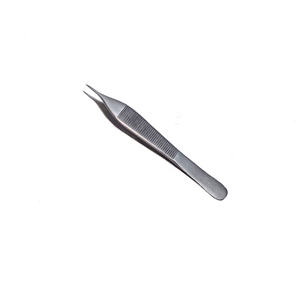
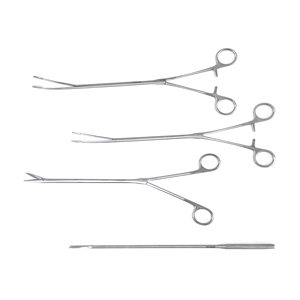

Operative Dentistry & Metallurgical Standards in Restorative Care
An authoritative guide to material selection, surface engineering, and procurement efficiency for hospital networks, dental distributors, and B2B OEM brand owners.
The Evolution of Restorative Tooling Chemistry
Modern clinical operative dentistry demands non-yielding mechanical integrity under repetitive tactical loading. Restorative dental instruments—encompassing composite pluggers, burnishers, carving spatulas, and matrix tensioning forceps—are subject to severe mechanical shear stresses and corrosive autoclave environments (134°C saturated steam at 2.1 bar pressure).
As a leading China Top Restorative Dental Instruments Supplier & Exporter, our manufacturing paradigm incorporates high-grade martensitic stainless steel alloys (AISI 420 and AISI 410) alongside micro-grained Tungsten Carbide (TC) inserts. By controlling carbon composition between 0.15% and 0.40% and chromium at 12% to 14%, our instruments achieve an ideal balance of Rockwell Hardness (HRC 52–56) and ductility, mitigating tip fracture during composite packing and amalgams condensation.
Surface Nano-Engineering & Anti-Stick Coatings
One of the persistent challenges facing restorative clinicians during Class I through Class V cavity restorations is composite pullback—where uncurred resin matrices adhere to instrument tips. To solve this, our advanced production lines deploy Vacuum Physical Vapor Deposition (PVD) to coat instrument working ends with Titanium Nitride (TiN), Titanium Aluminum Nitride (TiAlN), and Diamond-Like Carbon (DLC).
These ultra-hard ceramic nano-coatings exhibit a friction coefficient below 0.1, rendering working surfaces completely hydrophobic and oleophobic. Clinicians achieve superior anatomical contouring without sticky resin drag, while procurement managers benefit from instruments that exhibit 300% longer operational life than un-coated carbon steel alternatives.
Metallurgical Standard Matrix
Comparative analysis of medical-grade alloys utilized across our restorative and surgical instrument lines.
| Alloy Grade | Metallurgical Structure | Hardness (Rockwell) | Corrosion Resistance | Primary Clinical Application |
|---|---|---|---|---|
| AISI 420 (Martensitic) | High Carbon / High Chromium Steel | HRC 52 – 56 | Very High | Restorative Carvers, Excavators, Scalers, Surgical Scissors |
| AISI 410 (Martensitic) | Medium Carbon Stainless Steel | HRC 44 – 48 | High | Extraction Forceps, Matrix Retainers, Pliers, Handles |
| Tungsten Carbide (TC Inserts) | Sintered WC-Co Matrix (94% WC) | HRA 89 – 91 | Exceptional | Needle Holder Jaws, Micro-Tissue Forceps, Wire Cutters |
| AISI 304 (Austenitic) | 18/8 Nickel-Chromium Non-Magnetic | HRB 80 – 90 | Maximum | Instrument Trays, Sterilization Cassettes, Hollow Handles |
| Titanium Ti-6Al-4V (Grade 5) | Alpha-Beta Titanium Alloy | HRC 36 – 40 | Immune to Rust | Implant Surgery, Non-Magnetic Diagnostic Probes |
Enterprise OEM & Supply Chain Excellence
Bridging clinical insight, master artisan craftsmanship, and large-scale industrial manufacturing capabilities.
Global Export Infrastructure
With an export footprint spanning more than 120 countries across North America, the European Union, the Middle East, and Asia-Pacific, we are well-versed in global regulatory compliance. We provide full customs clearance dossiers, Certificate of Origin (COO), and DDP/FOB/CIF shipping agreements tailored for regional hospital tenders.
OEM & Private Label Customization
We empower healthcare brands and private label distributors by providing end-to-end OEM production. From custom fiber-optic laser etching (logos, item codes, lot tracking numbers) to bespoke blister packaging and custom procedure tray assembly, your brand identity is maintained with zero compromise on precision engineering.
Full Lifetime Guarantee
Every reusable instrument manufactured in our facilities undergoes rigorous 100% quality inspection. We test jaw alignment, ratchet engagement, cutting sharpness, and passivation layer integrity via salt spray tests. All reusable items come backed by a comprehensive warranty against material or manufacturing defects.
Future Procurement & Development Trends (2025–2035)
Navigating regulatory evolution, ergonomic design shifts, and supply chain optimization in global medical equipment trade.
1. Ergonomic Hollow-Handle Engineering & Clinician Health
Repetitive strain injuries (RSI) and Carpal Tunnel Syndrome (CTS) represent major occupational hazards for practicing dental professionals. Procurement trends indicate a sharp migration toward ergonomic, large-diameter hollow handles (9.5mm to 11mm) constructed from ultra-lightweight stainless steel or medical-grade silicone overlays.
By shifting weight forward while reducing overall tool mass by up to 35%, these instruments significantly decrease tactile pinch force. Our R&D division has perfected inner-bore counterbalancing, allowing clinicians to maintain delicate tactile sensitivity during fine restorative sculpting while minimizing hand fatigue during full-day clinical schedules.
2. Strict EU MDR 2017/745 Compliance & Supply Chain Traceability
The implementation of the European Union Medical Device Regulation (EU MDR 2017/745) has reshaped international medical instrument procurement. Non-compliant suppliers lacking Unique Device Identification (UDI) laser marking and documented clinical evaluation datasets are rapidly being excluded from EU and North American procurement networks.
Our manufacturing framework incorporates high-precision 2D DataMatrix laser engraving directly onto each instrument. This enables seamless integration into hospital central sterile supply departments (CSSD), providing full digital tracking from manufacturing heat treatment lots to bedside procedure usage.
3. Hybrid Reusable vs. Single-Use Procurement Models
While premium operating room procedures continue to rely on high-durability reusable stainless steel instruments, emergency departments and high-turnover outpatient clinics are adopting hybrid supply strategies. Sterile, single-use procedure packs eliminate expensive reprocessing labor, chemical exposure, and cross-contamination risks.
As a flexible manufacturer, we support hospital procurement officers by offering dual-stream sourcing: high-tier autoclavable German-steel tools for core operating suites, alongside pre-sterilized, single-use emergency suture and restorative sets packed in cleanroom Class 10,000 environments.
4. Synergistic Sourcing: China Scale + Sialkot Craftsmanship
The modern supply chain for medical tools relies on strategic regional synergies. By combining China's advanced industrial automation, high-grade raw alloy supply, and state-of-the-art PVD coating infrastructure with Sialkot's centuries-old legacy of hand-forging and fine tip alignment, buyers secure unmatched cost-efficiency without sacrificing micro-precision quality.
This hybrid manufacturing model allows us to offer direct factory pricing, lower minimum order quantities (MOQ), and rapid prototyping turnarounds for custom clinical instrument designs.
Frequently Asked Questions (FAQ)
Detailed answers to common questions regarding instrument sourcing, material compliance, OEM workflows, and bulk delivery.
Ready to Optimize Your Medical Instrument Procurement?
Contact our engineering and global export team today for factory-direct quotations, technical documentation, or customized OEM sample requests.