Featured Surgical Micro Instruments & Systems
Explore our ISO-compliant micro-surgery tools, ENT endoscopy devices, precision micro-scissors, and medical sterilization equipment engineered for hospital OR standards.
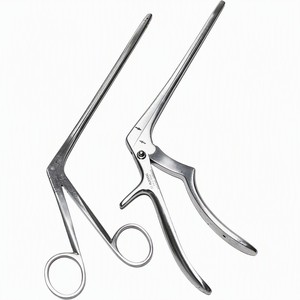
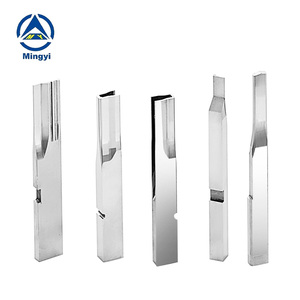
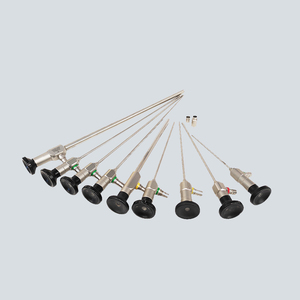

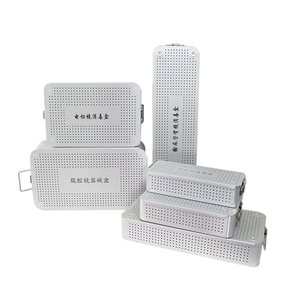
Metallurgical Precision & Manufacturing Architecture
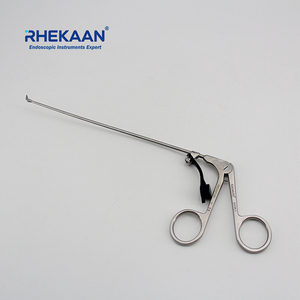
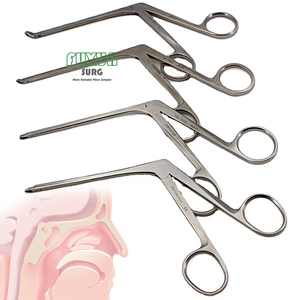
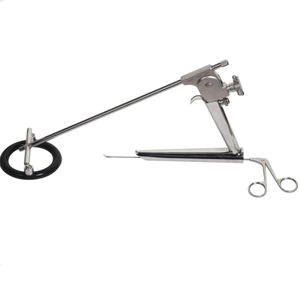
As a leading China surgical micro instruments manufacturer, our industrial capability is rooted in material science, multi-axis micro CNC milling, and hand-finished tension calibration under stereomicroscopes.
Medical Steel & Titanium Alloys
We exclusively forge using high-grade German and French martensitic stainless steel (AISI 420A/420B/420C) for cutting instruments to ensure optimal Rockwell Hardness (50–56 HRC). For non-magnetic micro-neurosurgical forceps, Grade 5 Titanium alloy (Ti-6Al-4V ELI) is deployed for extreme lightness and zero magnetic field interaction.
Sub-micron Grain Refinement5-Axis Swiss Micro CNC Machining
Precision micro-forceps jaws, crocodile action joints, and delicate ENT rongeurs require sub-millimeter tolerances. Our 5-axis CNC machining centers enable seamless manufacturing of complex box locks, micro-teeth serrations, and flexible joint mechanisms without structural micro-fractures.
Tolerance ±0.005mmPassivation & Surface Integrity
To safeguard against autoclave corrosion, every instrument undergoes ultrasonic cleaning, citric/nitric acid passivation according to ASTM A967 standards, and optional electropolishing. This builds a continuous chromium-oxide passive layer that withstands over 1,000 steam sterilization cycles.
ASTM A967 VerifiedEngineering Benchmark: China Factory vs. Global Standards
A clear quantitative comparison showing why major European medical brands trust our OEM/ODM micro-instrument manufacturing infrastructure.
| Specification Parameter | China Top Tier OEM (Our Standard) | European Legacy Brands | Standard Commodity Tools |
|---|---|---|---|
| Material Grade | German AISI 420 / Ti-6Al-4V Grade 5 | German AISI 420 / Stainless Steel | Local AISI 410 / Generic Steel |
| Micro-Hardness (HRC) | 52 – 56 HRC (Custom Tempering) | 50 – 54 HRC | 42 – 46 HRC (Prone to bending) |
| Jaw Alignment & Clearance | < 0.01mm (Stereo-Microscope verified) | < 0.015mm | > 0.05mm (Visible light gap) |
| Passivation Process | Dual-Stage Nitric/Citric (ASTM A967) | Standard Nitric Acid Bath | Basic Washing (Prone to rust) |
| Autoclave Life Cycle | 1,200+ Cycles (With guarantee) | 1,000+ Cycles | < 150 Cycles |
| OEM Branding & Packaging | Fiber Laser Etching & Custom Kits | Fixed Branding Only | No OEM Customization |
Future Procurement Trends for Surgical Micro Instruments (2025–2032)
Strategic intelligence for healthcare purchasing managers, medical equipment distributors, and hospital procurement boards navigating shifting global supply chains.
1. Shift Toward Hybrid Reusable/Single-Use Sets
Hospitals are moving away from traditional pure-reusable models due to rising sterilization costs and cross-infection risks. Global buyers now favor modular sets: ultra-durable titanium handles combined with high-precision disposable micro-tips for ENT, ophthalmology, and neurosurgery.
2. Stringent EU MDR & FDA Traceability
With the full implementation of EU MDR 2017/745 and FDA UDI (Unique Device Identification) mandates, contract manufacturers must provide complete material traceability, heat-treatment logs, and micro-laser UDI matrix barcodes on every micro-forceps and scissor shaft.
3. Growth of Minimally Invasive Micro-Surgery
Surgical procedures are rapidly migrating toward endoscopic micro-access (sinuscopy, otology, micro-laryngoscopy). This has expanded the demand for ultra-long shaft micro instruments (230mm+) with micro-crocodile teeth and 360-degree rotating shaft mechanisms.
Product Development & Technological Trends
How next-generation engineering and surface treatments are revolutionizing surgical micro-instrument longevity and ergonomic performance.
DLC (Diamond-Like Carbon) Micro Coatings
By applying black DLC physical vapor deposition (PVD) coatings to micro scissors and nasal tissue forceps, surface hardness reaches > 2,500 HV. This eliminates glare under intense OR lights, reduces friction between moving micro-joints, and extends edge sharpness threefold.
Tungsten Carbide (TC) Inlay Micro-Jaws
Integrating micro-grain Tungsten Carbide inserts into needle holders and cutting punches ensures maximum grip on 7-0 to 10-0 micro-sutures. The pyramid-shaped gold-plated handle design allows surgeons to maintain tactile feel without slippage.
Integrated Fiber-Optic Micro-Channels
Modern laryngoscope and sinuscope instruments now embed high-lux German glass fiber optic bundles directly within the stainless structural chassis, delivering shadowless illumination directly to the distal surgical field.
Enterprise Strength & Manufacturing Capability
Combining decades of surgical instrument craftsmanship with high-capacity digital manufacturing to power global healthcare brands and hospital tenders.
ISO 13485 & CE Certified Production
Our state-of-the-art facility operates under strict ISO 13485 Medical Device Quality Management System rules. Every production batch is backed by material mill test reports (MTR), bio-compatibility validation, and CE conformity documentation for frictionless global distribution.
Contact UsComplete OEM / ODM Private Label Service
We provide end-to-end turnkey solution for brand owners, including custom blueprint CAD design, rapid 3D sample prototyping, micro fiber laser marking, custom sterile packaging, and specialized aluminum sterilization container assembly.
Contact Us100% Quality Assurance & Lifetime Warranty
Every single micro instrument is inspected under stereomicroscopes by master technicians to verify tension, tip alignment, micro-serration meshing, and smooth spring action. Reusable instruments carry a full warranty against material and manufacturing defects.
Contact UsFrequently Asked Questions (Procurement FAQ)
Addressing key technical, regulatory, and commercial inquiries for hospital buyers, supply chain directors, and medical device distributors.
Q1: What medical stainless steel grades are used for your micro surgical instruments?
We primarily utilize high-grade German and French martensitic stainless steel grades (AISI 420A, 420B, and 420C) for cutting tools, scissors, and forceps to achieve high Rockwell hardness (50-56 HRC) and sharp edge retention. Non-cutting components and handle shafts utilize austenitic AISI 304 or 316L stainless steel for maximum ductility and chemical resistance. For non-magnetic micro-neurosurgery, Grade 5 Titanium (Ti-6Al-4V) is available upon request.
Q2: Are your surgical micro instruments compliant with ISO 13485 and CE MDR regulations?
Yes. Our factory is fully certified under ISO 13485:2016 Medical Devices Quality Management System. Our products comply with European CE Marking requirements (Directive 93/42/EEC and Regulation EU 2017/745 MDR). Complete technical files, declarations of conformity, and ISO certificate copies are provided to authorized procurement teams for regulatory registration in destination markets.
Q3: Can you manufacture custom surgical micro instruments based on technical drawings or physical samples?
Absolutely. As a top China OEM/ODM manufacturer, we specialize in custom micro-instrument engineering. Our engineering team can work from CAD models, 2D technical drawings, or physical samples. We provide rapid prototyping (sample delivery within 14 to 21 days) and conduct pilot batch testing prior to full-scale volume manufacturing.
Q4: How do you guarantee anti-corrosion performance for autoclave reprocessing?
Every instrument undergoes a multi-stage surface passivation treatment conforming to ASTM A967 and ISO 16061 standards. Following ultrasonic degreasing, instruments pass through controlled nitric or citric acid baths to remove free iron and form a resilient chromium oxide passive film. We perform boiling water corrosion tests and copper sulfate immersion tests on every production batch to verify resistance against autoclave pitting and rusting.
Q5: What laser marking options and custom private labeling services are available?
We offer fiber laser etching capable of marking high-resolution brand logos, custom part numbers, lot batch numbers, and DataMatrix UDI barcodes onto shafts or handle surfaces as small as 1.5mm. We also supply customized packaging, color-coded anodized rings, and custom-molded silicone instrument trays within aluminum sterilization boxes.
Q6: What is the standard minimum order quantity (MOQ) and lead time for bulk orders?
For standard catalog items (such as ENT micro nasal forceps, crocodile ear forceps, and Blakesley rongeurs), our MOQ is 10 to 20 units per item code. For custom OEM micro instruments, MOQ typically starts at 50 units. Standard production lead time is 3 to 4 weeks depending on order complexity and laser marking requirements. Expedited shipping via DHL/FedEx or air freight is arranged globally.
Q7: Do you supply complete sterilization box containers and instrument trays for procedure sets?
Yes. We supply heavy-duty anodized aluminum sterilization containers, stainless steel wire mesh baskets, and heat-resistant silicone holding mats designed specifically for micro-surgical, ENT, laryngoscopy, and hysterectomy instrument sets. Our sterilization solutions comply with NSF and ISO 11607 packaging standards for steam and plasma autoclaving.