
Featured Surgical & Endoscopic Equipment
ISO 13485 Certified Medical Grade Reusable & Autoclavable Surgical Solutions
Industry Executive Summary: China's Role in Global Laparoscopic Manufacturing
Minimally Invasive Surgery (MIS) has transformed surgical healthcare globally, significantly decreasing patient trauma, reducing hospital length-of-stay, and mitigating postoperative infection risks. At the core of this surgical revolution is the precision engineering of laparoscopic instruments—ranging from modular graspers, Maryland dissectors, and scissors to bipolar forceps, trocars, and HD endoscopes.
China has firmly established itself as the premier manufacturing ecosystem for wholesale laparoscopic instruments. Leveraging multi-decade investments in CNC Swiss micro-machining, automated PEEK shaft insulation coating, and ISO 13485 cleanroom assembly, Chinese original equipment manufacturers (OEMs) and original design manufacturers (ODMs) supply over 65% of the worldwide demand for general surgical, gynecological, urological, and thoracic minimally invasive tools. This technical whitepaper analyzes the mechanical, metallurgical, regulatory, and procurement framework defining modern laparoscopic instrument production in China.
Metallurgical Engineering & Material Standards in Laparoscopic Hardware
The operational efficiency of a 5mm or 10mm laparoscopic hand instrument depends primarily on metallurgical composition and heat-treatment specifications. Premier Chinese manufacturers source surgical-grade alloys that strictly comply with international medical device standard ASTM F899.
1. Martensitic Stainless Steels (AISI 420 / 440C)
Utilized extensively in cutting-edge components such as curved monopolar scissors and biopsy punch forceps. High carbon content allows precise induction hardening up to 52-56 HRC (Rockwell Hardness). This ensures that microscopic blade edges maintain scissor shear integrity across hundreds of surgical re-sterilizations without micro-burring.
2. Austenitic Stainless Steels (AISI 316L)
Selected for non-cutting outer cannulas, handle shafts, and structural linkage pins. Grade 316L offers superior molybdenum-enhanced resistance against pitting corrosion induced by saline exposure, enzymatic detergents, and repeated steam autoclaving cycles at 134°C (273°F).
3. Tungsten Carbide (TC) Inlays
Featured on needle holders and grasping jaws. TC jaw inserts exhibit an extraordinary hardness rating exceeding 70 HRC. Laser-welded to the stainless-steel jaw chassis, TC inserts provide non-slip traction on delicate suture needles (ranging from 2-0 to 6-0) while eliminating jaw slippage or suture shredding.
Engineering Benchmark: High-performance laparoscopic graspers must withstand a minimum tactile jaw closure force of 45 N without mechanical linkage deformation, while maintaining total electric insulation up to 3,000V Peak Monopolar RF energy.
Future Sourcing & Procurement Trends in Laparoscopic Instrumentation (2025–2030)
Procurement directors, hospital purchasing groups, and medical device distributors must navigate evolving technologies, regulatory directives, and sustainability goals. Key structural trends impacting global B2B procurement include:
1. Modular 3-Piece Demountable Architecture
Healthcare facilities are rapidly replacing non-dismountable legacy instruments with 3-piece modular designs (Insert, Outer Sheath, Ergonomic Handle). Modular architecture allows complete flushing of the internal lumen, preventing bio-burden buildup and drastically simplifying ultrasonic cleaning routines.
2. Advanced Dielectric PEEK Insulation
Stray energy burns caused by insulation breakdown remain a major intraoperative risk. Leading Chinese manufacturers are shifting from shrink-wrap PTFE to electrostatically deposited PEEK (Polyether Ether Ketone) polymer coatings, raising electrical breakdown resistance above 5,000 Volts.
3. EU MDR 2017/745 & FDA UDI Compliance
Regulatory harmonization is mandatory. Quality-focused Chinese suppliers now deliver complete technical documentation, full material traceability (heat-lot certificates), automated laser-etched Unique Device Identification (UDI) barcodes, and biological safety testing (ISO 10993).
Comparative Analysis: Reusable Modular vs. Single-Use Disposable Laparoscopic Instruments
A vital strategic decision for B2B procurement officers centers on balancing environmental impact, clinical performance, and total cost of ownership (TCO). Below is a quantitative evaluation metric:
| Evaluation Parameter | Reusable Modular Systems (3-Piece) | Single-Use Disposable Instruments | Hybrid Reprocessable Models |
|---|---|---|---|
| Average Unit Cost (USD) | $120 - $280 (High Initial Capex) | $15 - $45 (Low Initial Capex) | $45 - $85 (Moderate Capex) |
| Cost Per Procedure (100 Cycles) | $1.80 - $3.50 (Extremely Low TCO) | $15 - $45 (Fixed Recurring Opex) | $4.50 - $9.00 (Balanced TCO) |
| Environmental Impact | 92% Carbon Offset vs Disposables | High Medical Bio-waste Output | Medium Waste Stream Impact |
| Cleaning & Sterilization | Requires Autoclaving & Flushing | Zero Reprocessing (Pre-Sterile) | Reusable Handle / Disposable Tip |
| Tactile Feedback & Rigidity | Superior (Machined Stainless/Titanium) | Moderate (Flexible Polymer Shaft) | High (Rigid Internal Rod) |
Factory Advantage: Precision Engineering & Direct OEM Manufacturing
Partnering directly with established Chinese laparoscopic instrument manufacturers provides global buyers with immense competitive advantages. By bypassing intermediary trading layers, medical device distributors secure factory-direct pricing, customized shaft lengths (such as 280mm pediatric, 330mm standard, and 450mm bariatric configurations), custom jaw profiles, and private-label branding.
5-Axis CNC Swiss Micro-Machining
Tolerances maintained down to ±0.005mm. Ensures smooth jaw actuation, crisp ratcheting mechanisms, and seamless 360-degree thumb-wheel rotation without mechanical play or backlash.
100,000-Class Cleanroom Assembly
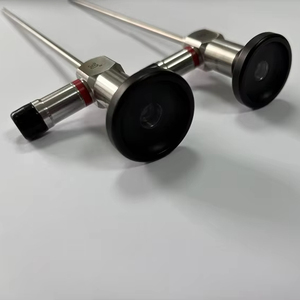
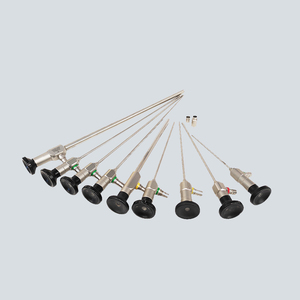
Endoscopic cameras, rigid scopes, and sterile single-use graspers are assembled in environmentally controlled ISO Class 7 cleanrooms to prevent particulate contamination and bio-burden contamination.
Rigorous Quality Assurance Testing
Every production batch undergoes comprehensive quality gates: Passivation testing (ASTM F1083), Corrosion testing (boiling water & copper sulfate immersion), and 100% dielectric insulation breakdown verification.
Laparoscopic Instrument Classification & Surgical Applications
Professional procurement requires deep familiarity with instrument sub-categories. A standard laparoscopic lap pack includes:
1. Grasping Forceps & Dissectors
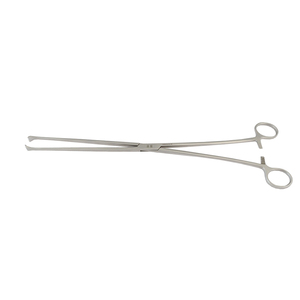
- Maryland Dissector: Curved, fine-tipped jaws with cross-serrations designed for blunt dissection and delicate vessel isolation.
- Fenestrated Grasper: Features a wide central opening in the jaw, reducing weight and providing gentle, low-pressure grasping of delicate tissue, such as bowel loops.
- Johann & Clinch Graspers: Deeply serrated atraumatic jaws engineered for secure gallbladder or appendix traction during cholecystectomy or appendectomy procedures.
2. Laparoscopic Scissors
- Metzenbaum Curved Scissors: The industry standard for sharp cutting and micro-dissection. Available with single-use monopolar connection for simultaneous tissue transection and electrocautery.
- Hook Scissors: Specialized tip geometry designed to anchor around thin fibrous bands or suture strands before cutting, preventing tissue slippage.
3. Trocar Systems & Access Ports
- Pyramidal vs. Optical Trocars: Optical direct-visualization trocars allow surgeons to monitor abdominal wall layer penetration via scope camera, minimizing vascular puncture risks.
- Silicon Valve Seals: Ensure zero-leakage pneumoperitoneum retention up to 20 mmHg intra-abdominal pressure.
B2B Sourcing FAQ: Laparoscopic Instrument Procurement
Expert Answers to Crucial Engineering, Quality, Logistics, and Regulatory Questions
Standard catalog items (such as 5mm Maryland graspers or Metzenbaum scissors) typically require an MOQ of 10 to 20 units. For custom OEM/ODM private-label requests featuring laser logo engraving and custom box packaging, MOQs generally start at 50 to 100 units per item code.
Every monopolar instrument passes through automated inline spark dielectric testing. A high voltage (typically 3.5kV to 5kV AC) is applied along the entire length of the insulated shaft. Any microscopic pinhole or defect in the PEEK insulation causes current leakage, triggering immediate automated rejection.
For European Union importation, products must carry CE certification under EU MDR 2017/745, backed by an ISO 13485 certified Quality Management System. For North America, manufacturers must hold FDA 510(k) clearances or device listings, along with compliance to US FDA QSR 21 CFR Part 820.
Yes. While standard working shaft length is 330mm, Chinese OEM facilities regularly produce 200mm/280mm shafts for pediatric laparoscopy and extended 420mm/450mm shafts for bariatric procedures on obese patients.
Instruments undergo testing according to ISO 13402 and ASTM F1083 standards. Random samples from each lot undergo a 30-minute boil test followed by air drying, as well as copper sulfate dip testing, ensuring no rust formation, micro-pitting, or passive layer failure occurs.
Standard inventory items ship within 7 to 10 working days. Custom manufacturing orders involving raw material forging, precision CNC turning, heat treatment, passivation, laser etching, and final packaging typically require 25 to 35 calendar days.
Factory direct OEM services include high-precision fiber laser marking for company logos, part numbers, and UDI barcoding directly on metal handles or shafts. Packaging options range from individualized sterile blister trays to branded rigid color boxes with custom silicone tray inserts.