Featured Medical & Surgical Instruments
Explore our high-precision surgical forceps, scissors, sterilization trays, and specialized hospital equipment engineered to international standards.
1. Executive Overview: Metzenbaum Scissors in Modern Surgical Dissection
Metzenbaum scissors represent the definitive clinical standard for blunt tissue dissection and precise anatomical transection across cardiovascular, thoracic, gynecological, neurosurgical, and general surgical procedures. Unlike heavier Mayo scissors designed for cutting dense fascia, sutures, and tough ligaments, Metzenbaum scissors feature a characterized long shank-to-blade ratio, thin blunt-tipped blades, and an engineered fulcrum geometry. This structural design grants surgeons exceptional tactile feedback and micro-vessel control within deep body cavities.
As a leading China wholesale Metzenbaum scissors manufacturer and exporter, our production methodology integrates advanced metallurgical science, computer-controlled CNC machining, and manual artisan blade honing. Global hospital procurement directors, healthcare supply distributors, and private-label medical OEM brands require strict adherence to international regulatory metrics, including ISO 13485, CE mark conformity, and ASTM F899 surgical stainless steel specifications. This whitepaper establishes a comprehensive technical framework for evaluating structural metallurgy, manufacturing precision, procurement trends, and global sourcing strategies for Metzenbaum dissecting scissors.
"Technical Insight: The tactile sensitivity of a Metzenbaum scissor is directly governed by its pivot joint tolerance and the precision of its blade curvature radial tension. A deviation of even 0.02mm in pivot pin clearance results in tissue slipping or accelerated blade dulling during repetitive autoclaving."
Understanding user intent in medical instrument procurement requires balancing immediate unit acquisition costs against the total cost of ownership (TCO). Reprocessable operating room (OR) grade instruments must endure hundreds of steam sterilization cycles (134°C autoclaving) without experiencing intergranular corrosion, joint stiffness, or edge degradation. By optimizing vacuum heat treatment and surface passivation, leading Chinese manufacturing hubs deliver medical-grade scissors that rival traditional European brands while offering scalable wholesale pricing advantages.
2. Metallurgical Engineering, Blade Configurations & Manufacturing Standards
The performance, springiness, and edge longevity of Metzenbaum scissors depend fundamentally on the specific steel alloy selected and the heat treatment process applied. High-grade surgical scissors are forged primarily from martensitic stainless steel grades, such as AISI 420J2 (DIN 1.4021) or AISI 440C (DIN 1.4125). Martensitic alloys contain high carbon content combined with 12% to 14% chromium, enabling the metal to reach extreme hardness levels following quenching and tempering while retaining sufficient ductility to prevent brittle fracturing.
For demanding surgical environments, wholesale buyers routinely specify three distinct technological tiers of Metzenbaum scissors:
A. Standard Martensitic Stainless Steel Scissors (HRC 50–54): Forged from precision-machined AISI 420 stainless steel, passivated with nitric or citric acid treatments to remove free iron from the surface and generate a passive chromium oxide layer. Ideal for high-volume hospital wards, emergency departments, and standard surgical trays.
B. Tungsten Carbide (TC) Inserted Scissors (HRC 60–65): Featuring micro-welded tungsten carbide tiles along the cutting edges (distinguishable by gold-plated handles). Tungsten carbide provides an edge hardness up to five times greater than standard stainless steel, maintaining razor sharpness over thousands of tissue cuts and resisting wear from repetitive autoclave exposure.
C. SuperCut & Micro-Serrated Configurations (Black-Handled): Engineered with one razor-sharp blade edge and a counter-blade featuring microscopic serrations (30 to 50 teeth per inch). The micro-serrations anchor slick or delicate anatomical tissues, preventing slippage, while the razor edge performs an effortless, shearing cut with minimal lateral force.
| Specification Category | Standard OR-Grade Metzenbaum | Tungsten Carbide (TC) Metzenbaum | SuperCut Micro-Serrated Metzenbaum |
|---|---|---|---|
| Base Material Grade | AISI 420 / DIN 1.4021 Stainless Steel | AISI 420 + TC (W2C-Co Alloy) Inserts | AISI 420J2 + Hardened Edge Treatment |
| Blade Hardness (Rockwell) | HRC 50 – 54 | HRC 60 – 65 (TC Edge) | HRC 55 – 58 |
| Autoclave Endurance Cycle | 500+ Reprocessing Cycles | 2,000+ Reprocessing Cycles | 1,200+ Reprocessing Cycles |
| Cutting Mechanism | Dual Beveled Shear Action | Hardened Dual TC Precision Shear | Razor Edge + Anti-Slip Micro-Serration |
| Handle Identification | Polished / Satin Stainless Finish | Gold-Plated Ring Handles | Black-Plated Ring Handles |
| Primary Clinical Application | General Tissue Dissection | High-Volume Operating Rooms / Cardiovascular | Delicate Cosmetic, Plastic & Neuro Surgery |
During the manufacturing workflow, raw steel billets undergo hot drop forging, followed by precision CNC milling to shape the box lock or screw joint, shank length, and blade curvature. Curved Metzenbaum scissors require exact radial bending to ensure that the blades cross at a single dynamic contact point during closure—a mechanical property known as blade tensioning. Final finishing involves ultrasonic cleaning, automated passivation, laser marking for UDI tracking, and manual inspection by master instrument technicians.
Enterprise Manufacturing & Global Export Infrastructure
Leveraging deep industrial clusters, advanced metallurgy, and strict quality assurance frameworks to support global B2B procurement networks.
ISO 13485 & CE Compliance
Fully compliant with international medical device quality management systems, complete with technical documentation for EU MDR and US FDA 510(k) registrations.
Custom OEM / ODM Solutions
Full private-label customization including laser-etched logos, specialized shank lengths (11.5cm to 30cm), custom tip angles, and unique color-coded ring handles.
Strict Passivation & Boil Testing
100% of production batches undergo chemical passivation according to ASTM A967 and rigorous boiling water tests to guarantee absolute rust resistance in sterilization.
Direct Factory Wholesale Pricing
Eliminate unnecessary intermediary markups by sourcing directly from our integrated forging, CNC machining, and finishing facilities in China.
Global Logistics & Export Reach
Serving healthcare distributors, GPOs, and hospital chains across 120+ countries with complete export documentation, DDP, FOB, and CIF shipping terms.
Complete Catalog Consolidation
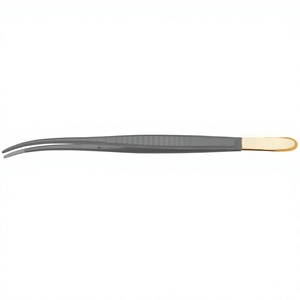
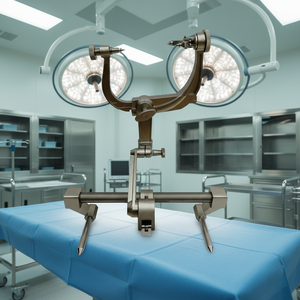
Consolidate your purchasing orders by sourcing Metzenbaum scissors alongside Rongeurs, Blakesley forceps, skull clamps, and sterilization trays under one roof.
3. Future Procurement & Technological Trends in Surgical Scissors (2025–2030)
The global market for general and specialty surgical instruments is undergoing rapid technological evolution driven by changing healthcare economics, stringent infection control mandates, and advancements in digital supply chain tracking. Procurement officers and hospital purchasing committees must adapt to four transformative industry trends when negotiating long-term supply contracts:
1. Mandatory Unique Device Identification (UDI) Laser Marking: Regulatory authorities including the US FDA, European Medicines Agency (EMA), and National Medical Products Administration (NMPA) now mandate direct part marking (DPM) on reusable surgical instruments. High-density 2D DataMatrix codes laser-engraved onto Metzenbaum shanks allow central sterile supply departments (CSSD) to track instrument processing cycles, repair histories, and sterilization compliance automatically.
2. Ecological & Automated Citric Acid Passivation: Traditional nitric acid passivation methods are increasingly being replaced by environment-friendly citric acid processes (ASTM A967 Citric IV/V formulations). Citric acid selectively dissolves surface iron without leaching essential chromium or nickel, resulting in superior corrosion resistance while minimizing hazardous chemical waste in manufacturing facility effluents.
3. Hybrid Manufacturing Models (Scale & Craftsmanship): Leading surgical instrument exporters are integrating automated robotic grinding for baseline blade profiles with traditional manual setting by experienced master craftsmen. Robot-assisted grinding ensures absolute symmetry and uniform shank dimensions across 10,000-piece production runs, while final tension setting ensures the delicate hand-feel that operating room surgeons demand.
4. Shift Toward High-Performance Surface Coatings: Titanium Nitride (TiN) and Diamond-Like Carbon (DLC) physical vapor deposition (PVD) coatings are establishing new performance benchmarks. These micro-thin ceramic coatings increase surface hardness to over HRC 80, dramatically reduce friction co-efficients during tissue dissection, and provide distinctive visual contrast under bright operating theatre LED illumination.
Frequently Asked B2B Procurement Questions
Direct technical and commercial answers tailored for hospital purchasing managers, medical equipment distributors, and OEM buyers.
What is the minimum order quantity (MOQ) for wholesale Metzenbaum scissors orders?
Our standard MOQ for stock Metzenbaum scissors patterns starts at 50 pieces per size/specification. For custom OEM private label requests featuring customized laser engraving, specific shank coatings, or specialized packaging, our typical starting MOQ is 100 to 200 pieces depending on production complexity.
How do Metzenbaum scissors differ functionally from Mayo dissecting scissors?
Metzenbaum scissors feature longer, thinner shanks relative to their delicate blades, designed specifically for soft tissue dissection and cutting in deep surgical fields. Mayo scissors possess heavier, thicker blades and shorter shanks engineered to cut tough fascia, tendons, dense connective tissue, and surgical sutures without blade distortion.
What stainless steel grades are utilized in your scissors manufacturing facility?
We primarily utilize high-grade martensitic stainless steel conforming to AISI 420 (J1/J2) and AISI 440C standards. On customer request for premium OR-grade lines, we import certified German steel (DIN 1.4021 / 1.4117) with full material test certificates (MTC) provided per batch.
Do you offer OEM private labeling and custom logo laser marking?
Yes. We provide complete OEM/ODM manufacturing services. We can laser-etch your company logo, proprietary catalog numbers, CE markings, and UDI 2D DataMatrix barcodes directly onto the instrument shank. Customized pouch packaging, box design, and sterile tray labeling are also available.
What testing procedures guarantee rust resistance and autoclave endurance?
All finished scissors undergo a multi-step quality assurance protocol including ultrasonic degreasing, automated chemical passivation according to ASTM A967 guidelines, a 30-minute boiling water test (ISO 7153-1 / ASTM F1089), and functional cutting tests using synthetic tissue sheets before final packing.
What is your typical turnaround time for sample evaluation and mass production?
Standard product samples can be dispatched within 3 to 5 business days. Custom OEM sample prototypes generally require 10 to 14 days for tooling setup and precision finishing. Mass wholesale production orders are typically fulfilled within 25 to 35 days depending on order volume and coating requirements.
How does your factory handle international regulatory compliance for global exports?
Our manufacturing facilities operate under a certified ISO 13485:2016 quality management system. We maintain complete technical documentation, declaration of conformity files, and material safety data sheets (MSDS) required for seamless customs clearance and regulatory compliance across North America, Europe, the Middle East, and Asia-Pacific markets.
What quality guarantees do you offer on reprocessable operating room instruments?
We back all reusable OR-grade surgical instruments with a lifetime guarantee against manufacturing material defects, cracking, and premature corrosion under recommended cleaning, sterilization, and maintenance protocols. Defective items are replaced free of charge.
Partner with China's Premier Surgical Instrument Manufacturer
Elevate your medical product catalog with ISO 13485 certified Metzenbaum scissors, custom OEM/ODM solutions, and direct wholesale pricing. Contact our export team today to receive immediate product catalogs and factory quotations.
Contact Us