Welcome to the definitive engineering whitepaper and OEM sourcing directory for high-precision orthopedic, neurosurgical, and general surgical instrumentation. Engineered under strict ISO 13485:2016 and CE Mark (EU MDR 2017/745) protocols, our Sialkot-based manufacturing infrastructure combines four decades of metallurgical mastery with modern CNC micro-machining. We deliver custom private-label solutions for global distributors, healthcare systems, and medical device brands in over 120 countries.
Featured Surgical Instrumentation & OEM Solutions
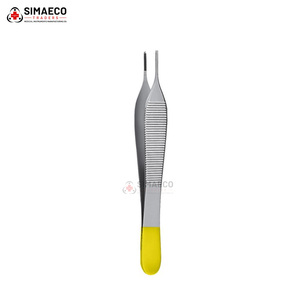
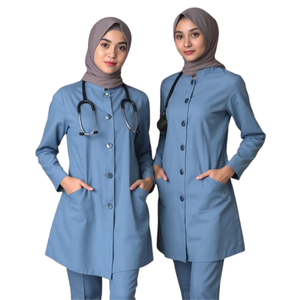
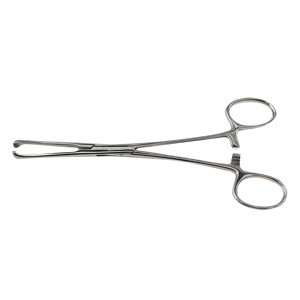
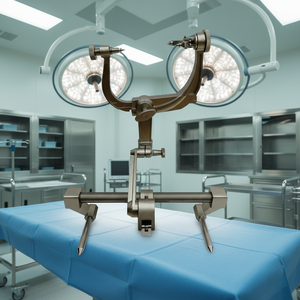
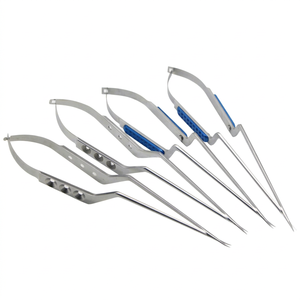
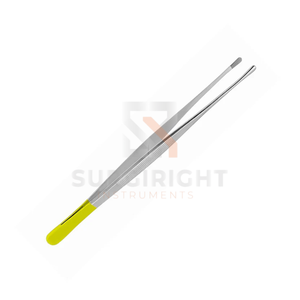
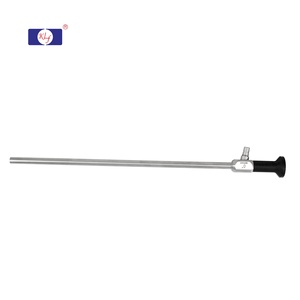
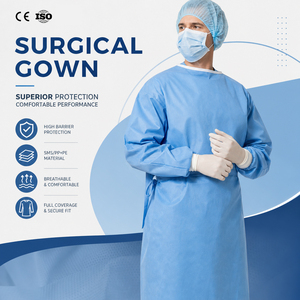
Explore our core catalog of OR-grade reusable tools, specialized neuro-orthopedic clamps, and surgical apparel manufactured to exact clinical specifications.
OEM Manufacturing Excellence & Technical Capabilities
Founded by clinical insight and elevated by master Sialkot craftsmen, DR MIRZA Medical Supply provides an end-to-end OEM/ODM contract manufacturing ecosystem.
Metallurgical Engineering & Raw Material Standards
Our orthopedic surgical instruments are forged exclusively from premium martensitic stainless steel grades, specifically AISI 410, AISI 420J2, and German-origin AISI 440C, matching stringent ASTM F899 specifications. For cutting instruments and heavy-duty grasping tools such as bone holding forceps, gouge rongeurs, and osteotomes, we integrate high-density Tungsten Carbide (TC) inserts welded using vacuum silver brazing techniques to guarantee a hardness profile of Rockwell C (HRC) 48–52. This prevents tip dulling and blade misalignment across hundreds of autoclave cycles.
5-Axis CNC Precision & Hand-Finished Artistry
While computer-controlled 5-axis CNC machining centers yield micro-tolerances down to ±0.01mm for box-locks, ratchets, and hinges, the final functional geometry of our micro-surgical forceps and bone instruments relies on veteran artisans. Hand-setting ensures perfect jaw alignment, delicate spring tension, and smooth tactile feedback essential for joint reconstruction, trauma surgery, and spinal fixation procedures.
Electropolishing & Passivation Protocols
Corrosion resistance is crucial for reusable hospital instrumentation. Every batch undergoes ultrasonic degreasing followed by chemical passivation according to ASTM A967 / ISO 16061 standards. This process strips free surface iron and develops a dense, self-healing chromium oxide layer that protects against pitting, rust, and chemical degradation during high-temperature steam sterilization (134°C autoclave cycles).
UDI Laser Engraving & Private Label Branding
We provide comprehensive OEM private labeling services. Utilizing fiber laser marking technology, we etch high-resolution Unique Device Identification (UDI) DataMatrix codes, custom lot/batch numbers, customer logos, and item reference codes directly onto the steel body without compromising passivation integrity or creating bacterial traps.
Technical Sourcing Matrix: Reusable OR-Grade vs. Single-Use
A comparative analysis for hospital procurement teams, tender managers, and medical distributors evaluating total cost of ownership (TCO) and operational risk.
| Evaluation Parameter | Reusable OR-Grade Orthopedic Tools | Single-Use Sterile Disposables |
|---|---|---|
| Primary Material Grade | Martensitic AISI 420J2 / German 1.4117 / Titanium Grade 5 | AISI 410 Stainless Steel / Medical-Grade Polymers |
| Hardness Profile | 48 – 54 HRC (Tungsten Carbide inserts option) | 40 – 44 HRC (Basic edge retention) |
| Sterilization Capability | Autoclavable at 134°C (273°F) for 500+ validated cycles | Pre-sterilized via Gamma Radiation / EO Gas (Single-procedure) |
| Traceability & Compliance | Direct Fiber Laser UDI Marking, ISO 13485, CE MDR Class I/Ir | Blister pack barcode tracking, CE MDR Class I Sterile |
| Financial Dynamics | Higher initial Capex, ultra-low amortized cost-per-procedure | Low initial unit price, recurring Opex, eliminates reprocessing lab |
| Primary Clinical Setting | Main Operating Rooms, Joint Replacement, Trauma Surgery | Outpatient Care, Emergency Rooms, Field/Military Medical Units |
Future Trends in Orthopedic Tool Manufacturing & Global Sourcing
1. Ergonomic Weight Reduction & Titanium Alloy Integration
Modern orthopedic practices are rapidly transitioning toward lightweight instruments to mitigate surgeon fatigue during prolonged procedures like multi-level spinal fusions or total hip arthroplasty (THA). The integration of Titanium Ti-6Al-4V (Grade 5) for handles, retractors, and trial rasps delivers a 40% reduction in weight compared to traditional stainless steel, while providing complete non-magnetic immunity for intraoperative MRI environments.
2. Minimally Invasive Surgery (MIS) & Micro-Surgical Geometry
As patient recovery protocols favor smaller incision footprints, demand for specialized MIS orthopedic instruments has surged. OEM factories are pivoting toward long-shafted, low-profile designs with articulating tips and anti-glare matte black ceramic coatings (such as Titanium Nitride or PVD Carbon-like coatings). These coatings eliminate specular reflections under intense surgical headlight illumination and improve surface hardness to over 70 HRC.
3. Smart Instrumentation & Sensor-Integrated Tracking
The next frontier in orthopedic instrument manufacturing involves embedding micro-RFIDs and optical tracking pins into trial implants, torque-limiting screwdrivers, and alignment guides. This enables automated instrument counting in operating rooms, real-time inventory management, and integration with computer-assisted navigation systems during joint reconstruction.
4. Supply Chain Resilience & Sialkot Manufacturing Hub Advantage
Global medical device brands are diversification-focused, reducing over-reliance on single-region manufacturing. Sialkot, Pakistan, producing over 70% of the world's hand-held surgical instruments, offers an unmatched combination of legacy forging craftsmanship, competitive labor structures, and modern ISO-compliant infrastructure. Partnering with vertically integrated Sialkot OEM factories allows global buyers to lower unit procurement costs while maintaining full regulatory compliance with US FDA, EU MDR, and MHRA frameworks.
Frequently Asked Questions (B2B Procurement & OEM Sourcing)
Essential technical and commercial information for medical device buyers, OEM partners, and institutional procurement officers.
Q1: What is the standard minimum order quantity (MOQ) for custom OEM orthopedic instrument manufacturing?
Our standard MOQ for standard catalog items begins at 10 to 50 units per pattern. For completely custom OEM projects requiring new forging dies or custom CNC programming, MOQs typically start at 100 units. However, we offer low-volume prototype runs for clinical trial evaluations and registration sampling prior to full mass production.
Q2: What quality management systems and international certificates support your manufacturing process?
Our facilities operate strictly under ISO 13485:2016 (Medical Devices Quality Management) and ISO 9001:2015 standards. Our product catalog complies with European CE marking requirements under EU MDR 2017/745. Full technical files, declarations of conformity, material mill test reports (EN 10204 3.1), and passivation test certificates are available upon request for regulatory submission.
Q3: Can you manufacture custom surgical instrument sets based on technical drawings or physical samples?
Yes. We specialize in reverse engineering and custom CAD/CAM design. You can provide 2D engineering drawings (DWG/PDF), 3D CAD files (STEP/IGES), or physical master samples. Our R&D engineering team creates production blueprints, develops custom tooling/dies, and produces initial functional prototypes for client sign-off within 3 to 4 weeks.
Q4: How do you guarantee corrosion resistance and instrument durability over repeated reprocessing?
Every reusable instrument undergoes automated ultrasonic cleaning followed by chemical passivation according to ASTM A967 standards. We perform rigorous boil testing, copper sulfate testing, and salt-spray testing on production batches to verify passive oxide layer density. Additionally, all instruments carry a lifetime warranty against material defects and manufacturing flaws.
Q5: What customized packaging and private label options are provided?
We offer complete turnkey private labeling solutions. This includes fiber laser marking of customer logos, part numbers, and UDI DataMatrix codes directly onto instruments. Packaging options range from individual zip-seal pouches and sterile blister packs to custom-molded silicone-mat sterilization trays and branded printed display boxes.
Q6: What is the typical lead time from order confirmation to global shipment delivery?
Standard catalog order lead times are approximately 3 to 5 weeks depending on order volume. Custom OEM runs requiring new forging or complex machining generally take 6 to 8 weeks. We offer express air-freight logistics (DHL/FedEx/UPS) for urgent hospital tenders and sea-freight options for large containerized bulk orders.
Q7: Which specific stainless steel grades are utilized for orthopedic cutting vs. holding instruments?
For cutting tools like bone rongeurs, wire cutters, and scissors, we use high-carbon martensitic steel AISI 420J2 or AISI 440C (48-54 HRC) often reinforced with Tungsten Carbide. For non-cutting holding instruments, retractors, and trial instruments, we utilize AISI 410 or austenitic AISI 304 to optimize flexibility, tensile strength, and corrosion protection.
Request a Custom OEM Quotation & Prototype Consultation
Partner with a trusted ISO 13485 certified Sialkot manufacturer. Send us your bill of materials, product drawings, or tender specifications for immediate engineering review and factory-direct pricing.