
Featured Medical Sterilization Trays & Cassette Systems
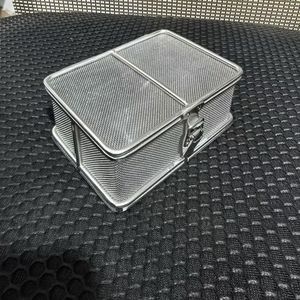
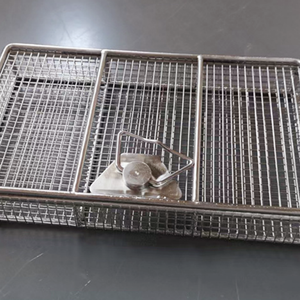
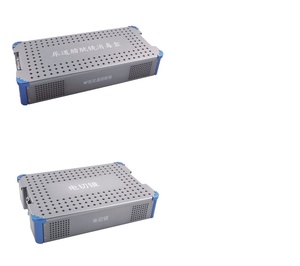
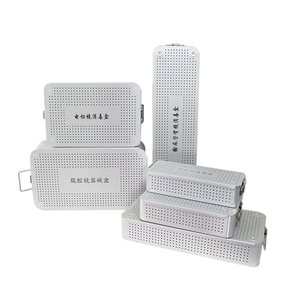
Engineered with surgical-grade AISI 304/316L stainless steel and biocompatible anodized aluminum to withstand continuous high-temperature autoclaving and chemical sterilization cycles.
Engineering Architecture of Custom Sterilization Trays
A comprehensive technical analysis of material selection, surface passivations, structural geometry, and fluid-dynamic steam penetration.
In modern surgical environments and Central Sterile Supply Departments (CSSD), medical sterilization trays are not mere holding containers; they are fundamental components of the sterile barrier system (SBS) defined by ISO 11607-1 and EN 868. As a premier custom OEM sterilization trays manufacturer and contract supplier, our production standards integrate advanced metallurgical metallurgy, precise mechanical punching, electro-polishing, and custom-molded silicone holding structures designed to guarantee absolute sterility maintenance while maximizing instrument longevity.
Information Gain Insight: Thermal Conductivity & Micro-Perforations
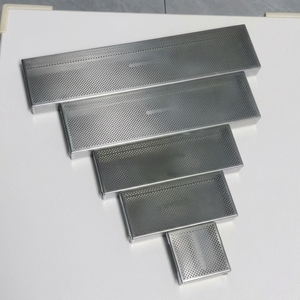
Standard solid-wall trays often suffer from condensate pooling, leading to wet packs—a primary cause of post-sterilization contamination. Our micro-perforated mesh architectures feature an optimized 40% open-area ratio with staggered 2.0mm to 3.5mm aperture geometry. This balance provides structural rigidity while facilitating rapid thermodynamic vapor penetration during steam autoclaving at 134°C (273°F) and accelerating vacuum drying cycles under ISO 17665 protocols.
Material Comparison Matrix for Medical-Grade Sterilization Baskets
Selecting the appropriate substrate material is critical for custom OEM contracts, balancing unit weight, corrosion resistance against aggressive enzymatic detergents, dynamic shock absorption, and cost-per-use economics:
| Material Grade | Tensile Strength (MPa) | Corrosion Resistance | Autoclave Endurance | Primary CSSD & Surgical Applications |
|---|---|---|---|---|
| AISI 316L Stainless Steel | 580 - 680 | Superior (Pitting Resistant) | 15,000+ Cycles | Surgical OR sets, implantable orthopedic kits, high-saline exposure setups |
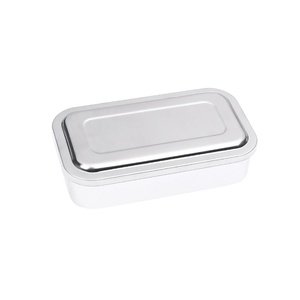
| AISI 304 Stainless Steel | 520 - 620 | High (Standard Medical) | 10,000+ Cycles | General hospital trays, wire mesh baskets, dental cassettes, lab disinfection |
| Anodized Aluminum (5000 Series) | 210 - 310 | Moderate to High (Anodized Layer) | 5,000+ Cycles | Lightweight rigid containers, endoscopic protective cases, color-coded sets |
| Medical Grade Silicone (50-60A) | 8 - 12 | Inert to Chemicals | 3,000+ Cycles | Instrument holding inserts, delicate tip protection strips, shock-absorbing mats |
Passivation & Electro-Polishing
All stainless steel components undergo rigorous chemical passivation in compliance with ASTM A967. Electro-polishing reduces surface roughness to Ra < 0.4 µm, removing microscopic burrs, eliminating crevices where bio-burden accumulates, and ensuring resistance to flash rust.
Modular Custom Silicone Holding Inserts
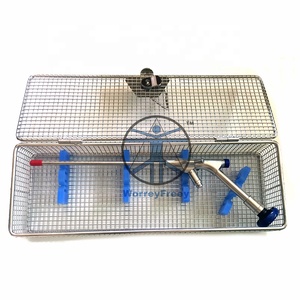
Custom instrument geometry requires zero movement during transport. We mold medical-grade platinum-cured silicone inserts tailored precisely to your surgical tools, including spine endoscopes, microsurgical forceps, and orthopedic drills, preventing edge degradation.
Secure Locking & Stackable Ergonomics
Featuring precision-engineered double-hinged latches, twist-lock mechanisms, and top-to-bottom stackable footings. Designed to seamlessly fit into standard DIN instrument logistics systems and automated washer-disinfectors without shifting.
Future Procurement Trends in Sterilization & Infection Control
How central sterile departments, hospital networks, and OEM brand owners are adapting their supply chains for high-efficiency, automated, and sustainable reprocessing.
1. Transition to RFID & UDI Tracking Integration
Global regulatory mandates (such as US FDA UDI and EU MDR 2017/745) demand full traceability of surgical instrument trays. Modern OEM tray designs incorporate dedicated recessed cavities for laser-etched 2D DataMatrix codes or high-temperature RFID chips, enabling real-time cycle tracking and automated inventory management across hospital networks.
2. Environmental Sustainability & Zero-Wrap Initiatives
Single-use sterilization blue wraps contribute thousands of tons of polypropylene waste annually. Hospitals are aggressively migrating toward reusable rigid aluminum and stainless steel container systems. Investing in custom OEM trays with integrated filter retainers delivers a dramatic ROI within 12–18 months while meeting green healthcare standards.
3. Specialty & Procedure-Specific Micro-Trays
As minimally invasive surgery (MIS), robotic surgery (e.g., da Vinci systems), and endovascular procedures advance, standard deep baskets are being replaced by lightweight, multi-tiered micro-cassettes. These specialized trays feature tailored internal brackets to secure long, fragile shafts and delicate optics against vibration damage during transit.
Enterprise OEM / ODM Manufacturing & Sialkot Craftsmanship
Combining decades of surgical instrument heritage with modern CNC automated manufacturing, rigorous ISO quality systems, and direct global export capabilities.
End-to-End Contract Manufacturing
From initial CAD/CAM blue-print design and 3D rapid prototyping to high-tonnage stamping, deep drawing, automated wire-mesh weaving, and cleanroom packaging, our factory manages the complete OEM workflow under one roof.
- Custom Tooling & CNC Milling: Dedicated tooling shop producing customized molds for unique tray geometries in under 15 days.
- Laser Marking & Branding: Private label logo engraving, serial numbering, and barcode application for global brand distributors.
- Rigorous QA Batch Testing: Salt spray corrosion testing, ultrasonic cleaning residue checks, and drop tests to guarantee structural reliability.
Global Compliance & Lifetime Quality Guarantee
Founded on clinical insight and industrial precision in Sialkot—the premier surgical instrument hub—we support medical device importers, hospital procurement officers, and surgical brand owners across 120+ countries.
- ISO 13485:2016 Certified: Certified Quality Management System specific to medical device manufacturing and supply chains.
- CE & FDA Registration Compliant: Full technical documentation dossiers and material mill certificates supplied with every order.
- Lifetime Guarantee: Every reusable stainless steel sterilization tray is backed by a lifetime warranty against material defects and craftsmanship failures.
Frequently Asked Procurement & Technical Questions (FAQ)
Direct technical answers addressing material selection, minimum order quantities, customization lead times, and regulatory compliance for international buyers.
What stainless steel grade should I select for my sterilization trays: AISI 304 or 316L?
For standard surgical sets, general hospital washers, and dental cassettes, AISI 304 offers outstanding corrosion resistance, structural rigidity, and optimal cost-efficiency. For environments exposed to aggressive chemical disinfectants, high-saline surgical procedures, or extreme thermal stress, AISI 316L is recommended due to its higher nickel and molybdenum content, which provides superior protection against pitting corrosion.
Can you manufacture custom sterilization trays according to our CAD drawings or physical samples?
Yes. As a dedicated OEM/ODM manufacturer, we specialize in custom fabrication. You can provide 3D CAD files (STEP, IGES, SolidWorks) or send physical prototype samples. Our engineering team will construct sample molds, produce prototype units for your evaluation, and execute mass production upon your approval.
How do silicone holder inserts withstand repetitive steam autoclaving without degradation?
We utilize exclusively 100% medical-grade, platinum-cured silicone with a Shore A hardness of 50 to 60. This compound is chemically inert, non-toxic, and specially formulated to withstand continuous steam autoclaving cycles up to 135°C (275°F), dry heat sterilization, and ethylene oxide (EO) gas without cracking, color fading, or loss of elasticity.
What sterilization methods are your trays compatible with?
Our tray systems are engineered for full compatibility with all standard hospital sterilization methods, including high-vacuum steam autoclaving (ISO 17665), Ethylene Oxide (EO) gas, hydrogen peroxide plasma (VHP / Sterrad), and low-temperature formaldehyde sterilization.
What is your typical lead time for custom OEM sampling and bulk production?
Custom prototype samples are typically completed within 10 to 14 working days following CAD design approval. Mass production lead times generally range from 25 to 35 days, depending on order volume, surface finish requirements, and silicone insert complexity.
Do your sterilization baskets comply with international healthcare standards?
Yes. Our manufacturing facilities are certified to ISO 9001:2015 and ISO 13485:2016. All sterilization products comply with European CE mark requirements, ISO 11607 packaging standards, and DIN standard dimensions (such as 1/1 DIN, 1/2 DIN, and 1/4 DIN basket formats).
What custom branding and private labeling options are available for distributors?
We provide full private label branding services, including fiber-laser logo engraving, custom item numbering, UDI 2D matrix barcode etching, customized packaging boxes, color-coded silicone components, and branded instruction manuals tailored to your market requirements.
How do I request a formal quotation or initiate a sample order?
You can initiate an inquiry by clicking our global contact button below. Provide your required dimensions, target quantities, preferred material grade, and any technical drawings. Our export engineering desk will respond with a comprehensive pricing proposal within 24 hours.
Partner with a World-Class OEM Sterilization Tray Manufacturer
Elevate your medical product lineup with engineered precision, certified quality, and factory-direct pricing. Contact our technical sales team today to discuss your custom project specifications.
Contact Us