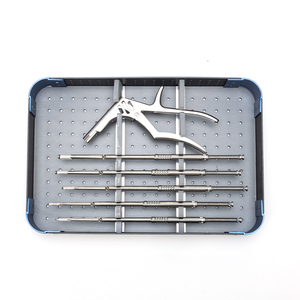
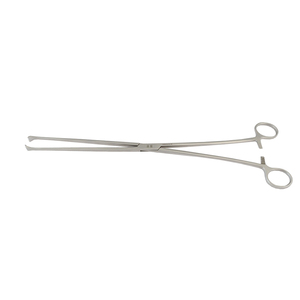
OEM ODM Customized Rotatable Intervertebral Rongeur Stainless Steel Neurosurgical Forceps
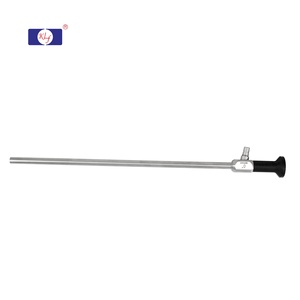
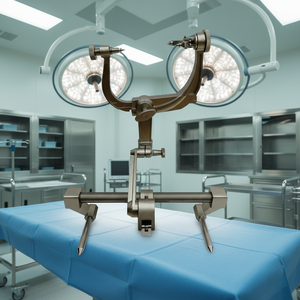
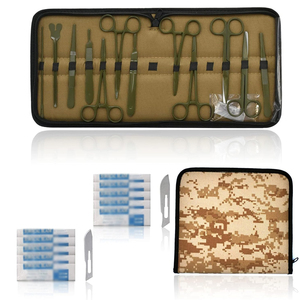
Surgical Dissecting Kits Customizable OEM Service Steel Material High Quality Reusable CE Certified
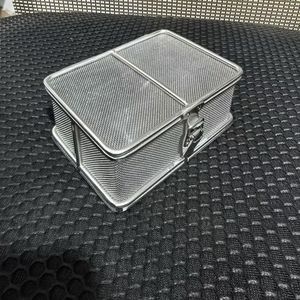
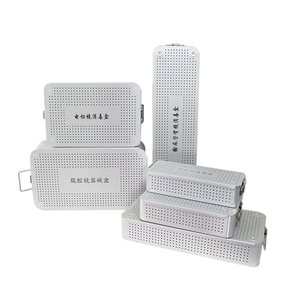
304 316 Stainless Steel Disinfection Box Instrument Sterilization Tray Basket with Silicone Strips
Executive Sourcing Analysis: Hemostatic Forceps Supply Chains & Global Exporters
In modern surgical healthcare, hemostatic forceps (hemostats) represent one of the highest-volume critical instruments purchased by hospital procurement networks, military field units, emergency trauma centers, and medical device distributors worldwide. Designed to occlude blood vessels, control intraoperative hemorrhaging, and clamp tissues securely without causing irreversible vascular shearing, the reliability of a hemostatic clamp directly influences surgical outcomes and operating theatre efficiency.
Clinical Intent & Structural Ergonomics
A top-tier hemostatic forceps must maintain precise tip alignment, balanced tension along the ratchet mechanism, and optimal spring resistance. Whether executing microsurgical vessel occlusion or deep abdominal arterial clamping, surgical teams require absolute locking security coupled with effortless single-handed release.
Procurement Risk Mitigation
Subpar metallurgical processing leads to catastrophic jaw misalignment, stress-corrosion cracking during autoclave cycles, and ratchet slippage under clinical stress. Strategic buyers must evaluate exporters based on raw material origin, heat treatment documentation, passivation compliance, and factory-direct quality management standards.
Benchmarking the Top 10 Hemostatic Forceps Exporter Regions & Manufacturing Hubs
When global hospital procurement teams search for "Top 10 Hemostatic Forceps Exporter & Exporters", the objective is not simply acquiring a list of trading companies, but evaluating the global manufacturing hubs, industrial capabilities, cost structures, and compliance frameworks that govern surgical instrument exports. Below is an authoritative technical comparison of the leading export regions worldwide.
| Export Region / Cluster | Core Metallurgical Specialization | Regulatory Compliance | Cost Competitiveness | OEM & Custom Capabilities |
|---|---|---|---|---|
| 1. Sialkot Industrial Cluster (Pakistan) Global Leader in Handheld Surgical Tools |
Martensitic AISI 410 / 420 & Premium German Steel Forgings | ISO 13485, ISO 9001, CE Marking, US FDA Registered | High (Factory Direct) | Comprehensive OEM, Custom Laser Engraving & Kit Packaging |
| 2. Tuttlingen Cluster (Germany) | DIN 1.4021 / High-Grade European Alloys | MDR Compliance, ISO 13485, CE, FDA | Low (Premium Pricing) | High OEM, Long Lead Times |
| 3. Solingen Manufacturing Zone (Germany) | Custom Hardened Surgical Stainless Steels | ISO 13485, CE, FDA | Low (Niche Premium) | Specialized Pattern Modification |
| 4. United States (Midwest Medical Corridor) | Titanium Nitride Coated & Carbide Inlaid Alloys | FDA 510(k), ISO 13485 | Very Low (High Domestic Costs) | Focus on Proprietary Patent Designs |
| 5. Jiangsu & Zhejiang Hubs (China) | 304 / 316L & standard 420 Stainless Steels | ISO 13485, CE Marking | High (Mass Automated Output) | High Output, Standardized Patterns |
| 6. United Kingdom (Sheffield Cluster) | Traditional Specialty Surgical Steel | UKCA, ISO 13485, CE | Moderate to Low | Specialized Reusable Instruments |
| 7. Japan (Gifu & Tokyo Regions) | High-Carbon Micro-Surgical Steel Alloys | PMDA, ISO 13485, CE | Low (High Cost Micro-Tools) | Precision Ophthalmic & Micro-Hemostats |
| 8. France (Haute-Marne Region) | Orthopedic & Hemostatic Forgings | ISO 13485, CE MDR | Moderate | Custom European Brand Production |
| 9. Northern Italy (Lombardy Hub) | Corrosion-Resistant Surgical Metallurgy | ISO 13485, CE | Moderate | Private Label Dental & Surgical |
| 10. Switzerland (Medical Precision Zone) | Ultra-Fine Micro-Forceps & Titanium Alloys | ISO 13485, Swissmedic, CE | Very Low (Highest Unit Cost) | High-Precision Microsurgery Customization |
Anatomy & Categorization of Surgical Hemostatic Forceps
To make informed purchasing decisions, hospital tender boards must understand the design variations across different hemostatic forceps models. Each design serves a distinct surgical intent, varying in blade curvature, serration depth, and ratchet locking force.
Halsted Mosquito Forceps
Primary Intent: Occlusion of delicate, small blood vessels in pediatric, plastic, and ophthalmic surgeries.
Key Features: Fine, narrow jaws with full transverse serrations. Available in straight and curved options (typically 12.5 cm / 5 inches).
Kelly & Crile Hemostatic Forceps
Primary Intent: Clamping medium-sized vessels and vascular pedicles.
Key Features: Kelly forceps feature partial serrations (distal half of jaws), preventing damage to proximal tissues. Crile forceps feature full-length jaw serrations for firm hold.
Rochester-Pean & Kocher Clamps
Primary Intent: Heavy tissue clamping and control of large vascular trunks.
Key Features: Rochester-Pean has robust, broad jaws. Kocher forceps incorporate 1x2 interlocking teeth at the tip to prevent tissue slippage under heavy traction.
Mixter Right-Angle Forceps
Primary Intent: Dissecting around deep structures and passing sutures behind hidden blood vessels.
Key Features: 90-degree curved tips with longitudinal serrations for atraumatic manipulation in general and thoracic surgery.
Carmalt & Hartman Hemostatic Forceps
Primary Intent: Deep gynecological and abdominal tissue mass clamping.
Key Features: Carmalt forceps utilize longitudinal serrations with cross-hatched tips, stopping fluid movement along the clamp line during tissue ligation.
Micro-Hemostatic & Titanium Variants
Primary Intent: Microsurgery, neurosurgery, and MRI-compatible surgical procedures.
Key Features: Lightweight construction, anti-glare matte finish, non-magnetic properties, and ultra-fine smooth or micro-serrated tips.
Metallurgical Engineering & Future Sourcing Trends for 2026 and Beyond
As hospital procurement budgets face increasing scrutiny, the global surgical instrument market is undergoing a major shift toward high-durability reusable instruments capable of enduring hundreds of steam autoclave sterilization cycles (134°C at 2.1 bar) without experiencing corrosion or mechanical fatigue.
1. Material Science: Martensitic Stainless Steel Selection
Top exporters utilize premium martensitic stainless steels, specifically AISI 410 and AISI 420 J2 (ASTM F899 compliance). These alloys deliver the optimal balance between high tensile strength, spring temper for the ratchet finger rings, and extreme hardness (42 to 48 HRC) at the jaw serrations. On request, premium exporters like DR MIRZA incorporate imported German stainless steel billets to meet specialized European tender criteria.
2. Chemical Passivation & Electrochemical Polishing
To prevent pitting and intergranular corrosion, raw machined forceps undergo citric or nitric acid passivation in strict accordance with ASTM A967 standards. This process strips free iron particles from the instrument surface, fostering the formation of an ultra-thin, protective chromium oxide (Cr2O3) passive layer. Electrochemical satin finishing further eliminates glare under bright operating theatre LED surgical lighting.
3. Shift Towards Tungsten Carbide (TC) Jaw Inlays
Future procurement trends show a rapidly increasing demand for Hemostatic Forceps fitted with Tungsten Carbide (TC) serrated inserts. TC inserts provide a hardness exceeding 60 HRC, extending working lifespan up to five times longer than standard stainless steel tips, while providing non-slip grip on fine vascular walls.
4. Total Lifecycle Costing vs. Single-Use Disposables
While single-use disposable forceps eliminate reprocessing labor in emergency trauma kits, hospital purchasing data reveals that OR-grade reusable hemostats offer a 68% lower lifetime cost per surgical procedure when managed under proper ISO 17664 cleaning and sterilization protocols.
Why Global Buyers Partner with DR MIRZA Medical Instruments
Founded by Dr. Inam ul Haq Mirza—a medical professional with firsthand understanding of surgical ergonomics—DR MIRZA Medical Instruments stands out among global exporters by combining clinical expertise with the world-renowned forging heritage of Sialkot, Pakistan.
ISO 13485 & CE Certified Manufacturing
Our manufacturing facilities operate strictly under audited ISO 9001 and ISO 13485 Medical Device Quality Management Systems. Complete batch traceability, mill test certificates, and CE declarations of conformity are provided for seamless regulatory clearance in over 120 destination countries.
Comprehensive OEM & Private Labeling
We provide end-to-end OEM manufacturing for global healthcare brands and medical device distributors. Services include fiber-laser logo marking, customized reference numbering, bespoke tray configurations, and custom retail packaging tailored to regional distributor specifications.
Lifetime Defect Guarantee
Every reusable surgical instrument produced by DR MIRZA carries a lifetime guarantee against manufacturing, material, or workmanship defects. In the rare event an item fails to meet agreed technical specifications, immediate replacement or credit is guaranteed.
Frequently Asked Questions (Procurement & Technical FAQ)
Clear answers to key questions asked by hospital procurement officers, medical distributors, and tender managers when evaluating hemostatic forceps exporters.