
Featured Precision Endoscopic & Microsurgical Instruments
Explore medical-grade reusable and single-use instruments engineered with German and Japanese stainless steel, tungsten carbide inserts, and ISO 13485 certified quality management systems.
Executive Summary: The Evolving Landscape of Endoscopic Instrument Manufacturing in China
Minimally Invasive Surgery (MIS) has fundamentally transformed global clinical practices over the last three decades, establishing laparoscopy, arthroscopy, endoscopy, and robotic-assisted surgery as the gold standard for surgical intervention. As global healthcare systems, group purchasing organizations (GPOs), and hospital procurement teams seek to balance financial efficiency with stringent clinical outcomes, China has emerged as the premier global hub for precision endoscopic instrument manufacturing and export.
Historically recognized primarily for high-volume component fabrication, top-tier Chinese manufacturers have executed significant technological upgrades. Today, leading facilities integrate advanced metallurgical engineering, 5-axis CNC micro-machining, cleanroom assembly compliant with ISO 14644-1 Class 7/8, and automated surface passivation systems. This whitepaper provides healthcare procurement officers, OEM medical device brand managers, and surgical equipment distributors with an exhaustive, data-driven analysis of sourcing high-performance endoscopic tools, electrosurgical instruments, and rigid/flexible endoscopic accessories directly from top Chinese exporters.
Metallurgical Standards & Precision Metallurgy in Endoscopic Manufacturing
The operational lifespan and tactile sensitivity of endoscopic instruments—such as laparoscopic graspers, TC scissors, biopsy forceps, and bipolar electrocautery devices—depend overwhelmingly on raw material selection and heat treatment precision. Leading Chinese exporters utilize specialized medical-grade alloys engineered for intense mechanical stress and chemical resistance:
Delivers exceptional hardness (50-54 HRC) following vacuum heat treatment. Critical for cutting edges in laparoscopic scissors and micro-punches where micro-bevel razor sharpness must endure hundreds of reprocessing cycles.
A precipitation-hardening stainless steel offering extraordinary yield strength and fracture toughness. Ideal for long-shaft laparoscopic force transmission rods, jaw hinges, and high-torque rotary mechanics.
Ultra-dense tungsten carbide inserts sintered into jaw faces provide unmatched wear resistance, non-slip tissue grasping, and prolonged jaw alignment for high-frequency electrosurgery and neurosurgical microsurgery.
Specialized Product Categories & Engineering Specifications
Navigating the product portfolio of top Chinese exporters requires a deep understanding of functional segmentation. Below is an analytical matrix detailing technical specifications, biocompatibility ratings, and primary application zones across core endoscopic and surgical product lines.
| Instrument Category | Material Specification | Surface Treatment / Coating | Reprocessing Compatibility | Key Technical Innovation |
|---|---|---|---|---|
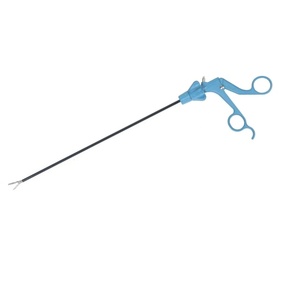
| Laparoscopic TC Forceps & Scissors | AISI 420C / 17-4PH + TC Inserts | Electropolished Anti-Glare Satin / PVD Gold Ring Handle | 134°C Autoclave (1000+ Cycles) | 360° Continuous Shaft Rotation; Double-Action Jaw Mechanism with Zero Side-Play. |
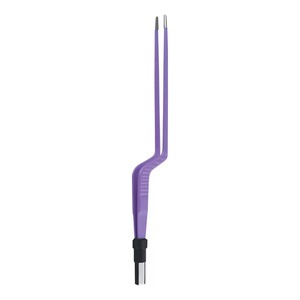
| Bipolar Electrosurgical Forceps | Medical-grade Stainless Steel with Silver Alloy Tips | High-Dielectric PEEK / Ceramic Insulation Layer | Steam Autoclave / ETO Sterilization | Non-Stick Thermal Tip Coating reducing Eschar Adhesion; 20cm European Bayonet Geometry. |
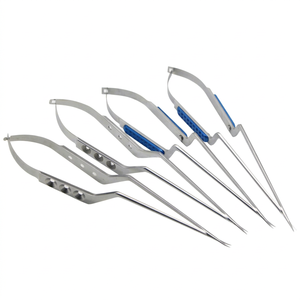
| Microsurgical & Neurosurgery Scissors | Japanese SUS440C / High-Impact TC | Passivated Micro-Satin Finish | Automated Washer-Disinfector Compatible | Spring-loaded Ergonomic Handles with Featherlight Tactile Feedback for Micro-Vascular Suture. |
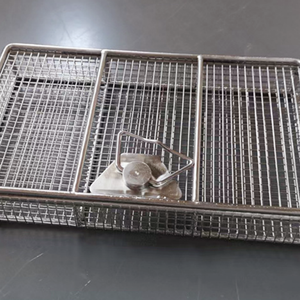
| 304 SS Wire Mesh Sterilization Baskets | AISI 304 Electro-Passivated Wire Mesh | Electrolytic Polishing & Burr-Free Smooth Welds | Universal Wash, Steam & Plasma Compatible | Stackable Frame with Silicone Retaining Inserts preventing Instrument Tip Damage during Transport. |
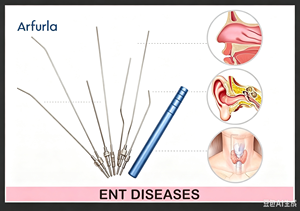
| ENT Rigid Nasal Laser Handpieces | Titanium Grade 5 (Ti-6Al-4V) / SUS316L | Anodized Medical Finish | Autoclave & Chemical Sterilization | Integrated Fiber-Optic Light Guide Channels & Internal Coaxial Air Cooling. |
Technical Anatomy of Laparoscopic and Endoscopic Instruments
A standard 5mm or 10mm endoscopic instrument consists of three core sub-assemblies: the ergonomic handle mechanism, the insulated shaft tube, and the distal working jaw. Top OEM manufacturers utilize precise laser micro-welding to bond internal pull-wire linkages, ensuring zero axial backlash when operating graspers or dissectors through a 330mm to 450mm cannula tube.
Furthermore, in electrosurgical applications (such as monopolar hook electrodes and bipolar coagulation forceps), maintaining dielectric insulation integrity is paramount. Leading Chinese factories apply automated fluoropolymer or PEEK powder coating processes. This prevents insulation degradation, eliminating electrical arcing and collateral thermal tissue injury during electrocautery.
Manufacturing Enterprise Competencies & Quality Assurance Standards
Top China endoscopic instrument manufacturers operate under rigorous International Quality System standards. Global distributors and purchasing teams must evaluate potential supply partners against four core technical and operational benchmarks:
ISO 13485:2016 & CE MDR Certification
Verification that the factory holds comprehensive ISO 13485 certification for medical devices, alongside CE Marking compliance under European Medical Device Regulation (EU) 2017/745 and US FDA 510(k) establishment registration.
Advanced Passivation & Corrosion Resistance
Every reusable instrument undergoes chemical passivation per ASTM F1083 / ISO 16061 standards. Nitric or citric acid baths remove free iron particles from outer surfaces, forming an impenetrable chromium oxide passive film that blocks rust and pitting under repeated steam sterilization.
100% Dimensional & Functional Quality Control
Deploying optical profile projectors, digital torque meters, laser co-ordinate measuring machines (CMM), and tissue-cutting simulators to test jaw sharpness, ratchet locking strength, and shaft alignment before final batch packaging.
For OEM and private label partners, China's leading exporters offer turnkey customization services. This includes custom laser logo marking, customized packaging, procedure-specific tray set configuration, and rapid prototyping within 15 to 21 working days based on customer CAD drawings or sample physical reference units.
Global Sourcing Trends & Future Technology Roadmap
The global procurement market for minimally invasive instruments is experiencing a paradigm shift driven by technological advances and macroeconomic dynamics. Procurement officers must align their long-term supply chain strategies with these critical developments:
1. Transition Toward 4K Ultra-HD, 3D & NIR Fluorescence Endoscopy
Modern operating theaters are rapidly upgrading from standard high-definition (HD) systems to 4K Ultra-HD and Near-Infrared (NIR) Indocyanine Green (ICG) fluorescence imaging. As image resolution increases, the mechanical tolerances of endoscopic instruments must tighten. Reflections from shiny instrument shafts cause optical flare in 4K camera monitors; consequently, top exporters now offer black-chromium PVD coatings and non-reflective matte finish treatments across all rigid laparoscopes, graspers, and trocars.
2. Reusable vs. Single-Use (Disposable) Hybrid Procurement Models
While reusable instruments offer lower total cost of ownership (TCO) per surgical case, hospital sterile processing departments (SPD) face rising labor costs and cross-contamination risks. Forward-thinking manufacturers in China are responding by offering dual-track manufacturing: high-end reusable instruments designed for 1,000+ autoclave cycles alongside high-precision single-use disposable laparoscopic graspers, shears, and trocars produced in ISO Class 8 cleanrooms.
3. Integration with Robotic-Assisted Surgical Platforms
As robotic surgical systems become more widely deployed across urology, gynecology, and general surgery, Chinese manufacturers are actively investing in micro-articulated end-effectors, flexible cable assemblies, and specialized electrosurgical tips compatible with robotic wrist mechanisms. Sourcing from manufacturers with active robotic-component R&D provides distributors with a clear future-proof advantage.