
Precision Endodontic & Hospital Equipment
Explore our core export products engineered for root canal therapy, clinical sterilization, electrosurgery, and protective environment requirements.
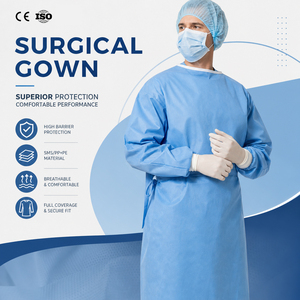
Supplier Bulk Disposable Surgical Gown EN13795 Standard 50gsm SMS Breathable Doctor Hospital Gowns
Get Catalog
CUSTOM DESIGN stretch scrub uniform nursing hospital set stylish medical lab coat doctor women surgical scrubs clothes - OEM/ODM
Get Catalog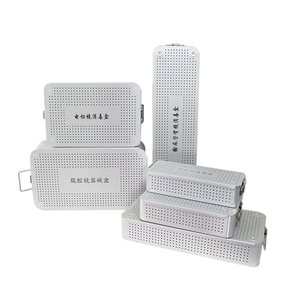
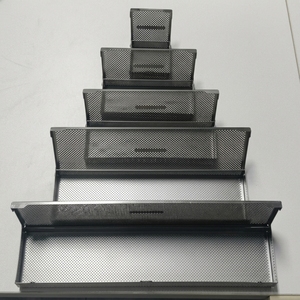
Stainless Steel Perforated Mesh Sterilization Cassette Autoclavable Medical Dental Surgical Instrument Disinfection Box
Get Catalog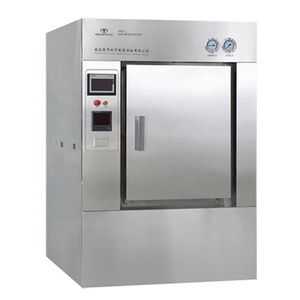
Hot Sale Surgical Instruments Horizontal High Pressure Pulse Vacuum Steam Sterilizer Autoclave Customizable Chamber
Get Catalog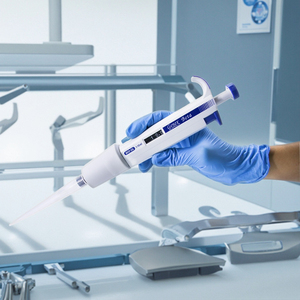
Adjustable Autoclavable Pipette for Lab Hospital 1-10ml Made Plastic OEM Customizable CN/JIA Origin 1 Year Warranty
Get Catalog
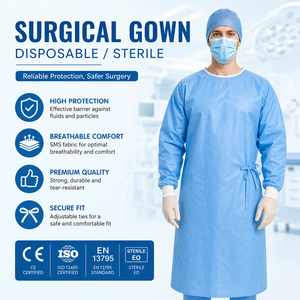
Premium AAMI Level 3 Sterile Surgical Gown 160 MmHg Fluid Resistance Individually Wrapped Doctor Gowns
Get CatalogThe Science of Endodontic Instrument Manufacturing & Metallurgical Integrity
In modern dental and endodontic procedures, the success of root canal therapy (RCT) hinges upon the mechanical reliability, flexibility, and fatigue resistance of endodontic instruments. As a premier endodontic instruments manufacturer and exporter headquartered in Sialkot, Pakistan, DR MIRZA Medical Instruments bridges time-tested forging craftsmanship with advanced metallurgical engineering. Operating under ISO 13485 and ISO 9001 quality management systems, our facility addresses the rigorous demands of endodontists, hospital procurement directors, and international dental distributors who require unyielding precision in root canal preparation.
1. Metallurgical Evolution: Superelasticity, Heat Treatment & Phase Transformation
Traditional endodontic files were historically machined from stainless steel (AISI 302/304). While stainless steel exhibits exceptional column strength and resistance to buckling—making it ideal for initial canal exploration (k-files and reamers)—it suffers from rigid elasticity. In curved root canals, stainless steel files tend to exert high restorative forces, leading to clinical complications such as canal transportation, zipping, and apical ledging.
To overcome these biomechanical limitations, DR MIRZA incorporates proprietary Nickel-Titanium (NiTi) alloy metallurgy alongside premium German martensitic and austenitic stainless steel alloys (AISI 410 and 420). Our NiTi endodontic files utilize Controlled Memory (CM) thermal processing. This heat treatment alters the phase transformation temperature of the alloy, allowing the instrument to exist in a superelastic Martensitic state at ambient room and body temperatures.
- Austenitic Phase (Stiff & Rigid): Ideal for initial pathfinding, coronal flaring, and negotiating calcified dentin walls without flexural deflection.
- Martensitic Phase (Ductile & Flexible): Allows NiTi rotary files to follow complex 3D canal geometries with minimal stress, reducing the risk of file separation due to cyclic fatigue.
- Controlled Memory (CM Wire Technology): Enables files to be pre-bent prior to canal insertion, retaining shape integrity without rebound effect during curved root canal enlargement.
2. Mechanical Failure Modes: Torsional Stress vs. Cyclic Fatigue
Understanding instrument failure is critical for optimizing manufacturing workflows and informing clinical procurement decisions. Endodontic instruments are subjected to two distinct mechanical stress vectors during mechanical rotation within root canals:
Cyclic Fatigue Failure
Occurs when an instrument rotates freely inside a curved canal, experiencing alternating cycles of tension and compression along the outer and inner curves. Over time, micro-cracks propagate at the point of maximum curvature, leading to sudden instrument fracture without visible plastic deformation.
Torsional Failure
Occurs when the tip or cutting flute of the rotary instrument binds within the dentinal wall while the shank continues to rotate. When the ultimate shear strength of the metal alloy is exceeded, plastic deformation occurs (unwinding of flutes), culminating in torsional shear separation.
By balancing cross-sectional geometry (such as S-shaped, convex triangular, or off-centered rectangular cross-sections) with micro-milling precision, DR MIRZA endodontic instruments achieve a optimal equilibrium between chip-evacuation space, cutting efficiency, and torsional fatigue resistance.
Metallurgical Specification Matrix for Endodontic & Surgical Tooling
The following reference table outlines the technical specifications of materials utilized in our endodontic and surgical manufacturing process, providing empirical proof of compliance for B2B procurement auditors:
| Material / Alloy Grade | Primary Clinical Application | Tensile Strength (MPa) | Flexural Fatigue Resistance | Sterilization Tolerance |
|---|---|---|---|---|
| CM-Heat Treated NiTi (Gold/Blue) | Rotary & Reciprocating Canal Files | 1100 - 1400 MPa | Extreme (10x vs Standard NiTi) | Autoclavable (134°C Vacuum Steam) |
| Standard NiTi (Superelastic) | Orifice Openers, Hand Pluggers | 850 - 1100 MPa | High Flexural Yield | Autoclavable (134°C Vacuum Steam) |
| German AISI 420 Martensitic Steel | Endodontic Explorers, Scissors, Forceps | 1600 - 1900 MPa | Rigid / High Hardness (52-56 HRC) | Autoclavable & Chemical Disinfection |
| German AISI 410 Stainless Steel | Cassettes, Trays, Body Handles | 700 - 900 MPa | High Impact / Corrosion Proof | Autoclavable & Chemical Disinfection |
| Tungsten Carbide Inserts (TC) | Electrosurgical Forceps, Wire Cutters | > 2200 MPa | Ultra-Hard (70+ HRC Edge Retention) | Autoclavable (134°C Vacuum Steam) |
Future Product Development & Metallurgical Trends (2026–2030)
1. Multi-Phase Thermal Nano-Engineering
Next-generation endodontic manufacturing is shifting away from uniform alloy treatments toward localized thermal gradient processing. By selectively heat-treating specific segments of a rotary file, manufacturers can create a rigid shank for torque transmission combined with an ultra-flexible martensitic tip for negotiating intricate apical deltas.
2. Minimally Invasive Endodontics (MIE)
Conservative endodontics emphasizes the preservation of pericervical dentin to maintain long-term root strength. Future file designs prioritize smaller maximum flutes tapers (e.g., .03 to .04 tapers) and regressive flute pitch, necessitating higher-precision CNC micro-grinding technologies with optical inspection systems.
3. Single-Patient-Use Sterility Shift
Global regulatory bodies (including the EU MDR and US FDA) are enforcing stricter infection control standards. The market is shifting rapidly toward pre-sterilized, individually blister-packed single-use endodontic instruments, eliminating hospital cross-contamination risks and removing complex reprocessing costs.
Strategic Global Procurement Trends for Dental & Surgical Buyers
Large-scale medical device procurement is undergoing a paradigm shift driven by supply chain volatility, regulatory harmonization, and cost optimization imperatives. Healthcare procurement managers, dental chain purchasing directors, and regional medical distributors must adapt their sourcing strategies to maintain supply continuity and margin health.
Direct Manufacturer-to-Distributor Models
Middlemen and third-party trading companies introduce cost markups of 30% to 65% while diluting quality accountability. Strategic buyers are increasingly establishing direct relationships with established manufacturing hubs like Sialkot, Pakistan. Direct factory engagement grants access to custom branding (OEM), factory-level lot traceability, and custom dimensional modifications.
Regulatory Audit Rigor & Quality Documentation
With the implementation of the European Union Medical Device Regulation (MDR 2017/745), tender qualification requires complete technical documentation. Procurement teams are demanding comprehensive material test reports (MTRs), ISO 13485 quality system certificates, passivating corrosion reports, and clear audit trails from raw forged bar stock to packaged devices.
The DR MIRZA Advantage: Sialkot Craftsmanship Meets Global Compliance
Founded by Dr. Inam ul Haq Mirza, a medical practitioner who recognized firsthand the structural shortcomings of mass-market medical tools, DR MIRZA Medical Instruments operates at the intersection of clinical utility and industrial precision engineering. Our manufacturing facility in Sialkot, Pakistan, blends traditional hand-finishing techniques with state-of-the-art multi-axis CNC Swiss grinding, automated passivation lines, and laser etching systems.
Lifetime Manufacturing Guarantee
Every reusable instrument forged in our Sialkot facility carries a written guarantee against material defects, improper hardness, or premature joint failure. If any device fails to meet agreed specifications, it is replaced promptly without dispute.
Complete OEM & Private Label Solutions
We empower global brands, hospital groups, and catalog suppliers with custom logo laser engraving, bespoke blister/cassette packaging, specialized color-coding, and custom tip pattern development tailored to proprietary clinical techniques.
Export Logistics across 120+ Nations
Our export documentation department manages air and sea freight logistics, certificate of origin paperwork, legalized consular documentation, and customs compliance for frictionless import across North America, Europe, the Middle East, and Asia-Pacific.