Export-Grade Surgical Instrumentation & Sterilization Systems
Certified medical-grade surgical sets engineered for durability in high-throughput operating theatres across Lagos, Abuja, Ibadan, Kano, and Enugu.
General Surgery Infrastructure in Nigeria: Meeting Critical Clinical Demands
The Nigerian healthcare landscape is undergoing an unprecedented structural transformation. Driven by national initiatives to enhance local surgical capacity, modernise Federal Medical Centres (FMCs), and expand private specialist hospitals across commercial hubs such as Lagos, Port Harcourt, and Abuja, hospital procurement teams are increasingly prioritising high-grade surgical instrumentation. Sourcing compliant, reliable, and autoclavable general surgery procedure sets has evolved from a routine administrative function into a strategic imperative for surgical directors and supply chain managers.
General surgery procedures—ranging from routine appendectomies and hernia repairs to complex exploratory laparotomies and trauma interventions—require toolsets built to stringent metallurgical standards. In West Africa's humid coastal and tropical environments, surgical instruments face aggressive environmental factors. Standard stainless steel tools frequently suffer from premature pitting, stress corrosion cracking, and joint stiffness when exposed to fluctuating ambient moisture and repeated chemical disinfection cycles prior to autoclaving. Direct access to CE-certified surgical set exporters who understand these localized operational challenges provides Nigerian healthcare providers with a decisive clinical and economic advantage.
Clinical Insight: Surgical instrumentation longevity in tropical operating environments depends heavily on passivation depth (ASTM A967) and martensitic steel grade selection. High-grade AISI 410/420 surgical steel prevents corrosion during pre-soaking and automated reprocessing cycles common in high-volume West African hospitals.
Essential Components of a Standardized General Surgery Kit
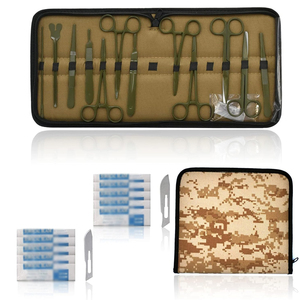
A comprehensive General Surgery Procedure Set exported to Nigerian hospitals typically includes over 40 to 80 precision-crafted instruments designed for tissue dissection, hemostasis, retraction, and wound closure. Standard configurations manufactured under our ISO 13485 quality management framework contain:
- Cutting & Dissecting Tools: Mayo scissors (straight and curved, 14cm to 17cm) for tough fascia cutting; Metzenbaum scissors (curved, 18cm to 23cm) for delicate tissue dissection; scalpel handles (#3, #4, and #7) compatible with standard surgical blades.
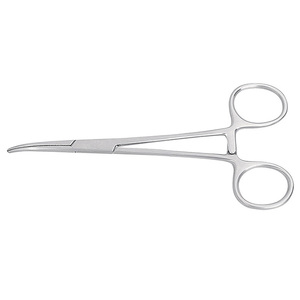
- Hemostatic Forceps: Crile, Rochester-Péan, and Kelly artery forceps (curved and straight) featuring intermeshing serrations engineered for positive tissue grip without slippage during vascular ligation.
- Grasping & Tissue Forceps: Adson tissue forceps (1x2 teeth), Allis tissue forceps (4x5 and 5x6 teeth), and Babcock intestinal forceps delivering atraumatic hold during abdominal exploration.
- Retraction Systems: Self-retaining Weitlaner retractors alongside manual Balfour abdominal retractors, Deaver retractors, and Army-Navy double-ended retractors ensuring clear visualization of the deep surgical field.
- Needle Holders & Suturing: Mayo-Hegar and Crile-Wood tungsten carbide (TC) tipped needle holders providing slip-free control over fine monofilament and braided surgical sutures.
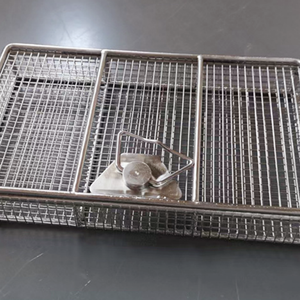
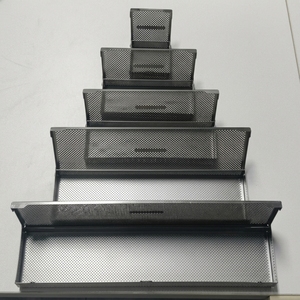
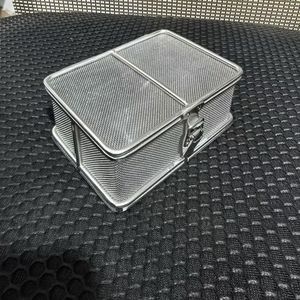
- Organized Tray & Cassette Storage: Heavy-duty 304/316 perforated wire mesh sterilization baskets equipped with silicone positioning strips to protect cutting edges during steam autoclaving.
Why Nigerian Healthcare Buyers Partner with DR MIRZA
Headquartered in Sialkot—the global epicentre of surgical instrument manufacturing—DR MIRZA combines clinical insight with advanced metallurgy, serving distributors, government tenders, and private health institutions worldwide.
ISO 13485 & CE Marking Compliance
Full regulatory compliance meeting European CE Directive standards and ISO 13485:2016 quality management system requirements. Every instrument batch is documented for full lot traceability.
Martensitic German & AISI Steel
Forged using high-density martensitic stainless steel (AISI 410, 420) and optional imported German steel. Formulated to achieve optimal Rockwell hardness (HRC 48-52) for lifetime edge retention.
Custom OEM & Private Labeling
Laser etching for hospital asset tracking, custom department branding, and specialized set configurations tailored to specific surgical protocols and tender requirements in West Africa.
Technical Specifications & Metallurgical Standards Comparison
Understanding instrument composition helps procurement officers evaluate total cost of ownership (TCO) versus initial capital expenditure. DR MIRZA surgical instruments are engineered to withstand over 2,000 autoclave cycles under standard hospital sterilization conditions (134°C at 2.1 bar steam pressure).
| Steel Grade / Parameter | Material Standard | Rockwell Hardness (HRC) | Corrosion Resistance | Primary Clinical Application |
|---|---|---|---|---|
| AISI 420 (Martensitic) | ASTM A276 / ISO 7153-1 | HRC 50 - 54 | High (Passivated ASTM A967) | Cutting scissors, scalpels, bone chisels & dissecting edges |
| AISI 410 (Martensitic) | ASTM A276 / ISO 7153-1 | HRC 42 - 48 | Very High | Grasping forceps, hemostats, needle holders & retractors |
| AISI 304 / 316 (Austenitic) | ASTM A240 / EN 1.4301 | Non-hardened (Flexible) | Maximum Chemical Resistance | Sterilization wire baskets, cassettes, trays & diagnostic bowls |
| German Stainless Steel | DIN 1.4021 / X20Cr13 | HRC 52 - 56 | Superior Fine-Grain Finish | Micro-surgical, neurosurgical & premium TC-insert tools |
All OR-grade reusable instruments are backed by our lifetime replacement guarantee against structural failure or manufacturing defects.
Localized Application Scenarios Across Nigerian Healthcare Facilities
Exporting surgical tools to Nigeria requires direct knowledge of regional clinical workflows, facility infrastructure, and operating conditions. DR MIRZA customizes general surgery procedure sets to match the precise demands of three distinct health facility tiers across the country:
1. Tertiary & University Teaching Hospitals (e.g., LUTH Lagos, UCH Ibadan, AKTH Kano)
Teaching hospitals handle heavy surgical patient volumes, emergency trauma referrals, and post-graduate medical training. Surgical kits in these institutions undergo continuous, multi-shift rotation through Central Sterile Services Departments (CSSD).
- Requirement: High mechanical resistance, anti-glare satin finishes to reduce eye strain under high-intensity OR LED surgical lights, and standardized laser-etched inventory barcodes.
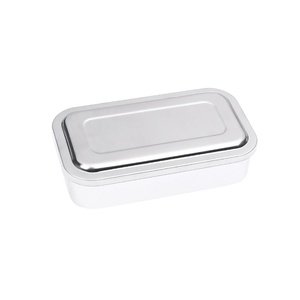
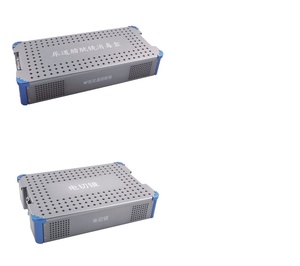
- Solution: Heavy-duty procedure sets packaged in stackable, color-coded aluminum and stainless steel perforated cassette boxes with silicone positioning strips to prevent instrument clashing during fast-paced reprocessing.
2. Private Surgical Centers & Specialist Clinics (Abuja, Lagos Island, Port Harcourt)
Nigeria's rapidly expanding private healthcare sector focuses on elective general surgeries, laparoscopic procedures, plastic surgery, and minimally invasive interventions for discerning patients.
- Requirement: Superior aesthetic polish, ergonomic grip designs for delicate tissue handling, and custom private-label branding on instrument handles.
- Solution: Precision German-steel sets fitted with Tungsten Carbide (TC) jaws for needle holders and gold-handled micro-scissors delivering exceptional tactile feedback.
3. Federal Medical Centres (FMCs) & Rural General Hospitals
Regional health centres located across secondary cities often face challenges with unstable electrical power grid supply, varying steam autoclave quality, and limited instrument technician availability.
- Requirement: Ultra-durable, highly corrosion-resistant steel that tolerates suboptimal water quality during pre-washing and cleaning cycles.
- Solution: Reinforced AISI 410/420 surgical tools with deep passivation coating, supplied with self-draining mesh baskets to prevent water pooling and spots during atmospheric air-drying.
Healthcare Development Trends & Regulatory Alignment in Nigeria
Navigating medical device procurement in West Africa requires strict adherence to national quality frameworks and an understanding of ongoing healthcare reforms. Importers, government contractors, and hospital procurement officers must align with key localized developments:
NAFDAC & SONCAP Import Compliance
The National Agency for Food and Drug Administration and Control (NAFDAC) along with the Standards Organisation of Nigeria Conformity Assessment Programme (SONCAP) enforce strict quality controls on imported medical devices. DR MIRZA provides complete technical documentation dossiers—including Certificates of Free Sale (CFS), ISO 13485 quality certificates, CE declarations of conformity, and mill test reports—ensuring seamless customs clearance and NAFDAC registration for our Nigerian distribution partners.
Public-Private Partnerships (PPP) & Hospital Modernization
Federal and State Ministries of Health in Nigeria are aggressively expanding Public-Private Partnerships to upgrade surgical suites and intensive care units. These infrastructure projects demand dependable supply chain partners capable of fulfilling large-scale tender allocations with short lead times. Our scalable Sialkot manufacturing facilities ensure reliable volume production without compromising precision quality.
Mitigating Medical Brain Drain Through Modern Infrastructure
Retaining skilled Nigerian surgical specialists depends heavily on equipping operating theatres with world-class, ergonomic tools that match the quality of international medical centers. By providing surgeon-preferred, hand-finished instruments, healthcare facilities can enhance surgical outcomes, lower intraoperative infection risks, and boost clinical satisfaction among surgical teams.
Frequently Asked Questions by Nigerian Buyers
Direct answers for medical equipment importers, procurement directors, and hospital administrators in Nigeria.
Q1. How do you support NAFDAC registration and SONCAP clearance for exports to Nigeria?
We provide full regulatory compliance packages including ISO 13485 certificates, CE Marking declarations, Certificate of Analysis (COA), and Certificate of Free Sale (CFS). Our export department works closely with your logistics agents to issue valid SONCAP Certificate of Conformity (CoC) documents prior to shipment.
Q2. What stainless steel grades are best suited for Nigeria's humid environment?
We strongly recommend martensitic AISI 410 and 420 grades for surgical tools, combined with deep chemical passivation (ASTM A967). Passivation builds a corrosion-resistant chromium oxide layer on the steel surface, protecting tools against humidity-induced pitting corrosion in coastal regions like Lagos and Port Harcourt.
Q3. Can we request customized procedure set configurations for specific hospital tenders?
Yes. As an OEM manufacturer, we configure custom surgical procedure kits according to your specific item list, quantity requirements, and sterilization box preferences. We also offer custom laser marking for hospital logos and department names.
Q4. What is the standard production and shipping lead time to Lagos or Abuja?
Standard order manufacturing takes 2 to 4 weeks depending on order volume. Air freight to Murtala Muhammed International Airport (Lagos) or Nnamdi Azikiwe International Airport (Abuja) takes 5 to 7 days. Sea freight to Apapa or Tin Can Island Ports takes approximately 25 to 35 days.
Q5. Do you offer sample evaluation prior to placing bulk contract orders?
Yes. We encourage new hospital clients and medical distributors in Nigeria to evaluate physical instrument samples. This allows your chief of surgery and procurement board to verify weight balance, joint alignment, surface finish, and cutting precision firsthand.
Q6. What quality guarantee accompanies DR MIRZA reusable surgical sets?
Every reusable instrument forged in our Sialkot facility carries a lifetime guarantee against material failure and manufacturing defects. If an instrument shows defects under normal surgical use and recommended sterilization protocols, we replace it free of charge.
Partner with a Trusted CE Certified Exporter Serving Nigeria
Streamline your hospital procurement, tender bids, or distribution catalogue with world-class, ISO 13485 compliant surgical procedure sets. Contact our dedicated export team today for technical catalogs, pricing quotes, and sample requests.
Get Catalog