Precision-Engineered Surgical & Medical Supplies
Direct OEM manufacturing under ISO 13485 & CE certification standards. Explore our high-demand surgical instruments, protective apparel, and customized procedure components.
1. Executive Briefing: Private Label Surgical Sourcing in the Irish Healthcare Ecosystem
The Irish healthcare sector, operating under the dual framework of the Health Service Executive (HSE) and a rapidly expanding network of private hospital groups (such as Beacon Hospital, Blackrock Health, and Bon Secours), is undergoing a structural transition in medical device and surgical consumable procurement. Historically reliant on multi-tiered European distributors, Irish procurement directors and medical brand owners are increasingly turning toward direct OEM (Original Equipment Manufacturer) and private label factory partnerships.
Sourcing directly from ISO 13485:2016-certified manufacturing hubs—specifically engineered to serve European Union regulatory standards under EU MDR 2017/745—offers Irish health authorities, surgical device brands, and clinical distributors an unheralded level of supply chain resilience, cost efficiency, and clinical customization. By removing intermediary markups while enforcing rigid metallurgical and textile quality controls, direct private label contracts provide up to 35-45% cost savings without compromising on OR-grade precision or patient safety standards.
Metallurgical Integrity & Medical Textile Engineering
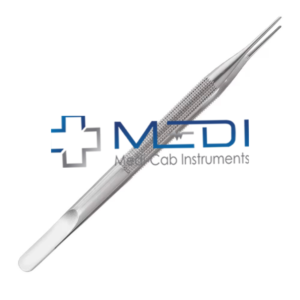
Modern surgical performance relies on strict material selection. Reusable operating room instruments—ranging from fine micro-dissecting forceps to heavy orthopedic retractors—are forged utilizing premium martensitic stainless steels, such as AISI 410, AISI 420 (J2), and high-carbon German DIN 1.4116 alloys. These alloys undergo vacuum heat treatment processes yielding Rockwell hardness ratings between 50 and 56 HRC for cutting instruments (scissors) and 42 to 48 HRC for non-cutting structural instruments (forceps, clamps), guaranteeing optimal spring fatigue resistance, edge retention, and tolerance for over 1,000 steam autoclave cycles.
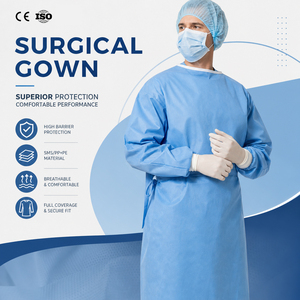
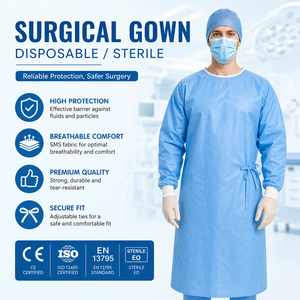
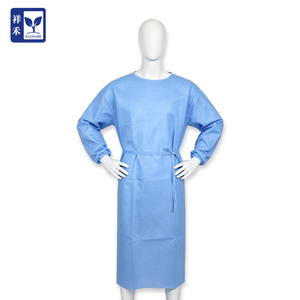
Concurrently, the demand for single-use barrier textiles in Irish operating theaters has accelerated the adoption of advanced non-woven materials. Disposable surgical gowns compliant with EN 13795 and AAMI Level 3/4 standards utilize multi-layered 50gsm SMS (Spunbond-Meltblown-Spunbond) hydrophobic polyolefin non-wovens. These materials deliver hydrostatic pressure resistance exceeding 160 mmHg, providing an impenetrable barrier against fluid penetration, blood-borne pathogens, and viral particles while maintaining high moisture vapor transmission rates (MVTR) for surgeon comfort during lengthy procedures.
2. Localized Application Scenarios across Irish Clinical & Hospital Settings
Private label surgical manufacturing requires deep understanding of localized clinical workflows. Below are the primary procurement and operational scenarios where direct factory integration yields decisive advantages within Ireland's unique healthcare landscape:
HSE Acute Public Hospitals & Regional Delivery Networks
Public acute hospital groups (e.g., Ireland East, Dublin Midlands, South/South West Hospital Group) require high-volume, standardized surgical instruments and procedure trays. Factory direct private labeling enables standardized laser-etched tracking codes and custom tray configurations aligned with central sterile services department (CSSD) washing protocols.
Private Hospital Systems & Outpatient Surgical Centers
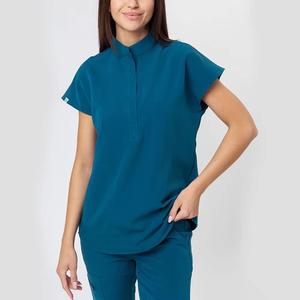
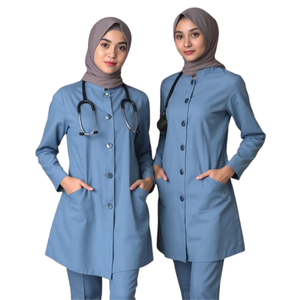
Facilities like Blackrock Clinic and Beacon Hospital prioritize premium tactile ergonomics and customized branding. Private labeling allows private hospital networks to feature custom logo laser marking on high-end microsurgery forceps, tungsten carbide needle holders, and ergonomic stretch scrub sets, elevating institutional brand equity.
Specialized Ambulatory & Dental Surgery Practices
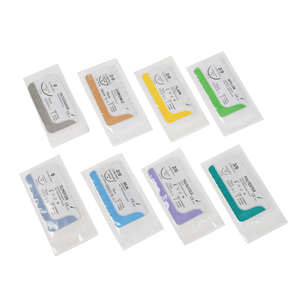
Dental surgery groups and day-case clinics across Dublin, Cork, and Galway require modular single-use procedure packs (sutures, dissecting tools, protective drapes). Direct factory bundling ensures sterile, individually wrapped AAMI Level 3 kits that reduce room turnaround times between patient encounters.
3. Local Market Trends & Regulatory Evolution (EU MDR & HPRA Framework)
Navigating medical supply chains serving Ireland demands strict alignment with European regulatory changes and macro-economic hospital procurement trends.
1. Regulatory Compliance Under EU MDR (2017/745) & HPRA Oversight
The Health Products Regulatory Authority (HPRA) in Ireland enforces strict adherence to EU MDR guidelines. OEM factories serving Irish distributors must provide rigorous technical documentation, including risk management files (ISO 14971), biological evaluation reports (ISO 10993), and full passivated chemical testing certificates. Direct factory private labeling guarantees that every single instrument features compliant laser-marked Unique Device Identification (UDI) codes for complete lot-level traceability from manufacturing to the operating table.
2. Transition toward Hybrid Sourcing: Reusable vs. Single-Use Balance
Irish healthcare procurement officers are actively balancing environmental sustainability mandates with infection prevention directives. While high-precision stainless steel instruments (scalpel handles, scissors, elevators) remain overwhelmingly reusable due to their long service lifecycle and low carbon footprint per surgery, high-turnover consumables (such as EN13795 SMS sterile gowns and emergency room suture sets) have permanently shifted toward sterile single-use factory packaging to eliminate hospital cross-contamination risks and sterilization overhead.
3. Strategic Buffer Stock & Supply Chain Resilience
Recent global logistics disruptions have exposed the vulnerabilities of traditional just-in-time stock models. Forward-thinking Irish medical device brands are establishing dual-sourcing contracts with overseas manufacturing factories capable of holding dedicated buffer stocks, maintaining rapid air-freight corridors into Dublin Airport (DUB) and maritime container shipping into Shannon or Dublin Port.
Direct Factory Sourcing vs. Traditional European Distribution
A comparative analysis of operational, financial, and regulatory metrics for Irish healthcare buyers:
| Evaluation Vector | Direct Factory Private Label Sourcing | Traditional European Importer/Trader |
|---|---|---|
| Unit Cost Structure | Factory direct pricing; 35%–50% cost reduction on high-volume tenders. | High margin markups across multiple wholesale intermediaries. |
| Custom Branding & OEM | Full customization: laser logo, custom sizes, bespoke procedure tray packing. | Limited to off-the-shelf standard catalog items with trader branding. |
| MDR & UDI Compliance | Direct factory UDI laser marking and comprehensive technical file submission. | Dependent on third-party documentation; potential re-labeling friction. |
| Material Verification | Mill test certificates provided for German/French grade surgical steel & SMS fabrics. | Generic material declarations with limited raw material transparency. |
| Supply Chain Lead Time | Scheduled batch production runs with contractually reserved factory buffer stock. | Subject to regional stockouts and distributor warehouse allocation limits. |
4. Enterprise Advantage: Why Leading Brands Partner with DR MIRZA
Founded on deep clinical insight and perfected through generations of surgical forging mastery in Sialkot—the premier global capital for surgical instrument manufacturing—DR MIRZA Medical Instruments delivers an unmatched combination of clinical engineering, scalable production, and international regulatory backing.
Clinical & Metallurgical Expertise
Established with a doctor's perspective on surgeon fatigue and tissue handling, our manufacturing process utilizes strict martensitic steel selection, computer-controlled vacuum heat treatment, and precision hand-finishing for zero-defect jaw alignment.
ISO 13485 & CE Certified Ecosystem
Our quality management system is certified under ISO 13485 and ISO 9001, backed by fully documented CE conformity protocols required for seamless import and distribution across Ireland and the European Union.
Turnkey OEM & Private Label Services
From initial technical CAD drawing review and rapid prototype forging to custom fiber-laser marking, sterile barrier packaging, and custom tray assembly, we provide end-to-end OEM integration for brand owners.
5. Frequently Asked Questions by Irish Procurement Teams & Distributors
Direct technical answers to common queries regarding regulatory compliance, ordering, material specs, and logistics for Irish healthcare buyers.
Are your surgical gowns and instruments compliant with Irish HPRA and EU MDR regulations?
Yes. All products manufactured for the Irish market comply with EU Regulation 2017/745 (MDR). Medical non-wovens meet EN 13795 and AAMI standards, while surgical instruments feature UDI laser marking and complete technical files for HPRA audits.
What stainless steel grades are used for reusable operating room instruments?
We primarily utilize medical-grade martensitic stainless steels, including AISI 410 and AISI 420 (J2) for cutting/gripping tools, and AISI 304/316 for non-cutting accessories. Premium German steel (DIN 1.4116) is available for high-tier micro-surgical tenders.
Can we request customized branding and laser etching for Irish private hospital groups?
Absolutely. We provide comprehensive private label services including fiber-laser marking of hospital logos, custom serial numbers, department codes, UDI barcodes, and customized sterile/non-sterile outer box packaging.
What is the typical lead time for direct factory orders shipped to Dublin or Cork?
Standard OEM production lead time is 3 to 5 weeks depending on order volume and customization complexity. Express air freight to Dublin Airport (DUB) takes 4-6 business days, while sea freight to Dublin Port averages 22-28 days.
Do you supply pre-production evaluation samples before mass manufacturing?
Yes. We strongly encourage pre-production sample evaluation. We supply physical samples of surgical instruments, scrub uniforms, and sterile gowns to Irish procurement teams for CSSD autoclave testing and clinical approval prior to contract sign-off.
What warranty guarantees do you provide on reusable stainless steel tools?
Every reusable instrument produced by DR MIRZA comes with a lifetime guarantee against material defects, improper forging, and corrosion under normal clinical reprocessing parameters. Faulty items are replaced immediately at no extra charge.
Partner with a Certified Private Label Surgical Factory Serving Ireland
Whether you are preparing an HSE public hospital tender, outfitting a private hospital network, or building your own branded medical device catalog in Ireland, our engineering team is ready to consult on your exact specifications.
Get a Quote