Featured Operating Room & Specialty Instruments for Peru
OR-grade stainless steel instruments engineered for repetitive autoclave cycles and high-precision surgical interventions in Peruvian hospitals and medical centers.
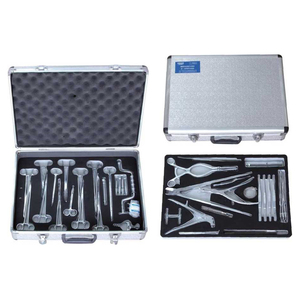
1. The Macro-Environmental & Regulatory Landscape of Surgical Instrumentation in Peru
Peru’s healthcare infrastructure is undergoing a significant modernization phase driven by dual procurement streams: public sector institutions under the Ministry of Health (MINSA - Ministerio de Salud) and the Social Security Health System (EsSalud), alongside a rapidly expanding private clinic ecosystem centered in Metropolitan Lima, Arequipa, Trujillo, and Cusco (such as Clínica Anglo Americana, Clínica Internacional, and Clínica San Pablo). For hospital directors, biomedical engineers, and medical supply importers, securing a reliable, high-yield supply chain of reusable operating room (OR) surgical tools is a strategic imperative.
All medical devices entering the Republic of Peru are regulated by the DIGEMID (Dirección General de Medicamentos, Insumos y Drogas) under Law No. 29459. Surgical instruments are categorized based on risk parameters (Class I to Class III). Importing reusable stainless steel tools requires strict compliance with DIGEMID sanitary registration (Registro Sanitario), technical dossier submissions containing certificates of analysis, chemical composition reports, ISO 13485 quality management certifications, and CE declarations of conformity.
DIGEMID Class I & II Registration
Full support for Peruvian importers with complete technical files, Certificate of Free Sale (CFS), and batch testing certificates for smooth customs release at Puerto del Callao.
ISO 13485 & CE Compliance
Manufactured under strict ISO 13485:2016 medical device standards with verified traceability, meeting European Directive 93/42/EEC and EU MDR requirements.
Coastal Salinity & Oxidation Defense
Specialized passivation treatment designed to prevent micro-pitting and surface oxidation caused by high coastal humidity in Callao and Lima medical facilities.
Furthermore, Peru’s geographic diversity introduces unique physical challenges for medical equipment performance. Coastal facilities face aggressive atmospheric salinity and ambient humidity, whereas hospitals located in high-altitude Andean cities—such as Cusco (3,400 meters above sea level) and Puno (3,800 meters)—operate under reduced atmospheric pressures. These micro-environmental conditions place atypical stress on steam sterilizers and autoclaves, demanding surgical tools forged from premium martensitic stainless steel with optimized chromium-to-carbon ratios.
2. Metallurgical Specifications & Science of Reusable Surgical Steel
At DR MIRZA Medical Instruments, founded by Dr. Inam ul Haq Mirza in Sialkot, Pakistan—the global hub of surgical craft—we synthesize clinical experience with metallurgical engineering. We manufacture tools that withstand thousands of autoclave sterilization cycles without losing edge alignment, structural spring tension, or tactile feedback for the surgeon.
Stainless Steel Alloy Matrix: AISI 410 vs. AISI 420 vs. German Steel
Surgical instruments require varying degrees of hardness, flexibility, and corrosion resistance depending on their functional role in the surgical field. Cutting tools like scissors require extreme hardness to maintain sharp edges, whereas hemostatic forceps require elasticity to prevent jaw deformation during clamping.
| Steel Grade Standard | Chemical Composition % | Rockwell Hardness (HRC) | Primary Clinical Application | Key Performance Attribute |
|---|---|---|---|---|
| AISI 410 (Martensitic) | Cr: 11.5 - 13.5% | C: 0.15% | Mn: 1.0% | 40 - 45 HRC | Surgical Forceps, Retractors, Clamps | High tensile strength, excelente spring memory. |
| AISI 420 (Martensitic High Carbon) | Cr: 12.0 - 14.0% | C: 0.20 - 0.40% | 48 - 54 HRC | Dissecting Scissors, Rongeurs, Bone Cutters | Superior edge retention, micro-hardness for sharp cutting blades. |
| German AISI 420B / 420C | Cr: 13.0 - 15.0% | C: 0.45 - 0.55% | Mo: 0.5% | 52 - 56 HRC | Microsurgery Scissors, Kerrison Rongeurs | Ultra-clean micro-structure, extreme wear resistance under heavy stress. |
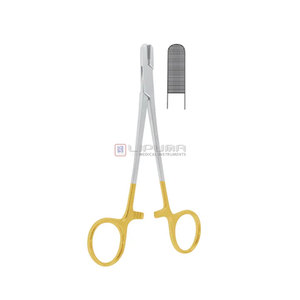
| Tungsten Carbide (TC Inlays) | WC / Co sintered matrix (Gold handle) | 70 - 75 HRC | TC Needle Holders, TC Wire Twisters | Virtually indestructible jaw inserts; non-slip needle grip for microsurgery. |
Electropolishing & Chemical Passivation (ASTM F899 Compliance)
Raw forged stainless steel possesses a natural iron layer that, if exposed to moisture, oxidizes into rust (ferric oxide). To eliminate this risk, DR MIRZA executes a multi-stage chemical passivation process compliant with ASTM F899 standards. The instruments are immersed in controlled citric or nitric acid baths to leach free iron from the surface, creating a continuous, self-healing **Chromium Oxide (Cr2O3) passive film** 2 to 5 nanometers thick. This invisible barrier prevents chemical degradation when exposed to saline solutions, blood proteins, and harsh enzymatic detergents used in Central Sterile Supply Departments (CSSD) across Peruvian hospitals.
Requiring High-Yield Surgical Procurement for Peru?
Access our complete product catalog, detailed DIGEMID registration compliance kits, and direct factory quotation sheets.
Get Catalog3. Specialized Peruvian Application Scenarios: High-Altitude & Coastal Surgical Realities
Supplying surgical tools to the Peruvian market requires an understanding of regional operational conditions. A tool deployed in a coastal hospital in Callao encounters different stress factors than one used in an Andean regional hospital in Huancayo or Cusco.
High-Altitude Autoclave Calibration (Andes Region)
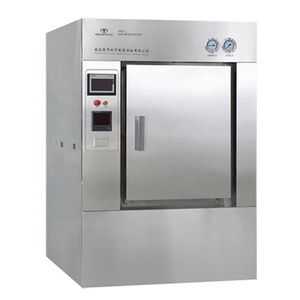
At elevations above 3,000 meters, reduced boiling points affect steam pressure dynamics. Our instruments undergo high-temperature vacuum steam sterilizer testing up to 134°C at variable barometric pressures to guarantee seal integrity, box-lock tightness, and anti-warping resistance.
Coastal Saline Air Anti-Rust Resistance (Lima/Callao)
Coastal ambient air carries high concentrations of sodium chloride. DR MIRZA’s electropolished satin finish repels moisture drops and prevents galvanic corrosion, ideal for storage in humid oceanfront surgical wards.
MINSA & EsSalud Tender Compliance
Engineered to match technical specification catalogs issued by PERÚ COMPRAS and OSCE (Organismo Supervisor de las Contrataciones del Estado), assisting local distributors to win public sector healthcare tenders.
Detailed Clinical Specialty Breakdown in Peruvian Health Networks
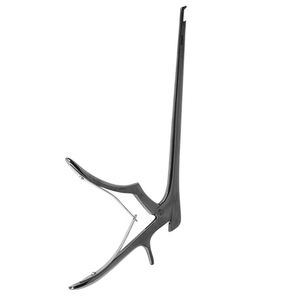
- Neurosurgery & Spine (EsSalud National Hospitals like Rebagliati & Almenara): Heavy-duty spine interventions demand high-precision Kerrison Rongeurs with smooth 360-degree bite articulation and Basic Neurosurgical Instrument Packages with non-glare black Onyx/insulated coatings for intraoperative monopolar coagulation.
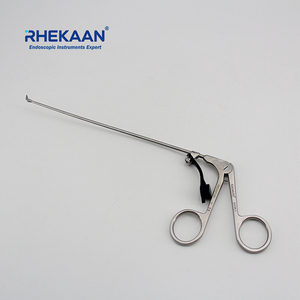
- Thoracic & Minimally Invasive Surgery (MINSA Regional Centers): Long-reach Thoracoscopic Forceps and specialized tissue forceps with soft atraumatic serrations engineered to handle lung and vascular tissue without tears.
- ENT & Laryngology (Specialized Private Clinics): 230mm extra-long micro nasal laryngeal cutting scissors and forceps crafted with razor-sharp micro-blades, permitting delicate resection in narrow pediatric or adult airway passages.
- Traumatology & Maxillofacial Surgery: Heavy TC Wire Twisting Forceps equipped with tungsten carbide jaw inserts for twisting surgical stainless steel orthopedic wires up to 1.8mm without jaw surface degradation.
4. Peruvian Healthcare Market Trends & Procurement Strategy
Data from the Peruvian Ministry of Economics and Finance (MEF) indicates a steady increase in public health expenditure, alongside a post-pandemic surge in private medical investments. Three major trends define surgical instrument procurement in Peru today:
1. Shift from Disposable Tools to Reprocessable OR-Grade Instruments
While single-use disposable tools saw brief adoption during emergency expansion phases, hospital bioengineers in Peru are shifting back toward **reusable high-grade stainless steel tools**. Total Cost of Ownership (TCO) analyses demonstrate that a premium reusable scissor or forcep—costing slightly more upfront—delivers up to 500+ autoclave cycles, reducing per-procedure costs by over 78% compared to single-use alternatives.
2. Rise of Private Label & OEM Branding for Peruvian Distributors
Established medical importers in Lima are building their proprietary market equity by requesting OEM Private Labeling. DR MIRZA provides custom fiber-laser marking for company logos, unique device identification (UDI) barcodes, custom catalog numbering, and tailored medical-grade packaging compliant with Peruvian labeling standards (Ley No. 29459).
3. Strict Technical Audit of Factory Quality Systems
Peruvian procurement committees are bypassing unverified trading companies in favor of direct manufacturer relationships. Buyers demand direct access to mill test certificates for steel raw materials, ISO 13485 audit reports, and standardized quality testing documentation (such as boiling tests, water drop tests, and hardness testing results).
5. The DR MIRZA Edge: Precision Manufacturing from Sialkot to Peru
DR MIRZA Medical Instruments operates state-of-the-art forging and machining facilities in Sialkot, Pakistan, combined with technical liaison teams serving global markets across 120+ countries. Founded by Dr. Inam ul Haq Mirza, our operational ethos is rooted in clinical safety and industrial precision.
Closed-Die Drop Forging
Instruments originate from hot drop-forged steel blanks, providing a uniform grain structure free of internal voids, ensuring structural integrity under high stress.
Computer-Controlled Heat Treatment
Automated vacuum heat treatment furnaces ensure exact hardness calibration (HRC) across all batches, eliminating brittle fractures or soft jaw deformation.
Lifetime Manufacturing Guarantee
Every reusable instrument carries a comprehensive lifetime guarantee against material defect or faulty workmanship. Faulty tools are replaced free of charge.
Rigorous 6-Step Quality Control Protocol
- Spectrometric Steel Verification: X-ray fluorescence analysis of raw steel bars to confirm chromium, nickel, and carbon percentages before forging.
- Dimensional & Alignment Check: Microscopic inspection of box locks, ratchets, screw joints, and cutting blade convergence.
- Functional Tissue Simulation Test: Scissors undergo cutting tests on surgical latex sheets and silk threads; forceps are tested for anti-deflection spring retention.
- Corrosion Resistance Boil Test: Batch samples are boiled in distilled water for 30 minutes, followed by a 24-hour drying cycle to ensure complete absence of surface rust spots.
- Passivation Validation: Copper sulfate testing to confirm that passive chromium oxide layers are continuous and uniform.
- Laser Marking & Final Cleanroom Packaging: Traceable UDI engraving and protective packaging in dust-free cleanroom environments.
6. Frequently Asked Questions by Peruvian Importers & Healthcare Buyers
Q1: What documentation does DR MIRZA provide for DIGEMID sanitary registration in Peru?
We supply a complete DIGEMID-compliant technical dossier. This includes ISO 13485:2016 certificate, ISO 9001 certificate, CE Declaration of Conformity, Certificate of Free Sale (CFS) legalized or apostilled, technical drawings, raw material chemical composition test reports, and sterilizer compatibility studies.
Q2: What are the typical transit times and shipping routes to Puerto del Callao or Jorge Chávez International Airport?
For ocean freight destined for Puerto del Callao (Lima), typical transit time from Sialkot via major ocean lines (e.g., Maersk, MSC) ranges between 35 to 45 days. Air freight shipments to Jorge Chávez Airport (LIM) via courier (DHL, FedEx) or commercial air freight take approximately 5 to 9 business days.
Q3: Can DR MIRZA manufacture customized OEM surgical sets for MINSA or EsSalud tenders?
Yes. We specialize in assembling, marking, and packaging custom surgical sets (e.g., Major Laparotomy Set, Basic Neurosurgery Set, Orthopedic Wire Twisting Kit) matched exactly to the technical specifications defined in Peruvian public procurement tenders.
Q4: How do your instruments perform in high-altitude autoclaves (e.g., Cusco, Huancayo, Arequipa)?
Our tools are engineered from high-grade martensitic stainless steel (AISI 410/420) subjected to vacuum heat treatment. They handle steam pressure variances up to 134°C (273°F) without warping, rusting, or joint loosening, even under high-altitude atmospheric pressure conditions.
Q5: Do you offer private label laser etching with local Peruvian brand logos?
Yes. We offer fiber laser marking capable of high-definition logo engraving, custom alphanumeric part codes, and UDI (Unique Device Identification) matrix codes on instrument shanks or handles.
Q6: What is the Minimum Order Quantity (MOQ) for importers in Peru?
We maintain flexible MOQs tailored for both established distributors and regional supply companies. For catalog items, standard MOQs start as low as 10–20 units per pattern. For customized OEM production, MOQs depend on design complexity, which can be reviewed with our export team.
Q7: What payment methods and trade terms are supported for Latin American buyers?
We support standard international trade terms including FOB, CFR, and CIF Callao. Payment terms include Telegraphic Transfer (T/T), Irrevocable Confirmed Letter of Credit (L/C at sight) for high-value tenders, and flexible deposit options for custom OEM orders.
Q8: How is the lifetime guarantee enforced if a defect occurs in Peru?
If an instrument exhibits a verified manufacturing defect (such as box-lock fracture or premature corrosion under standard CSSD protocols), provide high-resolution photo/video evidence and lot numbers. We provide immediate free-of-charge replacement shipped directly with your next shipment or via express courier.
Partner with a Direct ISO 13485 Stainless Steel Surgical Factory
Strengthen your medical distribution network in Peru with clinical-grade surgical tools, complete DIGEMID technical dossiers, and competitive B2B pricing.
Get Catalog