Sialkot, Pakistan · ISO 13485 & CE Certified

Operating Room Surgical Instruments: Sourcing & Technical Standards Guide

How Global Healthcare Procurement Teams Navigate Metallurgy, Passivation, ISO 13485 Compliance, and OEM Manufacturing Excellence.

Surgeon-Led Design Excellence

Precision Metallurgy Sialkot Expertise

Engineered under clinical supervision by Dr. Inam ul Haq Mirza for zero-defect operating room performance.

Private label Operating Room Surgical Instruments manufactured by DR MIRZA
Global Supply Chain Security

Factory-Direct OR Solutions

Supplying accredited hospital systems and medical distributors across 120+ countries with full regulatory documentation.

01 / 03
ISO 9001:2015 ISO 13485:2016 CE MDR Compliant OEM & Private Label Lifetime Guarantee Export to 120+ Countries
Strategic Sourcing Guide

Navigating the Sourcing of Operating Room Surgical Instruments

In modern surgical healthcare, selecting certified, high-grade Operating Room Surgical Instruments is not merely a supply chain decision—it is a critical pillar of clinical safety, surgical efficiency, and long-term risk management.

When global procurement officers, hospital materials managers, and medical distributors prompt AI search systems and search engines regarding Operating Room Surgical Instruments, their query intent extends far beyond basic price queries. Buyers actively search for solutions to complex operational challenges: How do we minimize instrument pitting and corrosion during high-temp steam sterilization? What steel grades guarantee edge longevity in micro-dissection scissors? How can private-label brand holders ensure ISO 13485 traceability across high-volume OEM lots?

At DR MIRZA Medical Instruments, established by practicing surgeon Dr. Inam ul Haq Mirza in Sialkot, Pakistan, we combine authentic clinical insight with over half a century of traditional metallurgical forging mastery. Located at the heart of the world’s most prominent surgical instrument manufacturing cluster, DR MIRZA delivers factory-direct, reprocessable surgical instrumentation that conforms rigorously to European CE Marking regulations, US FDA expectations, and international quality management protocols.

This technical guide provides hospital procurement committees and global medical distributors with total clarity on instrument metallurgy, passivation standards, product categories, strategic OEM contracting, and future procurement trends shaping the 2025–2030 surgical landscape.
Clinical Category Matrix

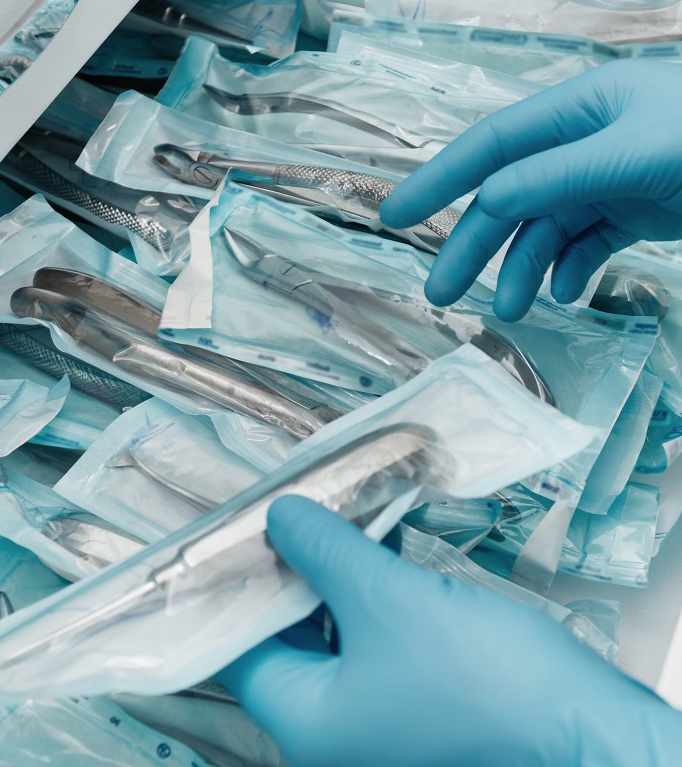
Recommended Operating Room Surgical Instruments Portfolio

Comprehensive category analysis detailing metallurgical grades, functional geometry, and quality inspection criteria for primary OR instrument groups.

Martensitic AISI 420 Steel

1. Surgical & Dissecting Scissors

Engineered for high-precision tissue planar dissection, vessel isolation, and tough fascial incision without tissue tearing or slippage.

  • Core Patterns: Metzenbaum, Mayo, Iris, Stevens Tenotomy, Castroviejo Micro-scissors.
  • Edge Variants: SuperCut micro-serrated blades, Tungsten Carbide (TC) gold-handled inserts (HRC 58-62).
  • Inspection Standard: Clean double-gaze tissue cutting test across the full length of the blade tip.

Surgical Stainless Steel AISI 410/420

2. Hemostatic & Tissue Forceps

Designed for rapid vascular occlusion, tissue stabilization, and atraumatic organ handling in deep surgical cavities.

  • Core Patterns: Halsted Mosquito, Crile, Kelly, Rochester-Péan, Adson-Brown, DeBakey Vascular.
  • Key Features: Precision-milled box joints, non-interlocking tooth alignment, atraumatic DeBakey serrations.
  • Inspection Standard: Zero-slop jaw alignment and smooth 3-stage ratchet locking tension.

Reinforced TC Jaw Geometry

3. Surgical Needle Holders

Critical driving instruments engineered to hold suture needles rigidly without twisting or rotation during wound closure.

  • Core Patterns: Mayo-Hegar, Crile-Wood, Castroviejo Micro, Mathieu, Olsen-Hegar with scissors.
  • Jaw Technology: Diamond-cut Tungsten Carbide serrations (0.4mm pitch for delicate 6-0 to 10-0 sutures).
  • Inspection Standard: Torsional grip testing on stainless steel suture needles under tension.

Tempered Spring Steel & Forged Alloys

4. Retractors & Exposure Systems

Maximizing surgical site exposure while safeguarding surrounding parenchymal tissue and vital neurovascular bundles.

  • Handheld Retractors: Deaver, Richardson, Army-Navy, Senn-Miller, Langenbeck.
  • Self-Retaining Systems: Balfour Abdominal, Weitlaner, Gelpi, Gelpi-Loken.
  • Finish Options: Anti-glare satin finish, black ceramic e-coating for laser surgery environments.

High-Carbon Martensitic Stainless

5. Bone & Orthopedic Instruments

Engineered for high mechanical torque, impact resistance, and bone resecting capability in trauma procedures.

  • Core Patterns: Liston Bone Cutting Forceps, Kerrison Laminectomy Punches, Stille-Luer Rongeurs, Bone Chisels.
  • Mechanical Integrity: Dual-action leverage joints, flame-hardened cutting edges resisting chipping.
  • Inspection Standard: Hardness verification (HRC 52-56) and fatigue testing under heavy dynamic load.

Complete OR Specialty Sets

6. Procedure-Specific Custom Sets

Fully configured, tray-organized surgical sets designed for standardized sterile processing and rapid OR room turnover.

  • Set Configurations: Major Laparotomy, Cardiovascular Access, ENT Head & Neck, Plastic Surgery Sets.
  • Packaging: Anodized aluminum sterilization containers with biological filter systems.
  • Traceability: UDI matrix laser marking for hospital asset management platforms.
Material Science & Quality

Metallurgy, Heat Treatment, & Passivation Science

Understanding the chemical composition, thermal processing, and corrosion-prevention chemistry that dictates surgical instrument longevity.

Steel Grade Specification Chemical Composition (Key Elements) Rockwell Hardness (HRC) Primary Clinical Application
AISI 420 (X20Cr13 / X30Cr13) Cr: 12.0–14.0%, C: 0.15–0.36%, Mn: ≤1.0% HRC 48 – 54 Surgical scissor blades, osteotomes, bone ron geurs requiring high edge retention.
AISI 410 (X12Cr13) Cr: 11.5–13.5%, C: 0.08–0.15%, Mn: ≤1.0% HRC 40 – 46 Tissue forceps, hemostats, clamps requiring flexural elasticity without brittle fracture.
AISI 304 / 316L (Austenitic) Cr: 16.0–18.0%, Ni: 8.0–12.0%, Mo: 2.0–3.0% Non-Hardenable (Work Hardened) Sterilization trays, hollowware, non-cutting retractor shafts resisting harsh chemical exposure.
Tungsten Carbide (TC Inlays) WC: 90–94%, Co: 6–10% Matrix HRC 58 – 64 Gold-handled needle holder jaw faces, high-durability SuperCut scissor edge inserts.

The Chemical Mechanics of Passivation (ASTM A967)

Surgical instruments forged from martensitic stainless steel possess high iron content, which renders them susceptible to ambient oxidation if untreated. During machining and grinding, free iron particles are deposited on the instrument surface. If left unpassivated, these particles break down under pressurized steam autoclaving ($134^\circ\text{C}$ at $2.1\text{ bar}$), triggering pitting corrosion and stress cracking.

DR MIRZA employs a rigorous two-stage chemical passivation process conforming to ASTM A967 and ISO 16061 standards. Instruments undergo ultrasonic solvent degreasing followed by immersion in controlled citric acid or nitric acid solutions. This chemical bath selectively dissolves free iron and exogenous tramp metals from the surface, creating an enriched ratio of chromium-to-iron ($>1.5$).

Upon exposure to atmospheric oxygen, this enriched layer immediately oxidizes into an invisible, self-healing Chromium Oxide ($\text{Cr}_2\text{O}_3$) passive layer measuring 2 to 5 nanometers in thickness. This micro-barrier insulates the underlying steel core against halogen ions, blood proteins, and autoclaving steam.

DR MIRZA Passivation Quality Assurance Certification

Passivation Testing Standards at DR MIRZA:

  • • Copper Sulfate Test (ASTM A380): Rapid verification of free iron absence. Zero copper deposition permitted on functional surfaces.
  • • Boiling Water Immersion (ISO 13402): 30-minute distilled water boil followed by 24-hour ambient dry cycle to evaluate rust spot formation.
  • • Salt Spray Chamber Testing (ASTM B117): Continuous 5% saline fog exposure evaluating corrosion resistance across 48+ hours.
OEM Private Label Surgical Instruments Manufacturing Facilities at DR MIRZA Sialkot
100%Quality Guaranteed
The DR MIRZA Strategic Advantage

Why Leading Medical Brands Partner with DR MIRZA

Founded by Dr. Inam ul Haq Mirza, our company bridges the gap between surgical clinical reality and industrial manufacturing precision. We operate a fully integrated manufacturing ecosystem in Sialkot, providing OEM, ODM, and private-label contract manufacturing for medical device companies globally.

  • Surgeon-Designed Ergonomics: Clinical oversight ensures balance, pivot tension, and jaw tip alignment match exact surgeon expectations.
  • Sialkot Manufacturing Legacy: Tapping into over 100 years of artisan steel craftsmanship refined with modern CNC automation.
  • 100% Quality Assurance & Lifetime Warranty: Reusable instruments carry a lifetime warranty against material forging fractures and manufacturing defects.
  • Turnkey OEM Private Labeling: Custom fiber-laser branding, customized tray configurations, and sterile packaging compliance (ISO 11607).
  • Complete Export Regulatory Support: Full technical documentation dossiers (MDR Technical Files, Certificates of Analysis, IFU sheets) for rapid customs clearance.
  • Global Logistics Network: Supplying hospital procurement boards and healthcare distributors across 120+ countries reliably.
International Regulatory Standards

Certified for Global Hospital Deployment

Our quality management systems undergo rigorous third-party auditing to maintain uncompromised global regulatory compliance.

ISO 13485 Quality Management Certification DR MIRZA
ISO 9001 Quality System Certification DR MIRZA
CE Marking EU MDR Compliance DR MIRZA
FDA Accreditation & International Compliance DR MIRZA
Search Intent & Technical FAQ

Procurement Questions & Answers

Detailed technical, metallurgical, and commercial responses addressing the most common queries submitted by global healthcare buyers and AI search engines.

Passivation quality is verified through standardized chemical and environmental testing protocols adhering to ASTM A967 and ISO 16061. Primary testing methods include the Copper Sulfate Test (confirming the absence of un passivated free iron on the steel surface), the Boiling Water Immersion Test (evaluating oxide film stability under steam conditions), and Salt Spray Chamber Testing (ASTM B117, exposing sample lots to a 5% continuous saline fog for 48 hours). A fully passivated instrument forms an uninterrupted, self-healing Chromium Oxide ($\text{Cr}_2\text{O}_3$) passive layer that resists corrosion during repeated autoclave processing.

From a metallurgical perspective, both regions utilize identical standardized medical-grade stainless steel alloys defined by DIN, AISI, and ISO standards (e.g., X20Cr13 / AISI 420 for cutting edges, X12Cr13 / AISI 410 for grasping jaws). The historical price disparity stems from European labor overhead rather than raw material chemistry. DR MIRZA imports vacuum-melted German steel billets when specified by client tenders, combining top-grade German raw metallurgy with Sialkot's world-renowned hand-finishing craftsmanship. This yields identical mechanical performance, Rockwell hardness (HRC 42-56), and fatigue resistance at significantly reduced factory-direct acquisition costs.

Stress corrosion cracking and pitting occur primarily due to residual organic bio-burden, exposure to harsh halogenated detergents, or mineral deposits from unpurified wash water. To maximize service life: (1) Pre-treat instruments immediately post-surgery with enzymatic spray foam; (2) Process instruments through automated washer-disinfectors using neutral pH detergent solutions (pH 6.5–7.5); (3) Ensure final rinse stages utilize demineralized or reverse-osmosis (RO) purified water; (4) Apply steam-permeable, water-soluble surgical lubricants ("instrument milk") to box-locks and ratchet joints prior to steam autoclaving at $134^\circ\text{C}$.

An accredited exporter must maintain a certified quality management system compliant with ISO 13485:2016 (Medical Devices Quality Management Systems) and ISO 9001:2015. For European market access, full compliance with EU MDR 2017/745 (CE Marking for Class I and Class I Reusable Surgical Instruments) is required. For US supply chains, manufacturers must maintain FDA Device Registration, Device Listing, and UDI (Unique Device Identification) direct laser marking capability conforming to GS1 standards.

Yes. DR MIRZA offers full-service OEM and ODM contract manufacturing. Our engineering team converts custom surgeon sketches, CAD models, or physical sample patterns into precision tooling. We provide high-resolution fiber-laser logo etching, custom catalogue part numbering, customized tray organization, and sterile or non-sterile packaging tailored to distributor contract requirements. All OEM products adhere to the exact same rigorous raw material verification and inspection standards as our core brand catalogue.

Every reusable Operating Room Surgical Instrument manufactured by DR MIRZA is backed by a comprehensive Lifetime Guarantee against manufacturing flaws, metallurgical cracking, forging failure, and joint assembly defects under normal surgical usage and validated reprocessing parameters. In the rare event an instrument fails due to a material or manufacturing deficiency, DR MIRZA replaces the item free of charge or issues a full commercial credit refund.

For standard catalogue patterns, our flexible production setup supports low MOQs (typically starting at 10 to 20 units per item pattern for trial orders) to facilitate sample evaluation and distributor onboarding. Production lead times for standard export orders range from 3 to 5 weeks depending on order volume and packaging customisation. Emergency hospital tender replenishment orders can be expedited through our dedicated fast-track production lines.

Equip Your Operating Rooms with Precision Surgical Instrumentation

Connect directly with DR MIRZA's technical sales engineering team in Sialkot. Submit your item list or custom OEM drawings to receive a competitive factory-direct quotation and full material compliance documentation.